01Sanjaya’s linga, 732
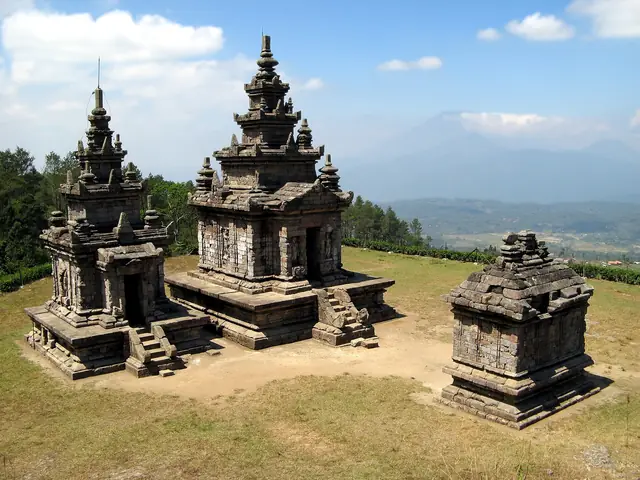
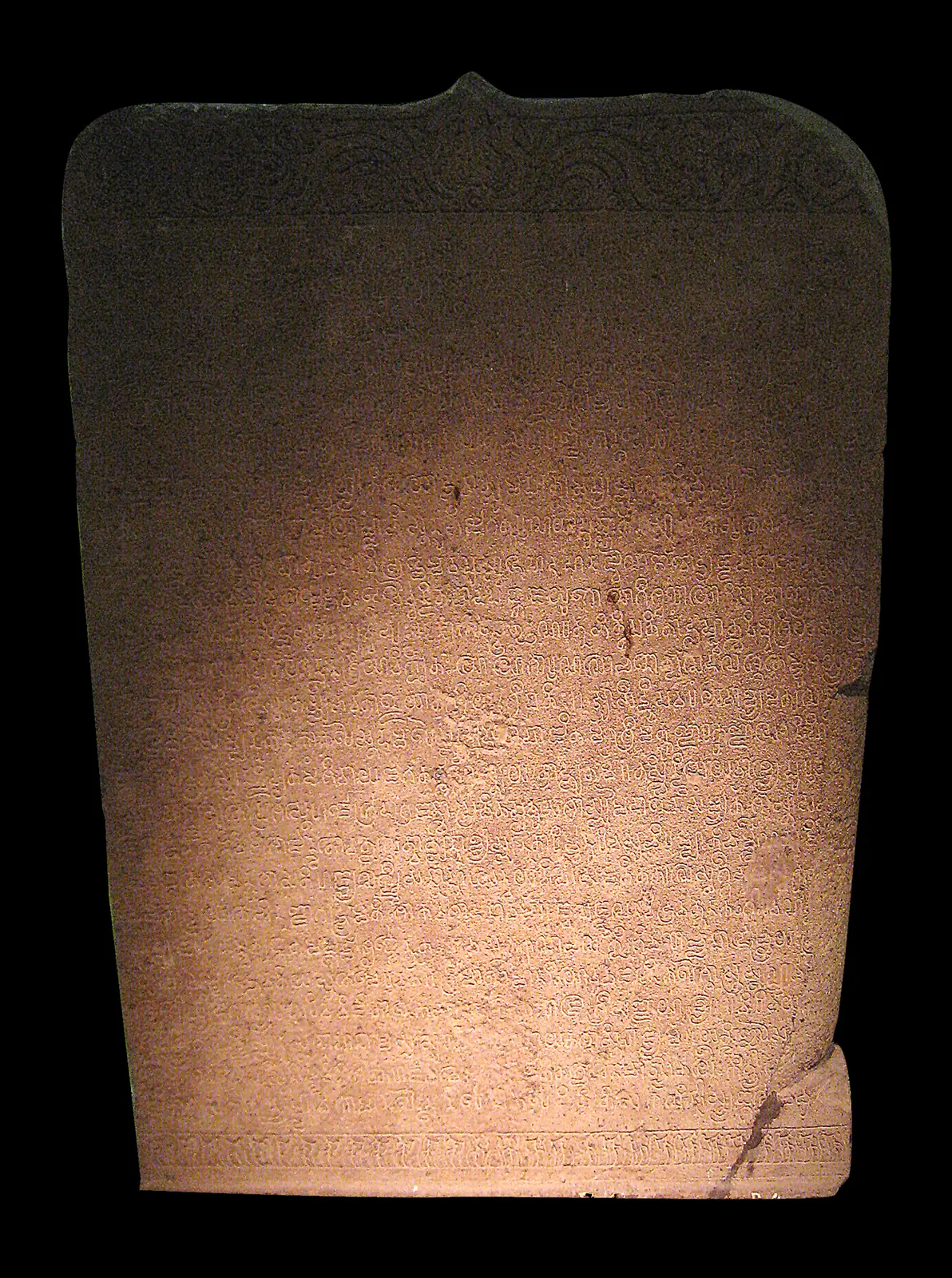
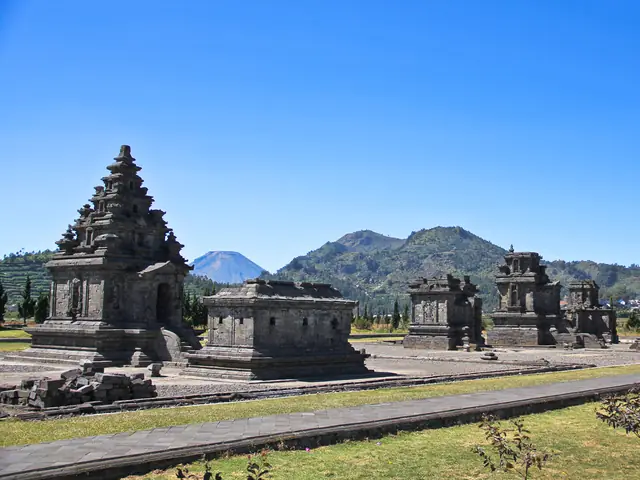
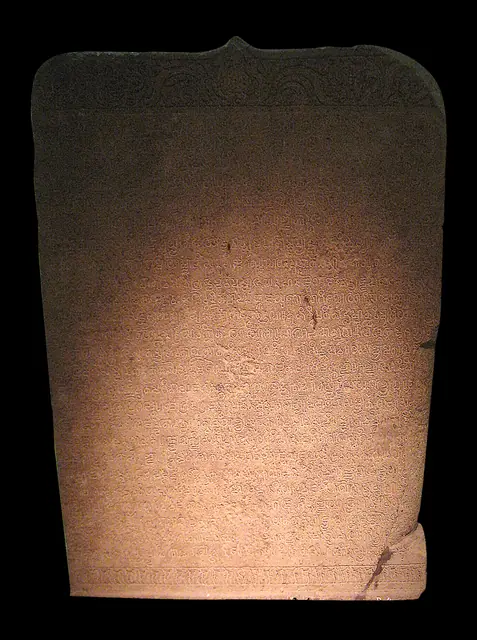
On a hill called Gunung Wukir, west of Mount Merapi, a Sanskrit inscription dated Shaka 654 (732 CE) records that King Sanjaya set up a linga there. It praises Shiva, Brahma and Vishnu, and calls Java an island rich in grain and gold. This is the Canggal inscription, and it is the founding charter of the line. The older Shiva shrines on the Dieng plateau, high in the clouds and named after the Pandavas, belong to the same Shaiva world.
02Shivagrha, 856
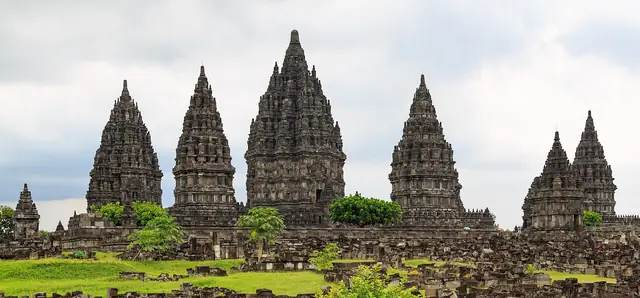
The Shivagrha inscription, dated 856, describes the consecration of a great house of Shiva with a river diverted to run beside it. That temple is Prambanan: a central Shiva shrine 47 metres high, flanked by Brahma and Vishnu, facing three shrines for their vahanas, and once ringed by 224 smaller temples. Its galleries carry the Ramayana in stone. The builder was Rakai Pikatan, husband of the Shailendra princess Pramodhawardhani.
03Balitung’s list of kings
In 907 King Balitung issued the Mantyasih copper plates, which name his predecessors back to Sanjaya. It is the backbone of Javanese chronology for the 8th and 9th centuries. Balitung’s reign also produced some of the earliest Old Javanese prose and many land grants to temples, each naming the officials who witnessed it. The Mantyasih plates were found near Magelang in Central Java, and the town still counts its founding from their date, 907.
04The move east and the fall of 1016
Around 929 Mpu Sindok moved the court from Central Java to the Brantas valley in the east, for reasons still argued over. His heirs ruled from there. In 1016 the palace of King Dharmawangsa Teguh was attacked during a wedding by a vassal from Wurawari, and the king was killed. His young son-in-law Airlangga escaped to the forest, rebuilt the kingdom, and before his death divided it into Janggala and Kediri.
The rulers
- 1SanjayaCanggal inscription; set up a lingac. 732
- 2Rakai PanangkaranNamed in the Kalasan inscription, 778later 8th century
- 3Rakai PikatanBuilt Prambanan, consecrated 856mid-9th century
- 4Rakai Kayuwangic. 855–885
- 5BalitungMantyasih plates, 907c. 899–911
- 6Mpu SindokMoved the court to East Java929–c. 947
- 7Dharmawangsa TeguhHad the Mahabharata rendered in Old Javanesec. 990–1016
What they left
- Prambanan, the Trimurti temple, UNESCO 1991
- The Dieng plateau temples, the oldest standing temples in Java
- The Ramayana reliefs that the Prambanan dance still performs
- The Old Javanese parwa versions of the Mahabharata