
01Raden Wijaya and the Mongols
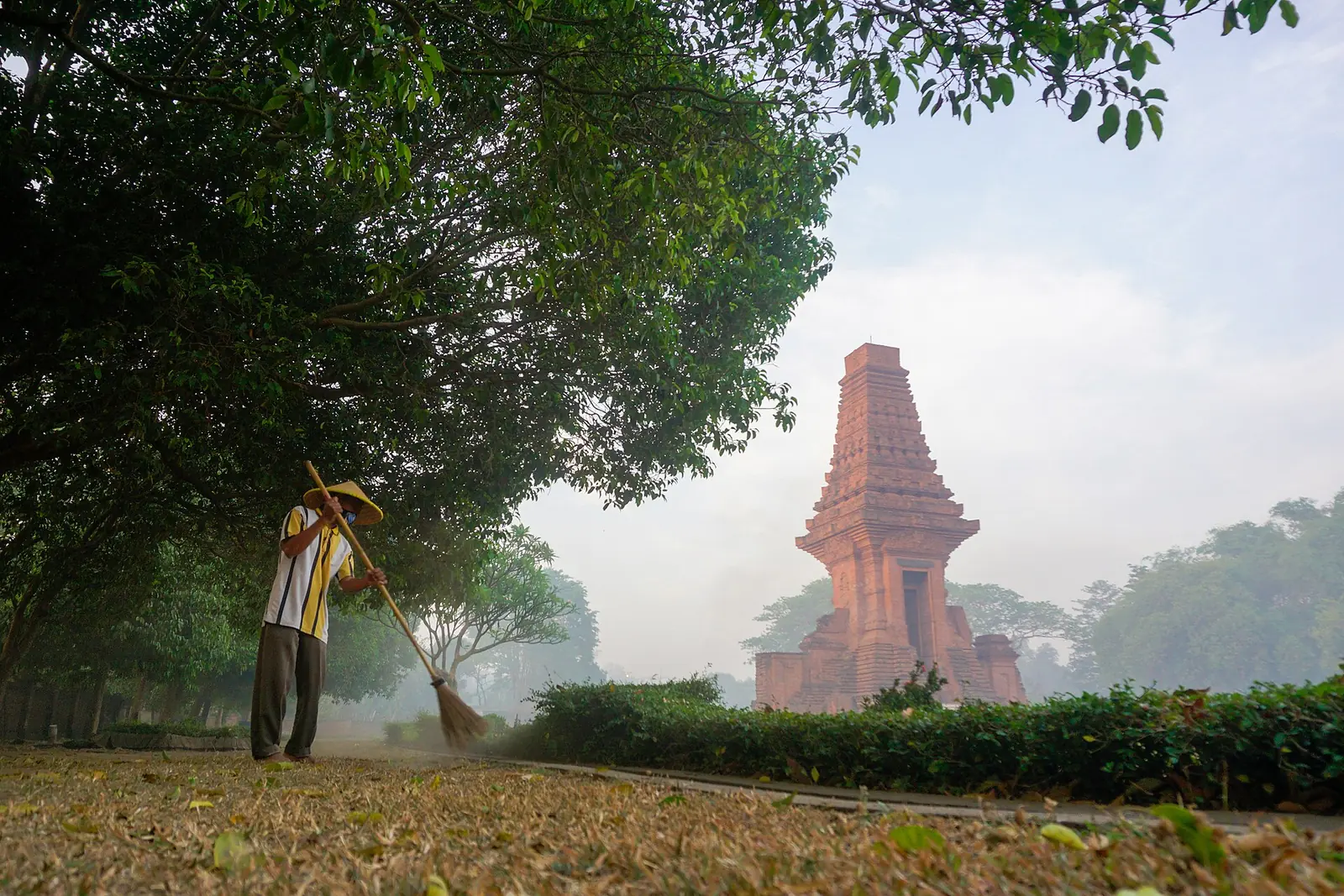
Raden Wijaya, Kertanagara’s son-in-law, was given forest land at Tarik, where a bitter maja fruit grew; the name Majapahit means bitter maja. In 1293 a Mongol fleet sent by Kublai Khan landed to punish Kertanagara, not knowing he was dead. Wijaya allied with them, defeated Jayakatwang of Kediri, and then turned on the Mongols and drove them to their ships. He was crowned the same year as Kertarajasa Jayawardhana.
02Gajah Mada’s oath
The Pararaton records that Gajah Mada, on becoming patih under Queen Tribhuwana Wijayatunggadewi, swore he would taste no palapa, no worldly pleasure, until the islands of Nusantara were under Majapahit. Under him and the young king Hayam Wuruk the empire reached its height. The Nagarakretagama names nearly a hundred tributary lands, from Sumatra to the Moluccas. The episode at Bubat in 1357, when the Sundanese king and his daughter were killed on the way to her wedding, is remembered bitterly in West Java and ended Gajah Mada’s career.
03Prapanca and Tantular
In 1365 the Buddhist court poet Mpu Prapanca finished the Nagarakretagama, a long kakawin describing Hayam Wuruk’s tours, the capital and the temples of the kingdom. The only full manuscript was found in 1894 at Cakranegara on Lombok. His contemporary Mpu Tantular wrote the Sutasoma, in which a line says that Buddha and Shiva are different yet one: bhinneka tunggal ika, tan hana dharma mangrwa, there is no duality in dharma. Bhinneka Tunggal Ika is now on Indonesia’s state emblem.
04Decline, and the road to Bali
After Hayam Wuruk died in 1389 a succession war, the Paregreg of 1404–1406, split the royal house. Ports on the north coast, grown rich and Muslim through trade, broke away one after another. The Javanese chronogram sirna ilang kertaning bumi marks 1478 as the end of the old order; the sultanate of Demak took what was left around 1527. Bali, conquered by Gajah Mada in 1343, kept the Majapahit courtly and priestly tradition alive, and Balinese Hindus still trace their temples, their dances and many of their priestly families to it.
The rulers
- 1Raden Wijaya (Kertarajasa Jayawardhana)Founder; expelled the Mongols1293–1309
- 2Jayanegara1309–1328
- 3Tribhuwana WijayatunggadewiQueen; appointed Gajah Mada1328–1350
- 4Hayam Wuruk (Rajasanagara)The empire at its height1350–1389
- 5WikramawardhanaParegreg civil war, 1404–14061389–1429
- 6SuhitaQueen1429–1447
What they left
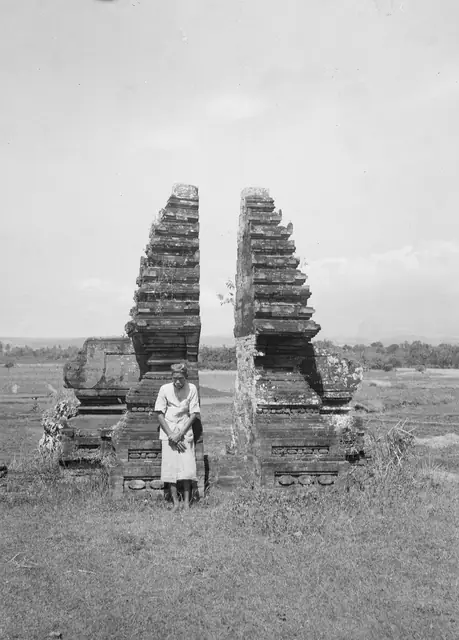
- Trowulan, the excavated capital, and the Bajang Ratu gate
- Penataran, the state temple of East Java
- Nagarakretagama (1365), on UNESCO’s Memory of the World register
- Bhinneka Tunggal Ika, Indonesia’s national motto, from the Sutasoma
- The Hindu courtly culture carried on in Bali