
01The footprints at Ciaruteun
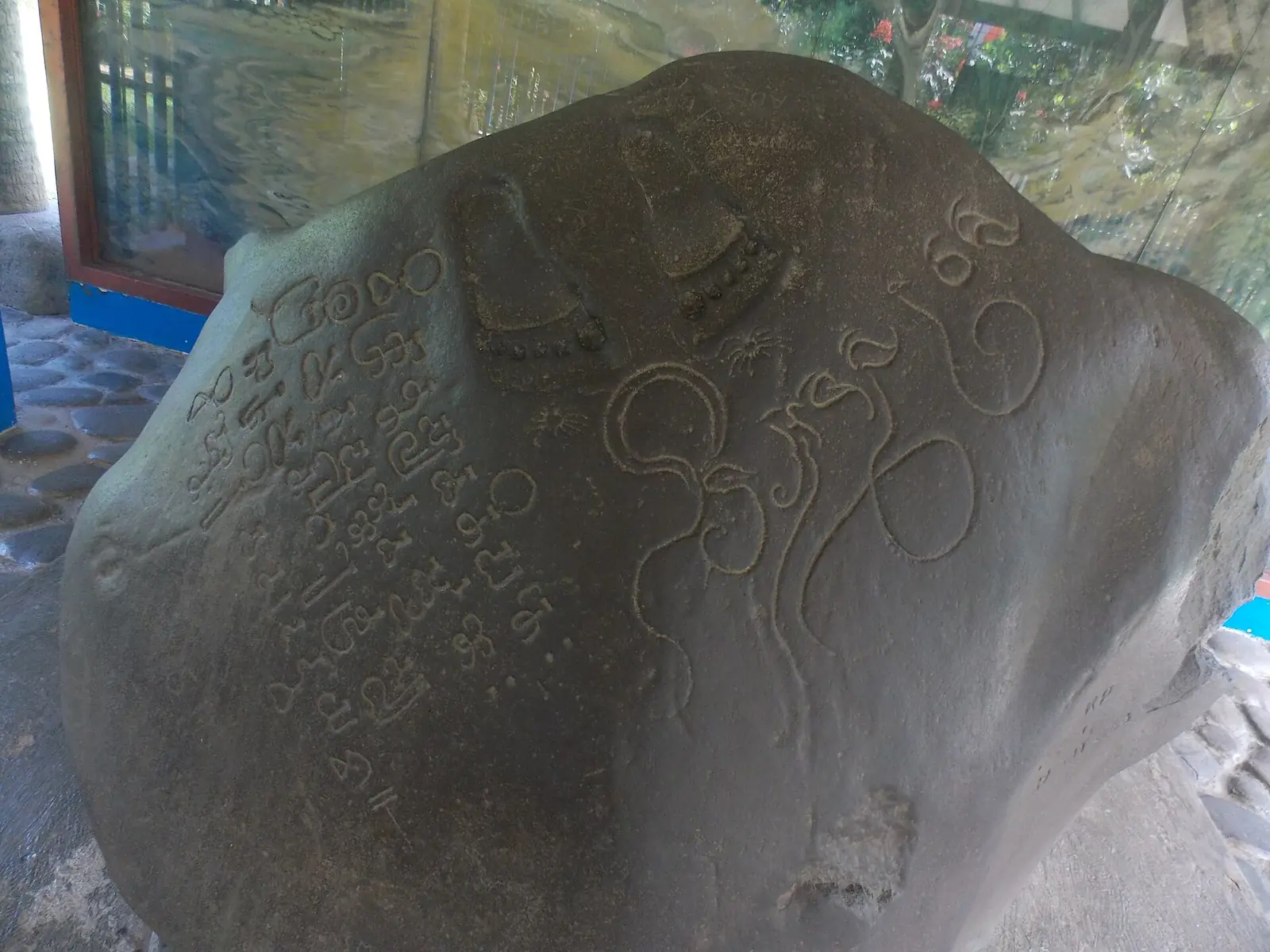
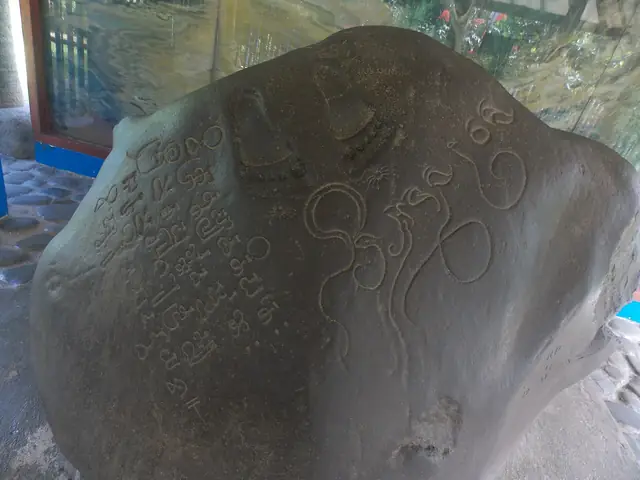
In the bed of the Ciaruteun stream near Bogor lies a boulder with two carved footprints and four lines of Sanskrit verse in a Pallava-style script. They say these are the feet of Purnavarman, lord of Tarumanagara, valiant king of the world, and that they are like the feet of Vishnu. The script places them in the 5th century. A nearby stone, Kebon Kopi, carries the footprints of the king’s elephant, likened to Airavata.
02The canal of Tugu
The Tugu stone, found in north Jakarta, is the longest of Purnavarman’s inscriptions. It records that in the 22nd year of his reign he had a channel named Gomati dug, 6,122 dhanus long, in twenty-one days, and that a thousand cows were given to the Brahmins at its completion. It also mentions an earlier channel, the Candrabhaga. These are river names of Bharat, carried to the plains of west Java.
03Envoys to China
Chinese histories record embassies from a country called To-lo-mo, generally read as Taruma, between 528 and 669. The Chinese pilgrim Faxian, shipwrecked on Java around 414, wrote that Brahmanical religion flourished there and Buddhism hardly at all. After 669 Taruma disappears from the records, and West Java next appears as the kingdom of Sunda. The Sundanese kings who followed, down to Pakuan Pajajaran, kept Hindu worship in the west of the island until the 16th century.
The rulers
- 1PurnavarmanSeven inscriptions; dug the Gomati canal5th century
What they left
- The Ciaruteun footprint inscription
- The Tugu inscription, now in the Museum Nasional, Jakarta
- Batujaya, the brick temple site of the Citarum delta