
01Ken Arok and the kris
The Pararaton, a Javanese chronicle, tells how Ken Arok, a commoner, killed Tunggul Ametung, lord of Tumapel, with a kris made by the smith Mpu Gandring, married his widow Ken Dedes, and in 1222 overthrew Kediri. He took the royal name Rajasa. The cursed kris then took his own life and those of his heirs, one after another, in the chronicle’s telling. Anusapati, Ken Dedes’ son by her first husband, had him killed in 1247.
02Temples of the dead kings
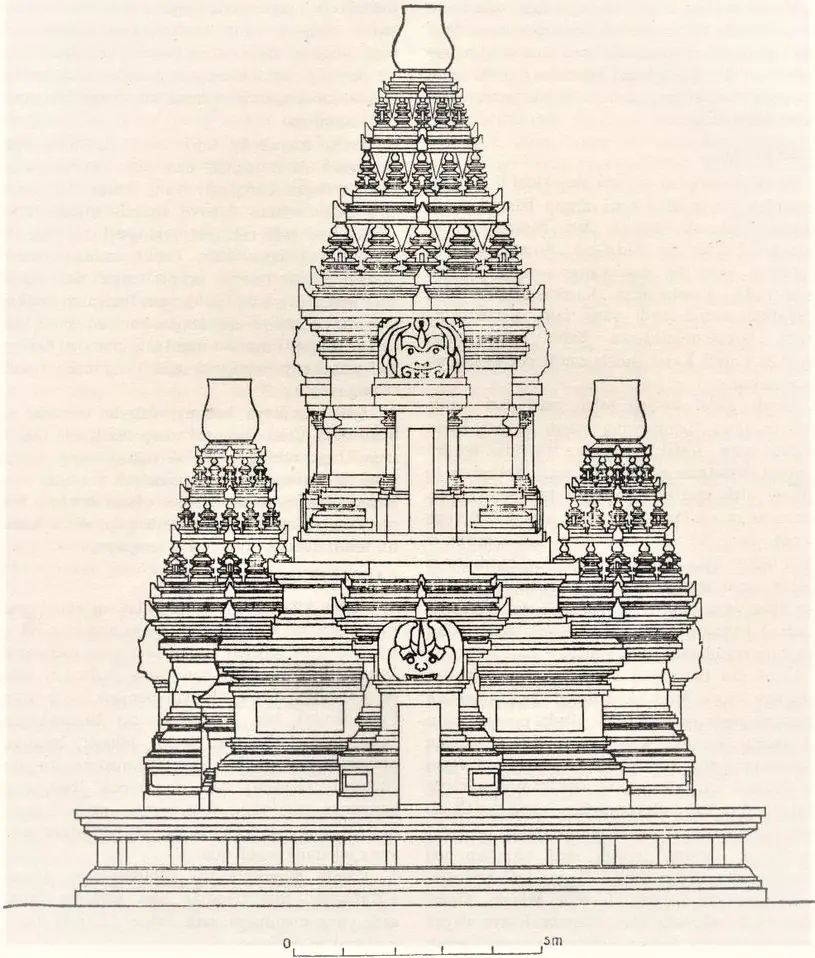
Javanese kings were consecrated after death in a temple as the deity they were held to have joined. Anusapati’s Candi Kidal carries the Garudeya, Garuda freeing his mother from slavery by bringing the amrita. Vishnuvardhana was honoured at Candi Jago as Shiva and as the Buddhist Amoghapasha. The Prajnaparamita statue from Singhasari, serene and jewelled, was taken to Leiden in the colonial era and returned to Indonesia in 1978.
03Kertanagara and Kublai Khan
Kertanagara, who reigned from 1268, was a learned Tantric initiate and an ambitious king. In 1275 he sent the Pamalayu expedition to Sumatra, and in 1286 he sent a statue of Amoghapasha to the Malay king at Dharmasraya. When Kublai Khan’s envoy Meng Qi came in 1289 to demand submission, Kertanagara had his face marked and sent him back. In 1292, before the Mongol fleet arrived, Jayakatwang of Kediri attacked and killed him. His son-in-law Raden Wijaya escaped and would found Majapahit.
The rulers
- 1Ken Arok (Rajasa)Overthrew Kediri at Ganter1222–1247
- 2AnusapatiCommemorated at Candi Kidal1247–1249
- 3Tohjaya1249–1250
- 4VishnuvardhanaCommemorated at Candi Jago1248–1268
- 5KertanagaraDefied Kublai Khan; killed by Jayakatwang1268–1292
What they left
- Candi Singhasari, Candi Jago and Candi Kidal
- The Prajnaparamita of Java, now in the Museum Nasional, Jakarta
- The Garudeya reliefs of Kidal