
01Airlangga divides the land
Airlangga rebuilt the East Javanese kingdom after the catastrophe of 1016. Near the end of his life, around 1042, he withdrew to become an ascetic and split the kingdom between two sons: Janggala in the east and Panjalu, with its capital at Daha, in the west. Panjalu, better known as Kediri, soon swallowed Janggala and became the leading power of Java for nearly two centuries.
02Bharatayuddha, 1157
In 1157, under Jayabhaya, the poets Mpu Sedah and Mpu Panuluh finished the Kakawin Bharatayuddha, the war at Kurukshetra told in Old Javanese verse with Sanskrit metres. Panuluh also wrote the Hariwangsa and the Gatotkacasraya. For a king Kameshwara, Mpu Dharmaja wrote the Smaradahana, the burning of Kama by Shiva. These poems became the stock of the wayang shadow theatre, and the dalang in a Javanese village still draws on them.
03The fall at Ganter
Kertajaya, the last king, quarrelled with the Shaiva and Buddhist clergy, who went over to Ken Arok, the ruler of Tumapel. In 1222 Ken Arok defeated Kertajaya at Ganter. The Pararaton and the Nagarakretagama both tell of it. Kediri lived on as a vassal and rose once more in 1292, when its prince Jayakatwang killed Kertanagara of Singhasari. A year later Majapahit put an end to it.
The rulers
- 1AirlanggaRebuilt Java’s kingdom, then divided it1019–1042
- 2Jayawarsac. 1104
- 3Kameshwara ISmaradahana is dedicated to a king Kameshwarac. 1116–1135
- 4JayabhayaKakawin Bharatayuddha written for himc. 1135–1157
- 5Kertajaya (Srengga)Defeated by Ken Arok at Ganterc. 1194–1222
What they left
- Kakawin Bharatayuddha (1157), the Javanese Mahabharata war
- Smaradahana, Hariwangsa and Gatotkacasraya
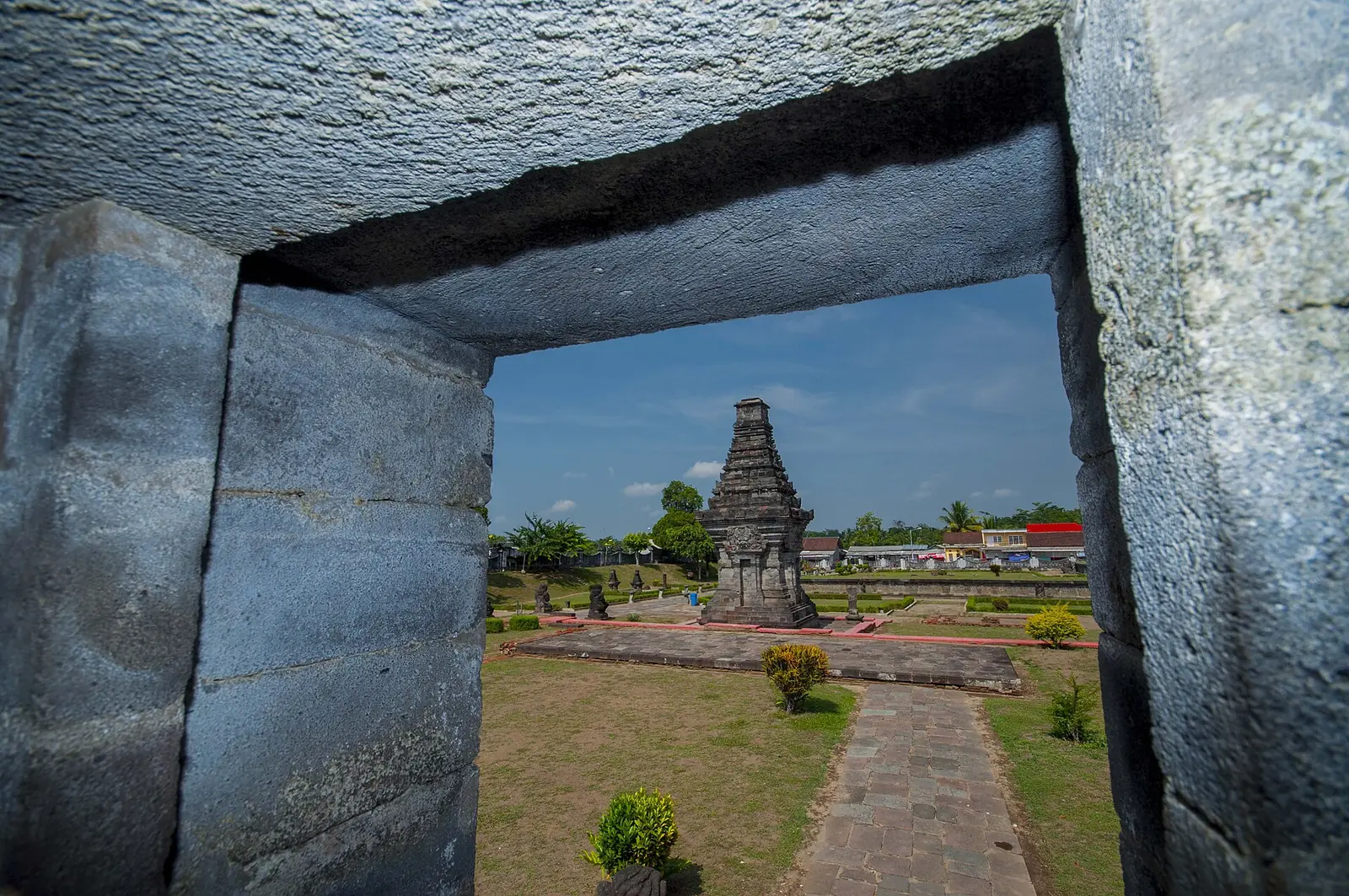
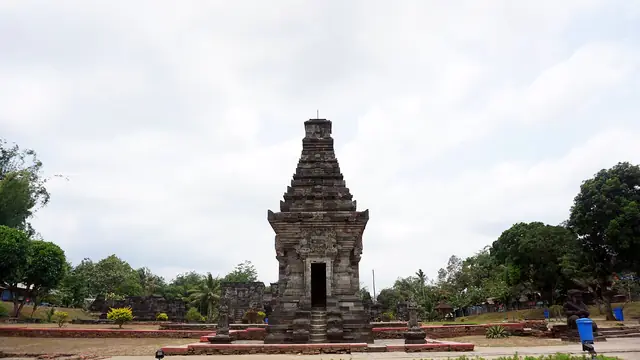
- The first shrines at Penataran, Java’s largest temple complex in the east
- Jayabhaya’s name, still invoked across Java