
Cave and rock-cut temples
Maharashtra, Karnataka, Tamil Nadu, Madhya Pradesh, Himachal · 3rd century BCE to 10th century CE
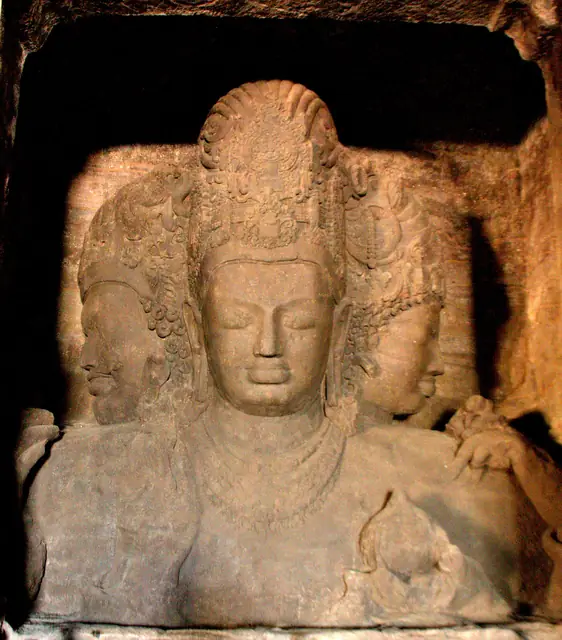
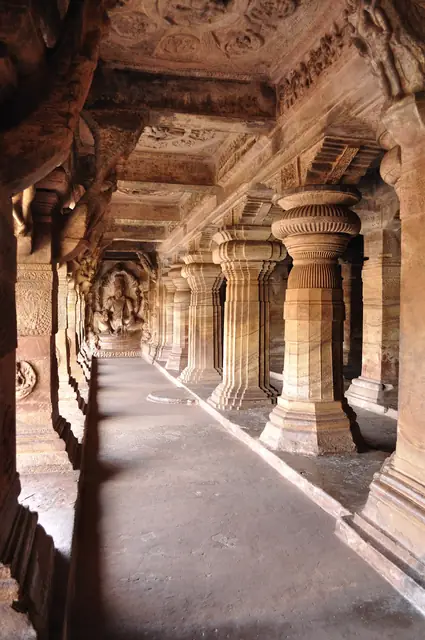
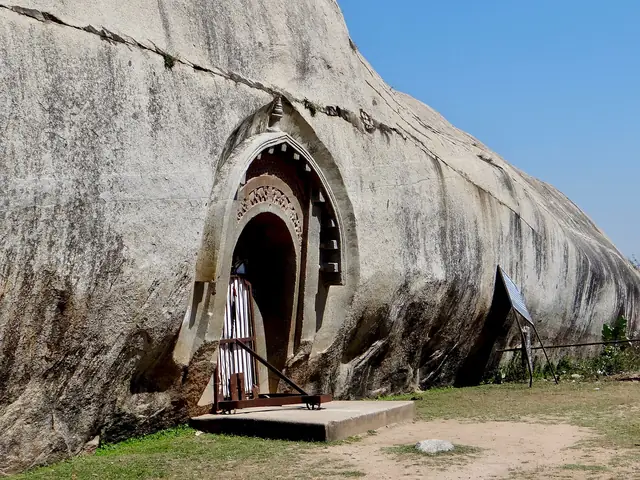
Before temples were built, they were carved. The Barabar caves of the Maurya age show the polish already mastered; at Udayagiri near Vidisha, around 401 CE under Chandragupta II, the cave shrines include the great Varaha panel. The Chalukyas cut four cave temples into the red cliff at Badami, one dated 578, and the Pallavas cut theirs at Mandagapattu and Mamallapuram. At Elephanta the 6th-century cave holds the three-headed Sadashiva, nearly six metres high.
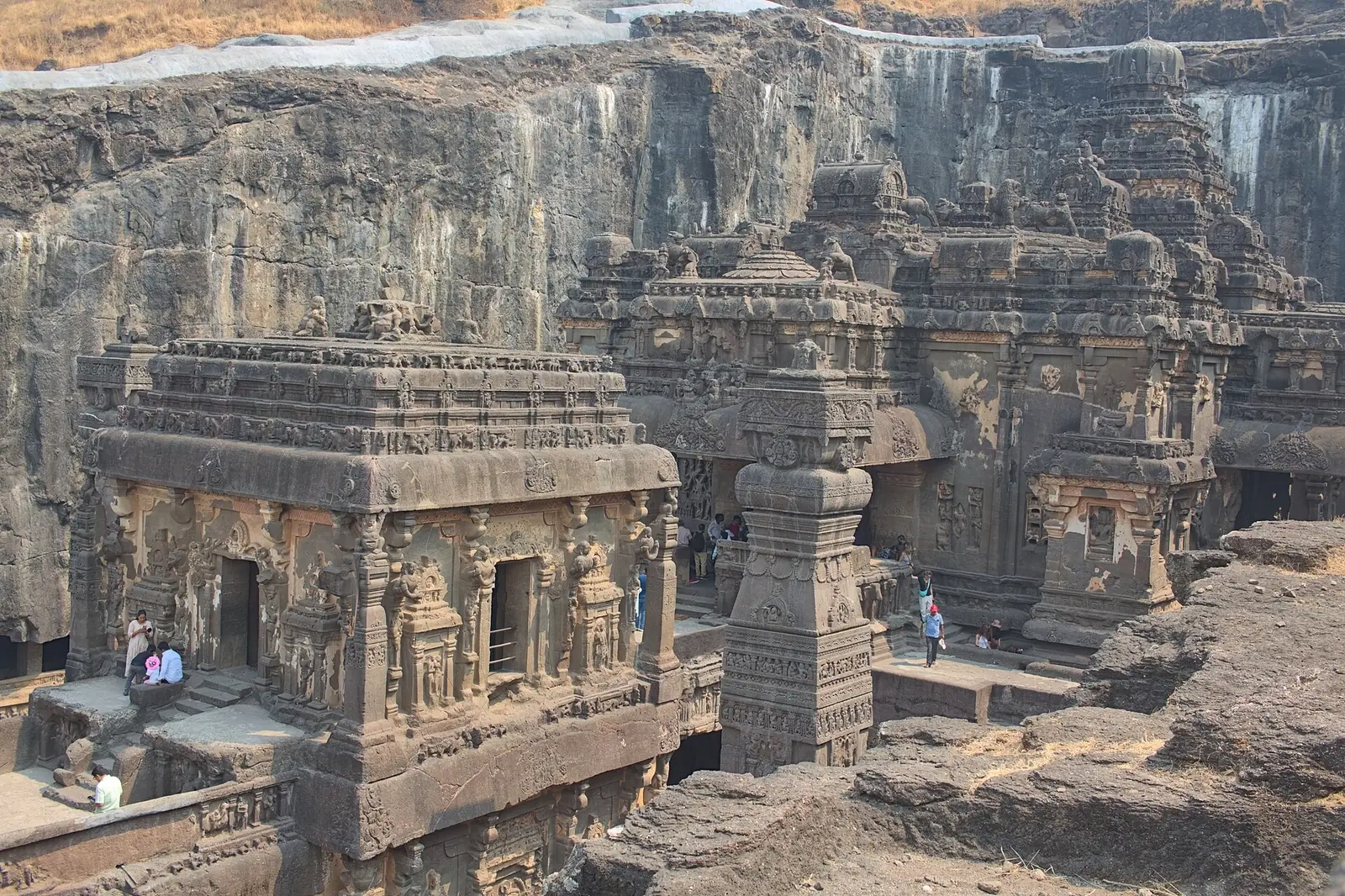
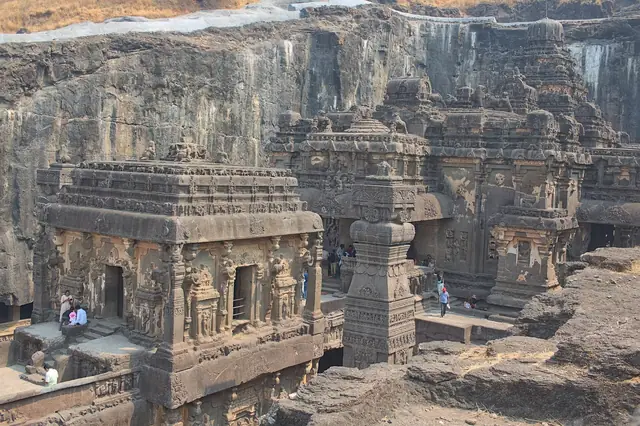
The summit of the art is Ellora Cave 16, the Kailasa, cut downward from the top of a basalt hill under the Rashtrakuta king Krishna I in the 8th century: a complete temple with vimana, halls, Nandi pavilion and courtyard, made by taking stone away, an estimated two lakh tonnes of it. At Masrur in Kangra a group of Nagara shrines was carved out of a single sandstone ridge in the same century. Rock-cut work never quite stopped; pilgrims still enter cave shrines at Amarnath, Vaishno Devi and Batu Caves.
How to recognise it
- Carved from living rock, not assembled
- Pillared cave halls with a shrine cell at the back
- Monolithic free-standing temples at Ellora, Mamallapuram, Masrur
- Great relief panels: Varaha, Sadashiva, Arjuna’s penance
Great examples
 Standing
Kailasa Temple, Ellora (Cave 16)
A whole temple, with its shrine, Nandi mandapa, towers and elephants, carved downward out of a single basalt hill under the Rashtrakuta king Krishna I. Nothing was built; everything that is not temple was cut away.
 Ruined
Elephanta Caves (Gharapuri)
A Shaiva cave temple on Gharapuri island in Mumbai harbour, with the three-faced Sadashiva, about 6 m high, at its centre. The Portuguese named the island for a stone elephant; the damage to its panels dates from their time.
 Standing
Badami (Vatapi)
Vatapi, capital of the Chalukyas, set in red sandstone cliffs around the Agastya lake. Its four cave temples hold some of the earliest dated Hindu sculpture in the Deccan.
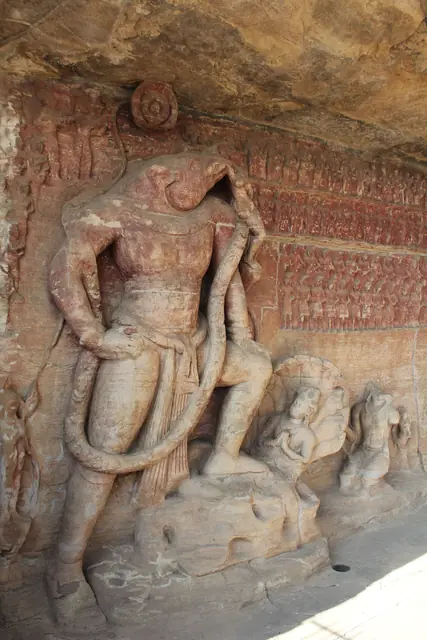 Standing
Udayagiri Caves, Vidisha
Twenty rock-cut shrines in a sandstone hill near Vidisha, the oldest securely dated Hindu cave temples. The great Varaha panel of Cave 5 shows Vishnu lifting Bhudevi out of the ocean.
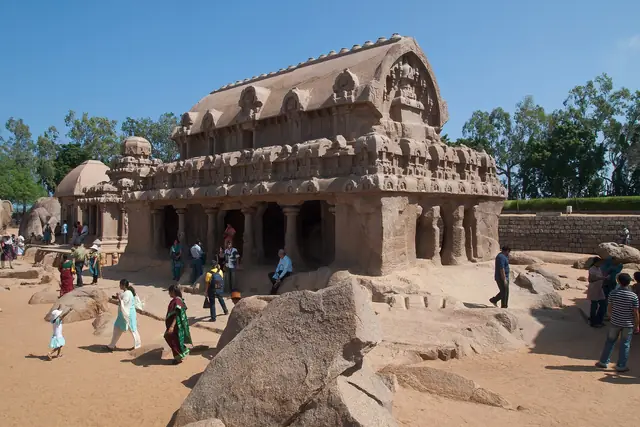 Standing
Pancha Rathas and Arjuna’s Penance, Mahabalipuram
Five temples, an elephant and a lion, each carved from a single outcrop of granite in the reign of Mamalla. Near them, the great relief of the Descent of the Ganga covers a whole rock face.
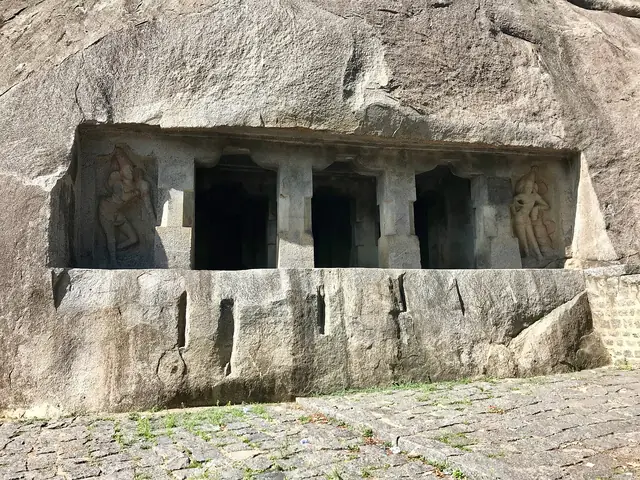 Standing
Mandagapattu cave temple
A hall cut into a granite boulder in a village near Villupuram, with three shrines for Brahma, Shiva and Vishnu. Its inscription says it is a temple made without brick, timber, metal or mortar: the first rock-cut temple of the Tamil country.
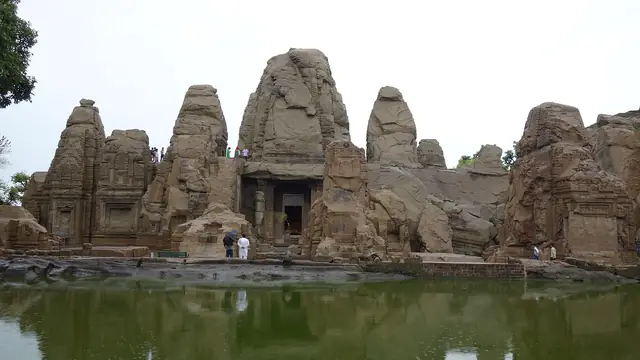 Ruined
Masrur Rock-cut Temples
A group of fifteen Nagara temples carved, top down, out of one sandstone ridge in the Kangra hills, the only monolithic temple group of this kind in the Himalaya.
 Standing
Barabar and Nagarjuni Caves
The oldest rock-cut caves in Bharat, hollowed out of solid granite and polished to a mirror finish, which Ashoka and Dasharatha gave to the Ajivika ascetics.