01Vichitrachitta’s boast
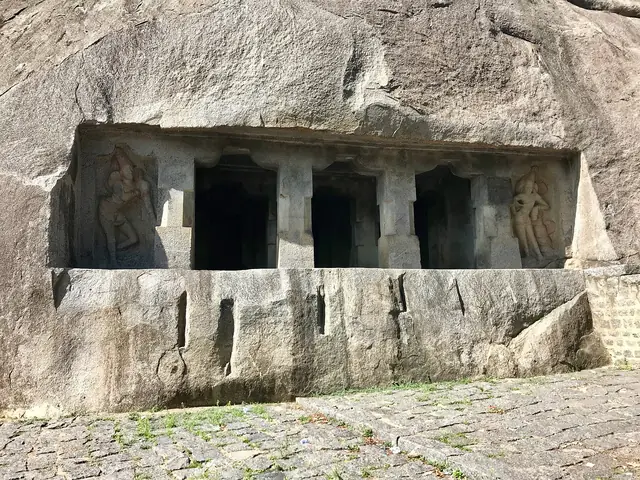
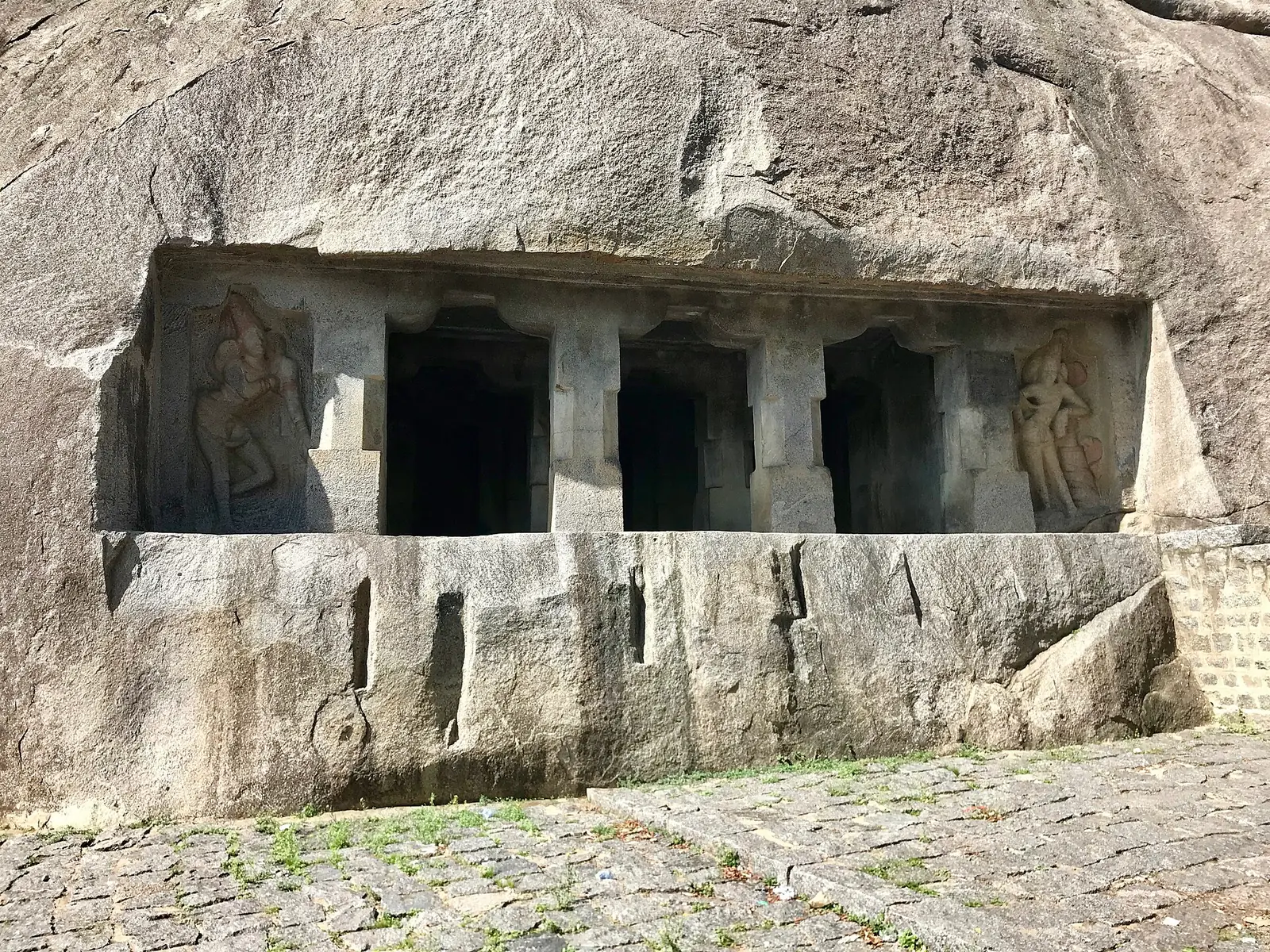
Before Mahendravarman I, temples in the Tamil country were built of brick, timber and metal, and few survive. The Pallava king, who called himself Vichitrachitta, the curious-minded, had this one cut straight into the living rock, and placed a Sanskrit inscription on the pillar to say so: that this shrine to Brahma, Ishvara and Vishnu, made without brick, without timber, without metal and without mortar, was caused to be made by King Vichitrachitta. A front row of four square pillars, two of them cut free, opens on a mandapa with three small cells at the back.
02Where Mamallapuram began
The two door guardians carved at the ends of the façade, leaning on their clubs, are among the earliest dvarapalas in Tamil stone. The cells are empty; the images were probably painted or made of stucco and have gone. From this plain beginning the Pallava cutters went on to the cave temples of Mahendravarman’s reign at Tiruchirappalli, Mamandur and Dalavanur, and under his son Narasimhavarman Mamalla to the rathas and reliefs of Mahabalipuram. The cave is under the protection of the Archaeological Survey of India.
The life of this place
- Early 7th centuryMahendravarman I has the cave cut and inscribed.