01Chosen to end the fish-law
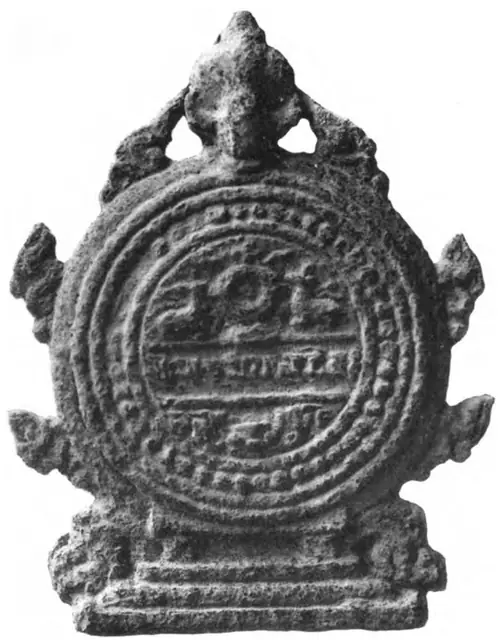
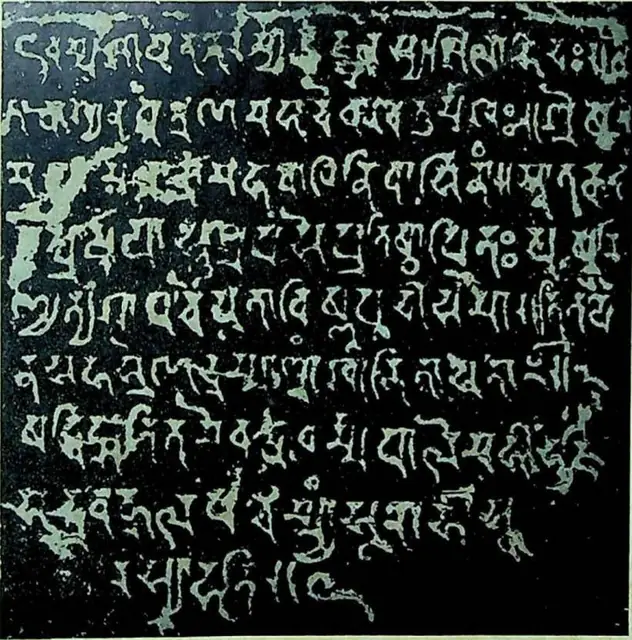
After Shashanka’s time Bengal fell into what the inscriptions call matsyanyaya, the law of the fishes, where the big swallow the small. The Khalimpur copper plate of Dharmapala says the people, the prakriti, made Gopala take the hand of Lakshmi to end it. His son Dharmapala made the Palas a great power. He fought for Kannauj, placed his own man Chakrayudha on its throne, and held a durbar there that the kings of the north attended. Devapala after him carried the Pala name to the Himalaya and the Vindhyas.
02Vikramashila and Somapura
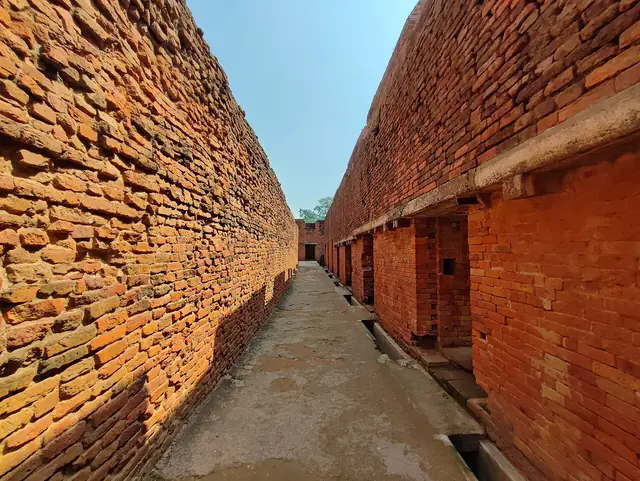
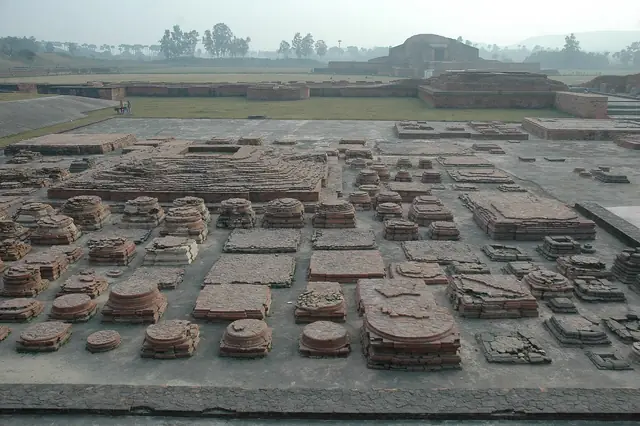
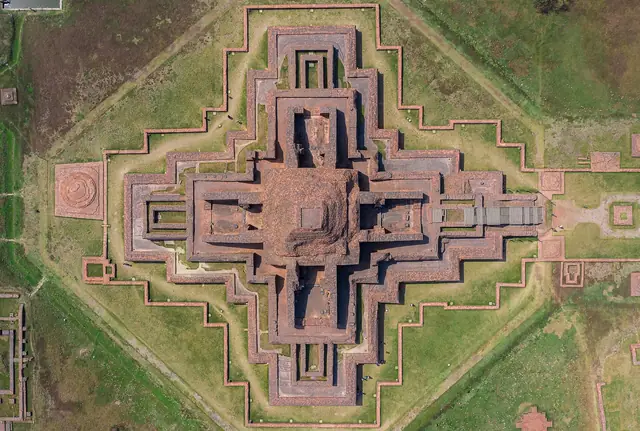
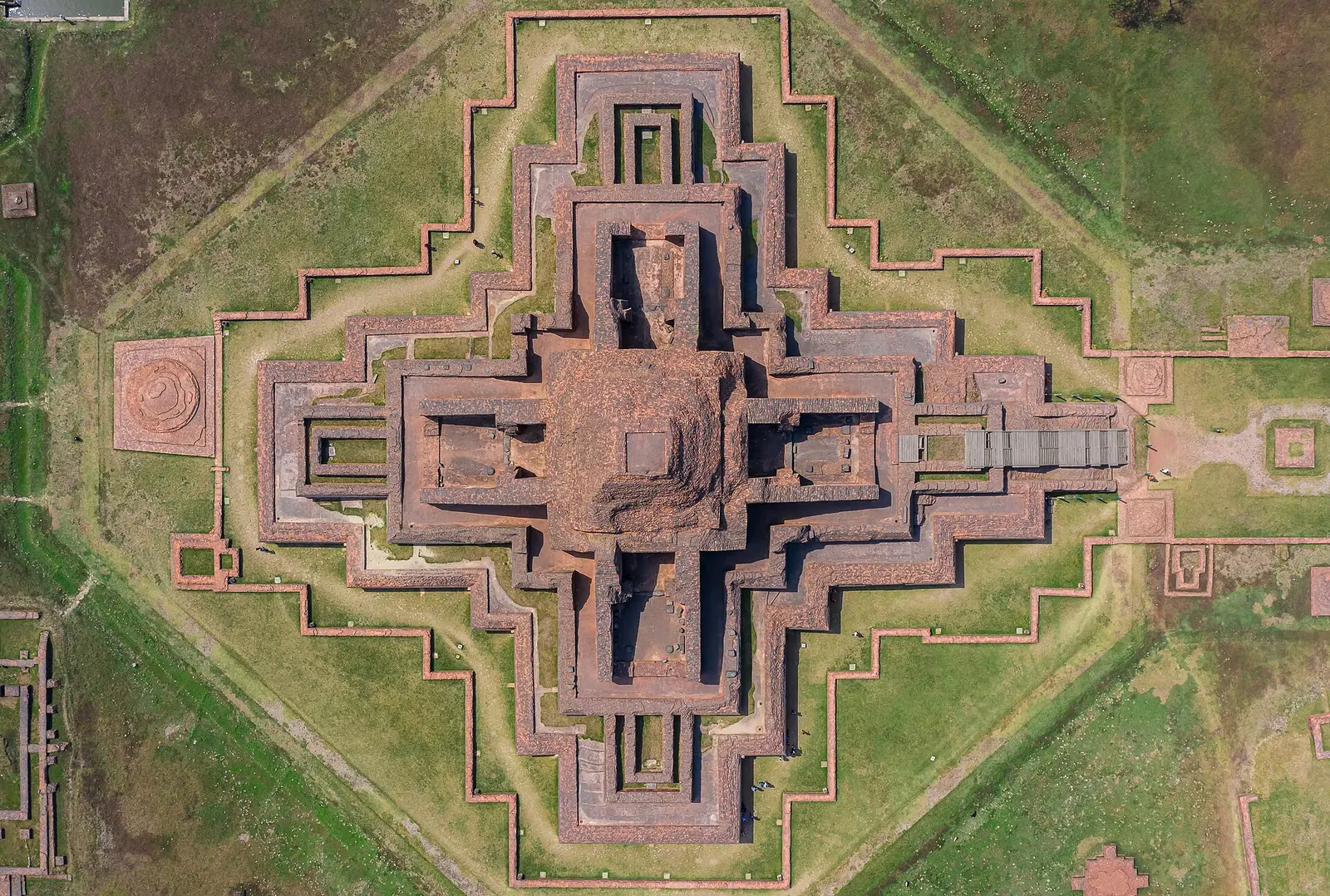
Dharmapala founded Vikramashila on the Ganga in Bhagalpur district and the vast Somapura vihara at Paharpur, now in Bangladesh, with its terraced central shrine and 177 cells around the court. Nalanda flourished under Pala protection. Devapala’s Nalanda copper plate records five villages given at the request of Balaputradeva, the Shailendra king of Suvarnadvipa, for a monastery he had built there. From Vikramashila the teacher Atisha Dipankara left for Tibet in the 1040s. The workshops of Bihar and Bengal turned out images of Vishnu, Surya, Uma-Maheshvara and the Buddha in polished black stone and in bronze.
03Ramapala and the last century
Mahipala I rebuilt the kingdom around 988, though Rajendra Chola’s northern army defeated him on its march to the Ganga. In the reign of Mahipala II the Kaivarta chief Divya rose in revolt and took Varendra, north Bengal. His brother Ramapala won it back with the help of his feudatories, and Sandhyakaranandi told the story in the Ramacharita, a poem that reads in two senses at once, as the tale of Shri Rama and of Ramapala. After Ramapala the Senas rose from within the Pala lands, and Madanapala, the last notable king, lost Bengal to them.
The rulers
- 1Gopala IChosen to end the matsyanyayac. 750–770
- 2DharmapalaFounded Vikramashila and Somapurac. 770–810
- 3DevapalaNalanda copper platec. 810–850
- 4Narayanapalac. 854–908
- 5Rajyapalac. 908–940
- 6Gopala IIc. 940–960
- 7Vigrahapala IIc. 960–988
- 8Mahipala IRevived the kingdomc. 988–1038
- 9Nayapalac. 1038–1055
- 10Vigrahapala IIIc. 1055–1070
- 11Mahipala IIKilled in the Kaivarta revoltc. 1070–1075
- 12RamapalaRecovered Varendra; subject of the Ramacharitac. 1077–1130
- 13Kumarapalac. 1130–1140
- 14MadanapalaLast notable Pala kingc. 1144–1161
What they left
- Vikramashila mahavihara, Bhagalpur
- Somapura mahavihara, Paharpur
- The Pala school of black-stone and bronze sculpture
- Ramacharita of Sandhyakaranandi