
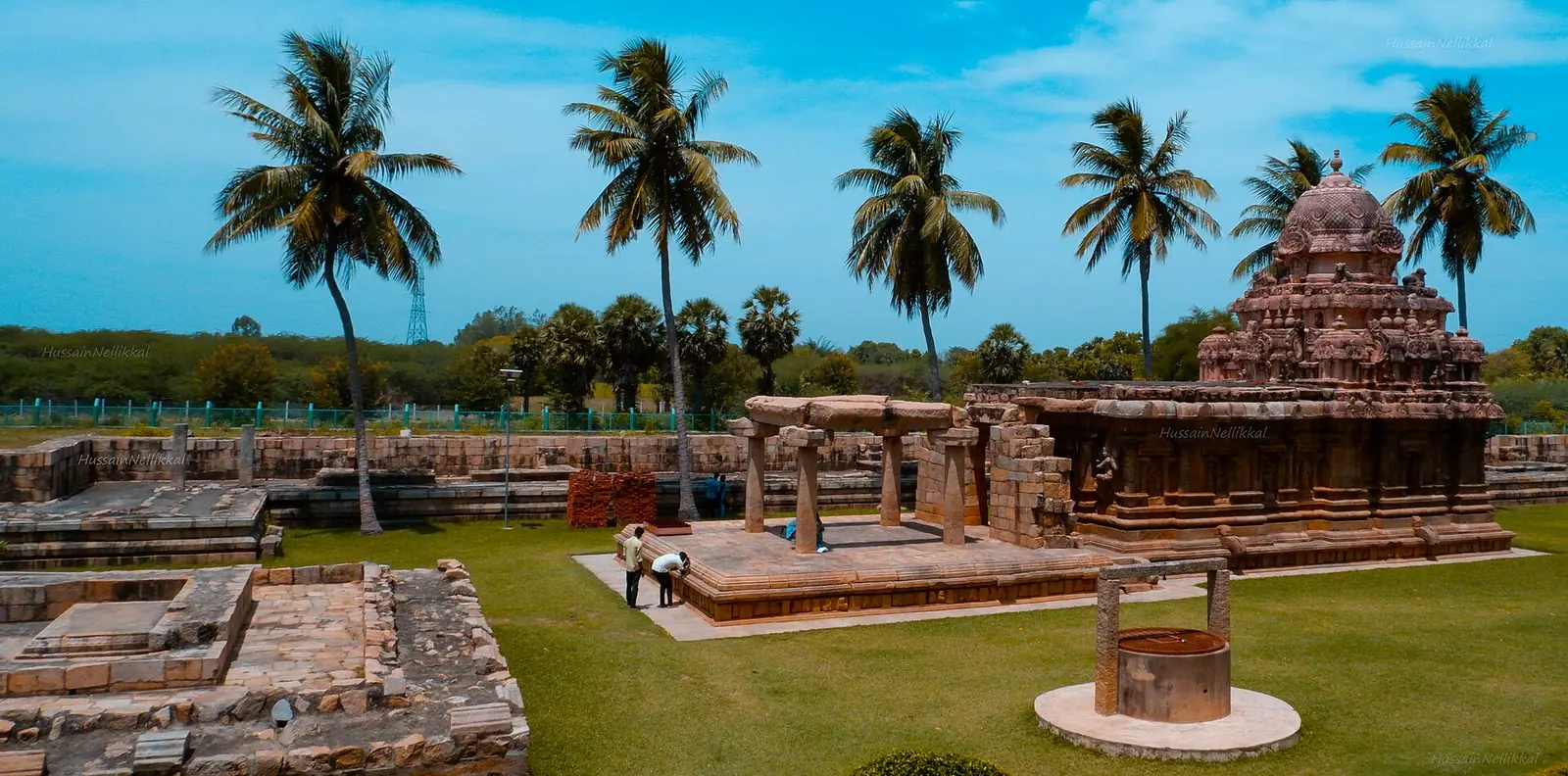
The Chola army reached the Ganga, defeated Mahipala, and carried Ganga water back to the new capital.
01The roll of conquests
Rajendra’s Tamil meykirti, the praise that opens his inscriptions, lists the march in order: Odda-vishaya, Kosalai, Tandabutti of Dharmapala, Takkana-ladam of Ranasura, Vangala-desam of Govindachandra, Uttira-ladam of Mahipala, and the Ganga with its sacred waters. The Tiruvalangadu copper plates add that the general brought Ganga water and the defeated kings were made to carry it. Rajendra himself met the returning army on the Godavari.
02Gangaikonda Cholapuram
The water went into a great tank, the Cholagangam, at the new capital Rajendra raised in the dry country north of the Kaveri. He took the title Gangaikonda Chola, the Chola who took the Ganga, and built a Shiva temple there whose vimana answers his father’s at Thanjavur. The temple is a UNESCO World Heritage site with Thanjavur and Darasuram. The city itself is gone; only the temple, a few mounds and the embankment of the tank remain.
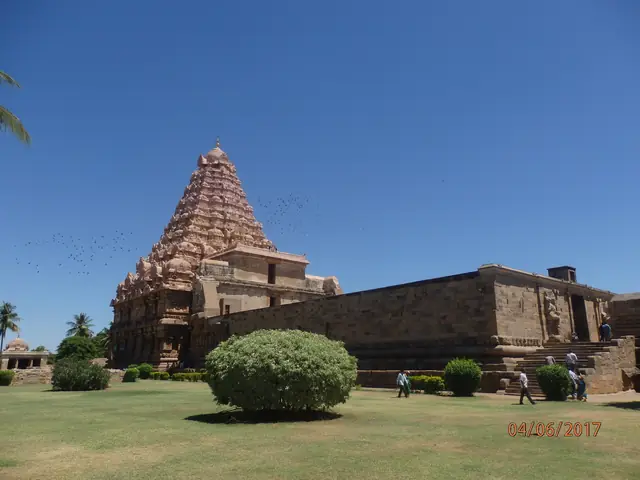
No other southern king carried his arms to the Ganga, and the capital named for it was the Chola seat for some 250 years.