01Dharmapala’s vihara
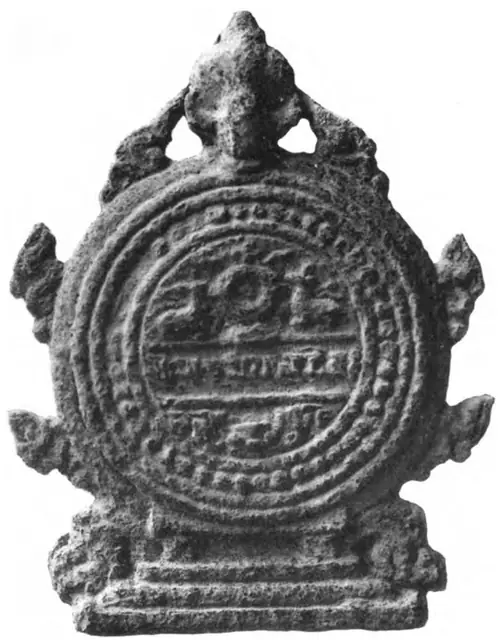
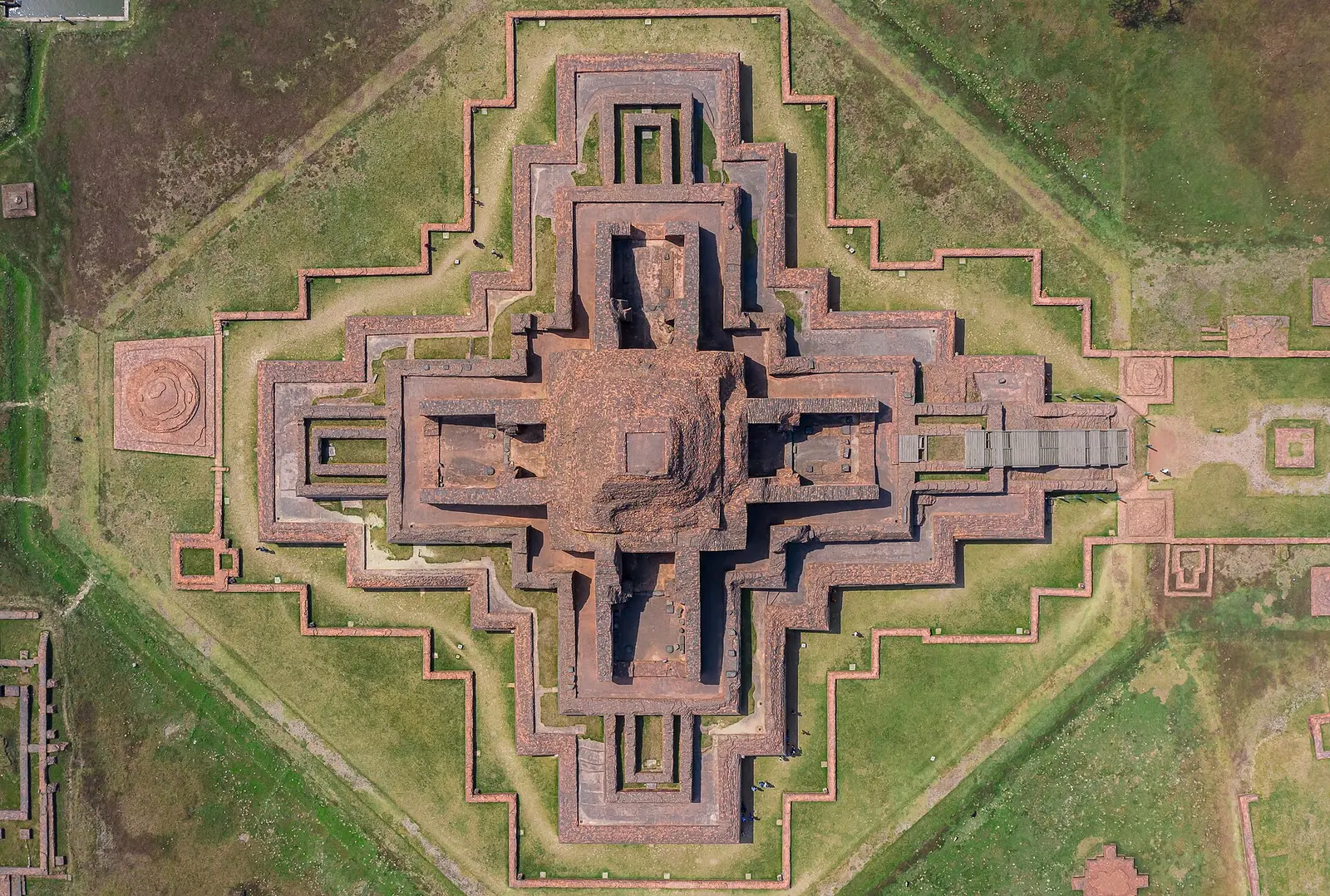
Clay seals found in the ruins read ‘of the community of monks of the great vihara of Shri Dharmapaladeva at Shri Somapura’, which settled both the name and the founder. Dharmapala, who also founded Vikramashila, built it in the late 8th century. Each side of the enclosure runs nearly 280 metres. In the middle, the shrine rose in three terraces, its walls banded with more than two thousand terracotta plaques and a row of stone reliefs at the base. The stone panels include Krishna lifting Govardhan, Krishna with Radha, Balarama and Shiva; the plaques run from Ramayana scenes to village life. Monks came from Tibet and Southeast Asia, and the vihara corresponded with Nalanda and Bodh Gaya.
02Fire, decline and the spade
An inscription of the monk Vipulashrimitra found at Nalanda records that Somapura was set on fire by an army from Vanga, east Bengal, in the 11th century, and that it was restored. The vihara declined in the 12th century as Pala power faded, and by the time the Turkish conquest swept north Bengal around 1200 it was being abandoned. The mound, rising like a hill over the flat paddy land, gave the village its name, Paharpur. Excavations by the Archaeological Survey under D. R. Bhandarkar and K. N. Dikshit between 1923 and 1934 uncovered the whole plan. UNESCO listed it in 1985.
The life of this place
- late 8th centuryDharmapala founds the Somapura Mahavihara.
- 11th centuryAn army from Vanga burns the vihara; it is restored (Vipulashrimitra’s Nalanda inscription).
- c. 12th–13th centuryThe vihara is abandoned as Pala power ends and the Turkish conquest reaches north Bengal.
- 1923–1934ASI excavations uncover the monastery and its shrine.
- 1985Inscribed as a UNESCO World Heritage Site.
Paharpur is about 5 km from Jamalganj station in Naogaon district; the site museum keeps the stone reliefs and a selection of plaques.