01The rite on Mahendraparvata
In 802 Jayavarman II climbed Phnom Kulen, which the Khmers called Mahendraparvata, and had a Brahmin named Hiranyadama perform a rite that made him chakravartin, so that Kambujadesha would no longer be subject to Java. The Sdok Kok Thom inscription of 1052 tells this, and it tells how the family of the priest Shivakaivalya kept the cult of the kamraten jagat ta raja, the god who is king, for 250 years. Every Angkor king after him dated his line from that day.
02Temple-mountains and barays
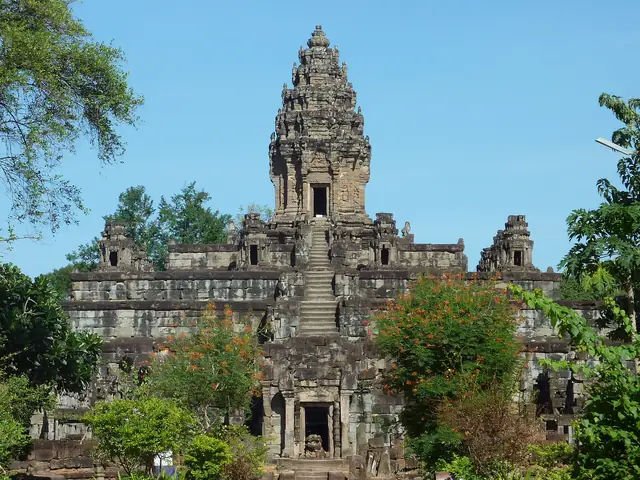
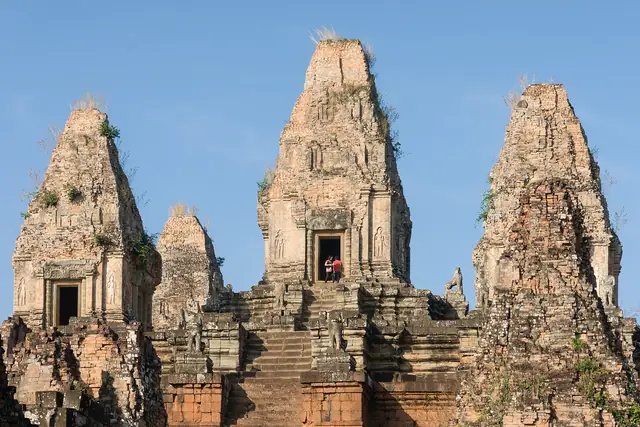
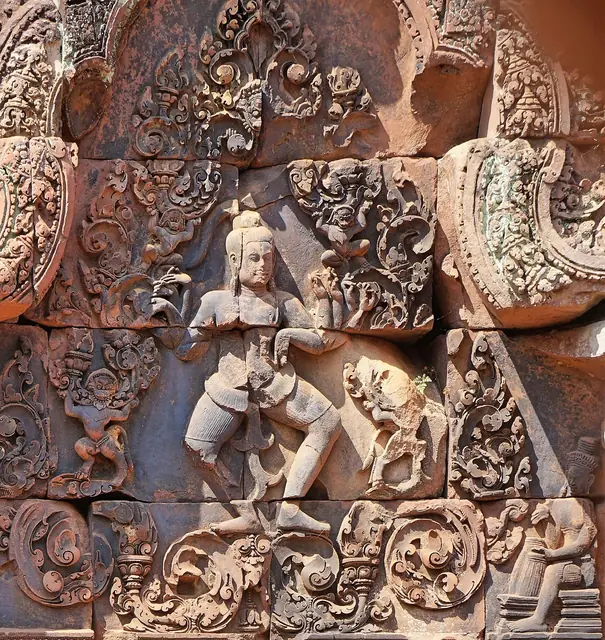
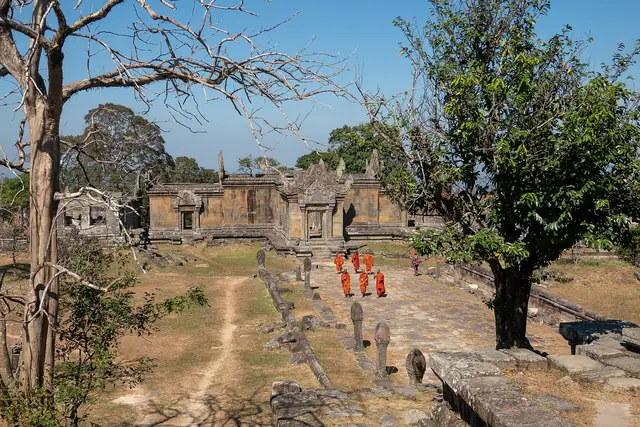
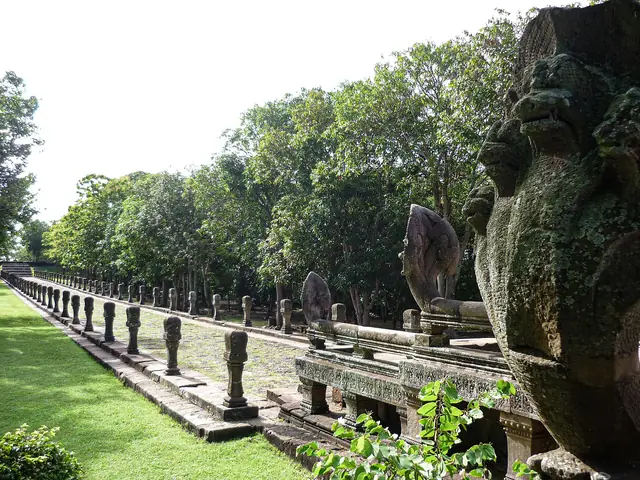
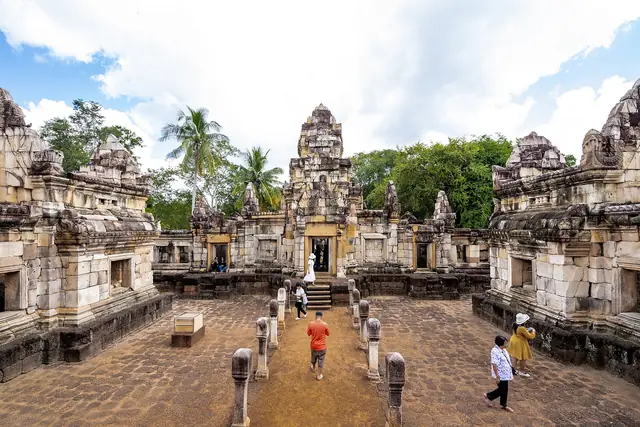
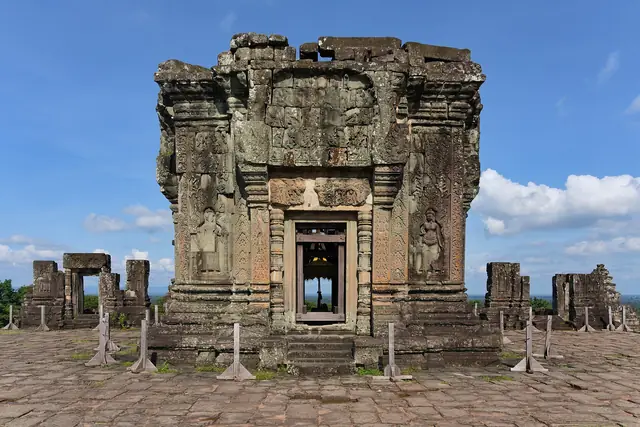
Indravarman I consecrated Preah Ko in 879 and the Bakong, the first great temple-mountain, in 881, and dug the Indratataka reservoir. His son Yashovarman I moved the capital to Yashodharapura, raised the Phnom Bakheng on a hill at its centre, and cut the East Baray, 7 km long. Each king who followed added a mountain of his own. In 967 the guru Yajnavaraha consecrated Banteay Srei, a small Shiva temple in pink sandstone carved as finely as sandalwood. Along the Dangrek scarp, Preah Vihear was enlarged under Suryavarman I.
03Suryavarman II and Angkor Wat
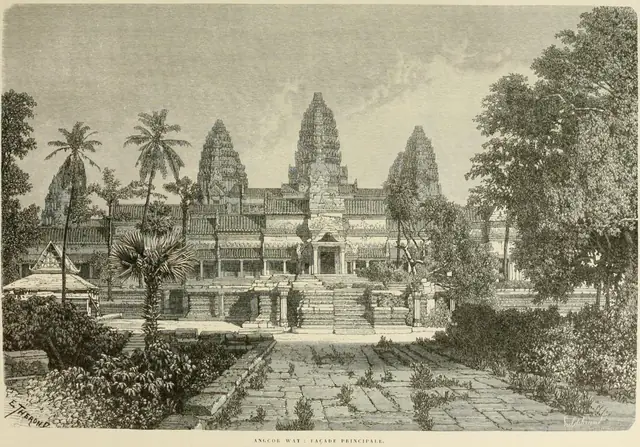
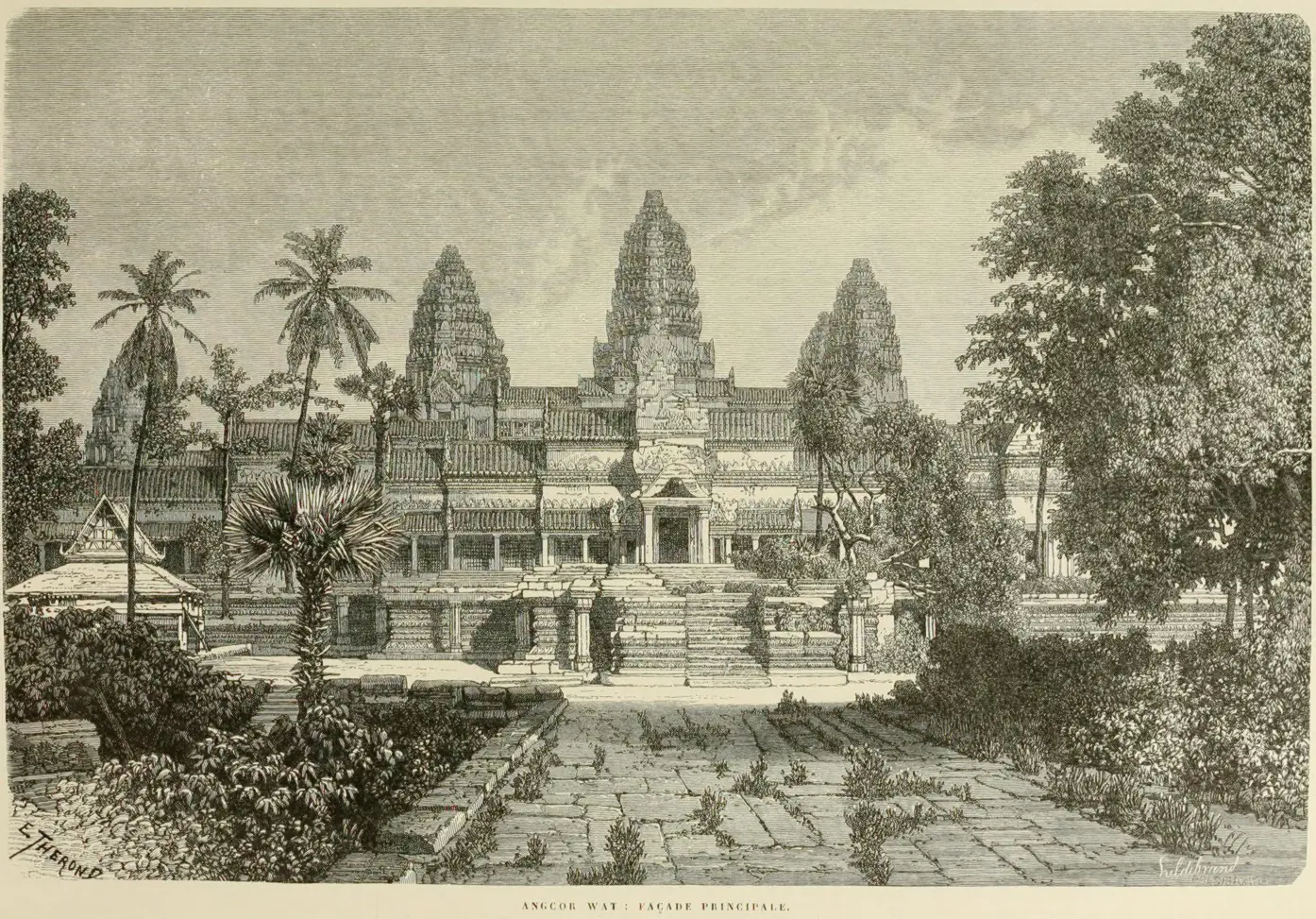
Suryavarman II came to the throne in 1113 and built Angkor Wat for Vishnu. It faces west, its moat is 190 metres wide, and its galleries carry nearly a kilometre of reliefs: the Samudra Manthan with devas and asuras pulling Vasuki, the battle of Kurukshetra, the battle of Lanka, and the king himself holding court. His posthumous name was Paramavishnuloka, he who has gone to the world of Vishnu.
04Jayavarman VII and after
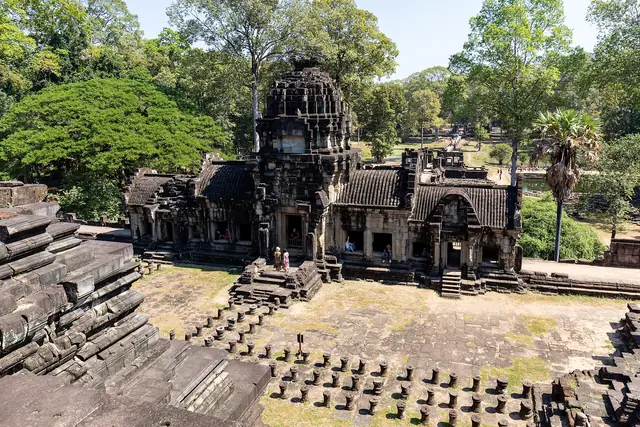
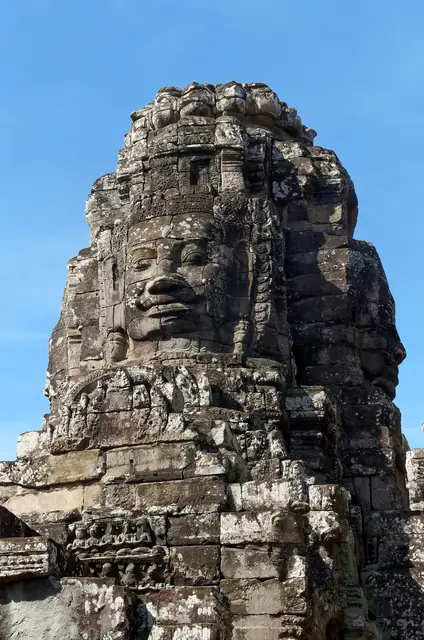
In 1177 a Cham fleet sacked Angkor. Jayavarman VII drove the Chams out, took the throne in 1181 and built Angkor Thom with the Bayon at its centre, its towers carrying great serene faces. He was a Mahayana Buddhist, and his temples Ta Prohm (1186) and Preah Khan (1191) were dedicated to his mother and father as Prajnaparamita and Lokeshvara. His Preah Khan inscription lists 102 hospitals across the kingdom. Jayavarman VIII brought back Shaiva worship in the later 13th century. The Chinese envoy Zhou Daguan lived at Angkor in 1296–97 and left the only eyewitness account. Siamese armies from Ayutthaya took the city in 1431, and the court moved south towards Phnom Penh.
The rulers
- 1Jayavarman IIProclaimed chakravartin on Mahendraparvata802–835
- 2Indravarman IPreah Ko (879) and Bakong (881)877–889
- 3Yashovarman IFounded Yashodharapura; East Baray889–c. 910
- 4Jayavarman IVRuled from Koh Ker928–941
- 5Rajendravarman IIReturned the court to Angkor944–968
- 6Jayavarman V968–1001
- 7Suryavarman IEnlarged Preah Vihear; West Baray begun1006–1050
- 8Udayadityavarman IIBuilt the Baphuon1050–1066
- 9Suryavarman IIBuilt Angkor Wat for Vishnu1113–c. 1150
- 10Jayavarman VIIAngkor Thom, the Bayon, 102 hospitals1181–c. 1218
- 11Jayavarman VIIIShaiva revival1243–1295
What they left
- Angkor Wat, the largest religious monument in the world
- Over 1,200 Sanskrit and Khmer inscriptions
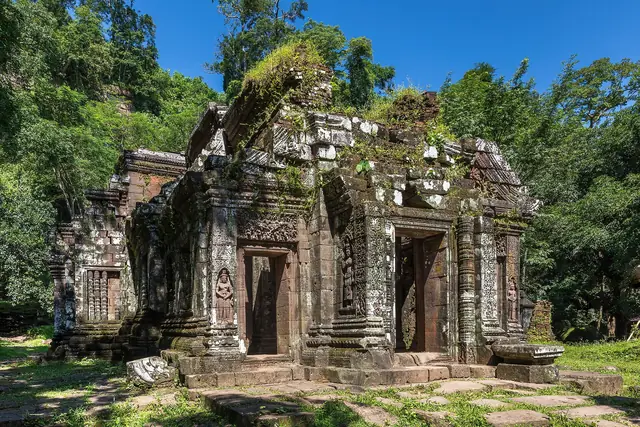
- Banteay Srei, Preah Vihear, the Bayon and Wat Phou
- The Reamker, the Khmer Ramayana, still danced today
- The barays and canals that fed the city of Angkor