01The mountain that is a linga
Above the Mekong at Champasak, the peak of Phu Kao ends in a natural rock column. The people who settled here in the fifth century saw it as a Swayambhu linga and called the mountain Lingaparvata. A Sanskrit stele of that time, found near the river, names a great king Devanika and speaks of a tirtha he consecrated, named after Kurukshetra. The old city on the plain below, Shreshthapura, was among the first seats of the Chenla kings.
02The Khmer temple
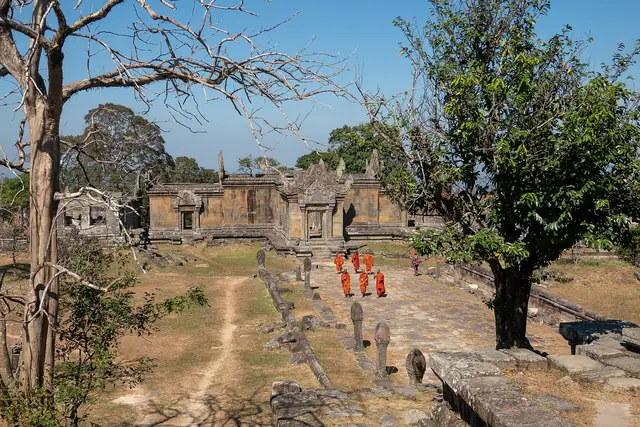
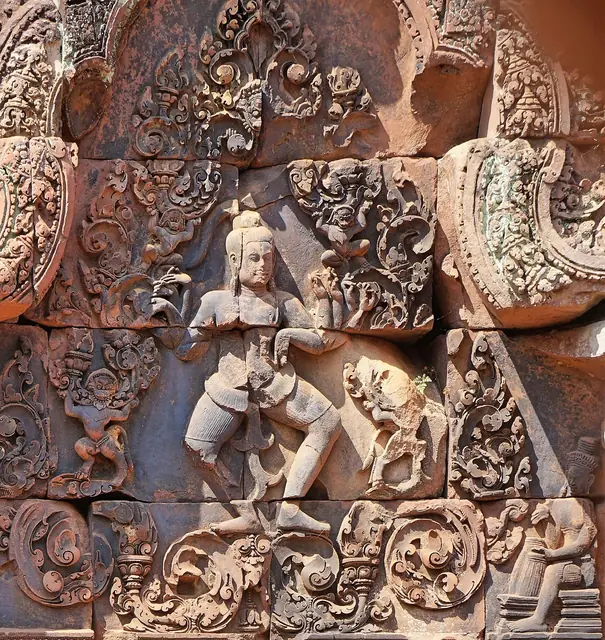
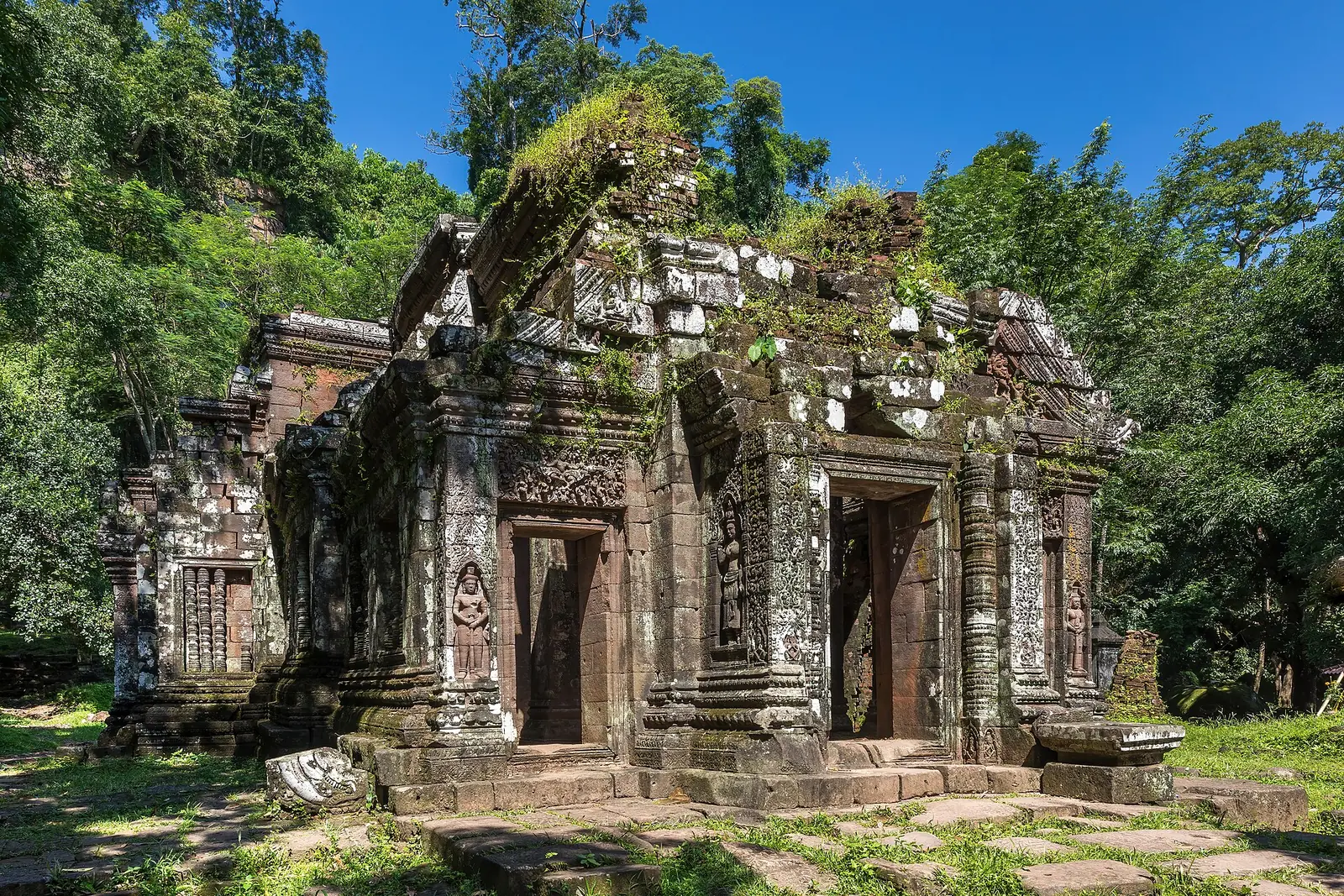
The temple you see was built mostly in the eleventh century, when Champasak was part of the Khmer empire, and was extended into the twelfth and thirteenth. It rises in terraces for more than a kilometre: two great barays, a causeway lined with linga-shaped markers, two palaces, then steep stairs to the sanctuary. Behind it a spring seeps from the cliff, and channels once carried that water over the linga. A royal road ran from here to Angkor. Lintels show Shiva and Uma on Nandi, Vishnu on Garuda and the churning of the ocean.
03Buddhist keepers, Hindu stones
After the Khmer empire declined, the Lao people, who are Theravada Buddhists, kept the temple as a holy place and set Buddha images in the sanctuary, where they are still worshipped. The great festival, Boun Wat Phou, is held at the full moon of the third Lao month, usually in February, with pilgrims climbing to the spring at dawn. In 2001 UNESCO listed Vat Phou and the ancient settlements of the Champasak landscape as a World Heritage Site.
The life of this place
- 5th centuryThe Devanika stele records the consecration of a tirtha near Lingaparvata.
- 11th centuryKhmer kings built the main sanctuary and the terraces now standing.
- 2001Listed by UNESCO as a World Heritage Site.
About 45 km south of Pakse. Climb early in the morning; the upper stairs are steep and uneven.