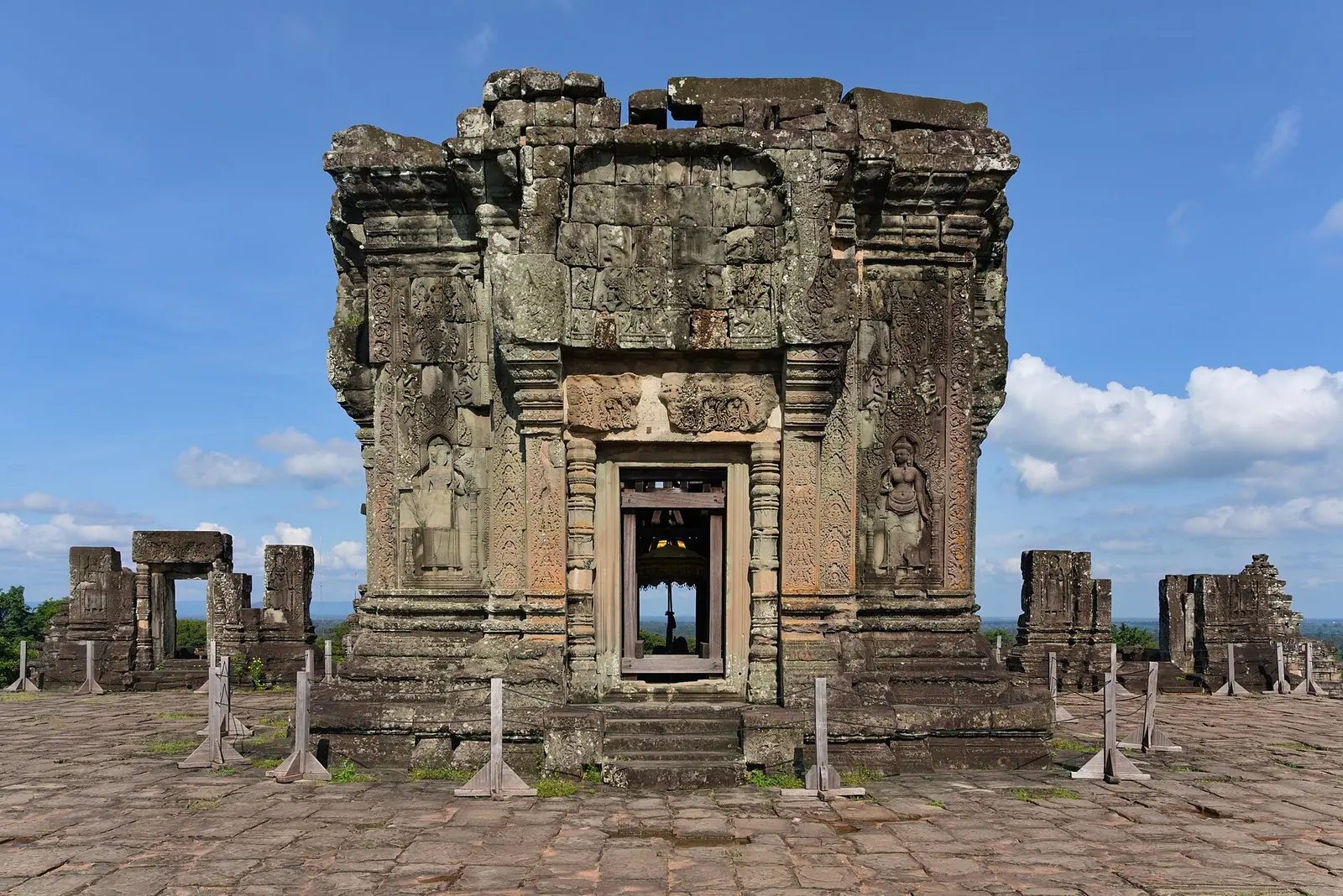
01Meru on a hill
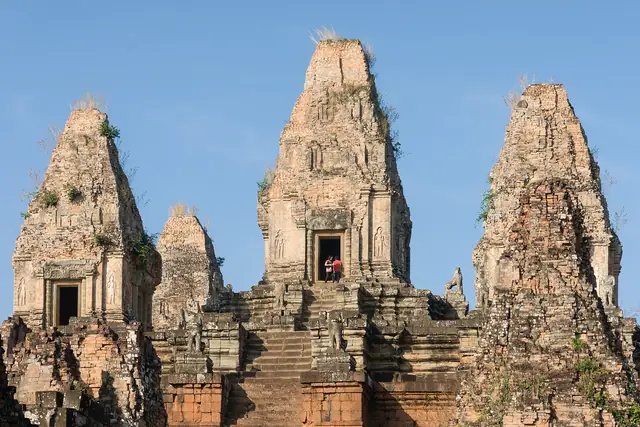
When Yashovarman moved his court from Hariharalaya at Roluos around 900, he built the new city round a low hill and made the hill itself into Mount Meru. The rock was cut into five terraces faced with sandstone, and on them stood 108 small towers, with five more on the summit, the central one holding the linga. Seen from the middle of any side, only 33 towers show, the number of the devas. An inscription of 1052 from Sdok Kak Thom, now in Thailand, records that the king’s guru Vamashiva set up a linga on Yashodharagiri, ‘a mountain equal in beauty to the king of mountains’.
02Crowds at sunset
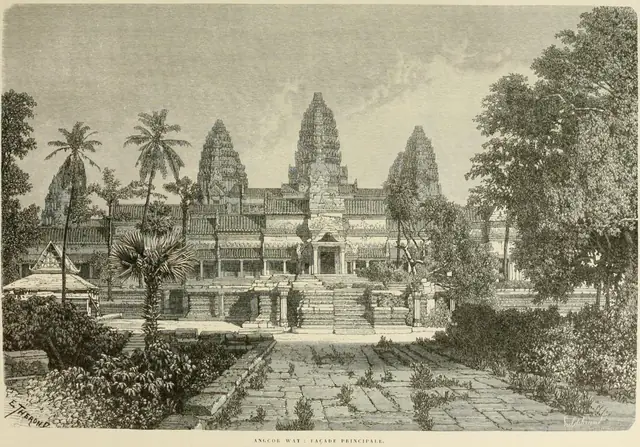
Later centuries turned the shrine to Buddhist use, and much of the upper terrace fell. Today Phnom Bakheng is the most crowded hill at Angkor, because from its top the towers of Angkor Wat show above the forest to the south-east at sunset. The footfall wore the stone so badly that the number of visitors on the summit is now capped, and the World Monuments Fund has worked with the APSARA authority since 2004 to stabilise the terraces and drain the hill.
The life of this place
- c. 900Yashovarman I consecrates the temple at the centre of Yashodharapura.
- 1052The Sdok Kak Thom inscription records Vamashiva’s linga on Yashodharagiri.
- 1992Angkor is inscribed as a World Heritage Site.
About 1.5 km north-west of Angkor Wat; the climb takes 15–20 minutes. Visitor numbers on top are limited at sunset, so arrive early.