01Ships, monsoons and Kaundinya
Dharma reached the Mekong by sea, carried on the monsoon by merchants, Brahmins and craftsmen from the ports of Kalinga and the Tamil coast. The Chinese envoy Kang Tai, who visited Funan in the 3rd century, recorded the katha the Khmer kings told of their own beginning: a Brahmin named Kaundinya came over the water, married the naga princess Soma and founded the royal line. Excavations at Oc Eo, Funan’s great port in the Mekong delta, turned up Roman coins, Indian beads and seals with Brahmi letters. No army conquered anyone here. The kings chose Sanskrit, the Shastras and the gods of Bharat for themselves.
02The oldest Sanskrit stone
Near Nha Trang in southern Vietnam stands the Vo Canh stele, a Sanskrit inscription in a southern Brahmi hand, usually placed in the 2nd or 3rd century CE. It records a gift by a king of the family of Shri Mara and is counted the oldest Sanskrit inscription in Southeast Asia. After it, the stones multiply. Funan and then Chenla left hundreds of inscriptions in Sanskrit verse, set in the same metres a poet at Ujjain would have used, naming Shiva as Bhadreshvara, honouring Harihara, Shiva and Vishnu in one form, and giving land, cattle and dancers to temples.
03Chenla and the Lingaparvata
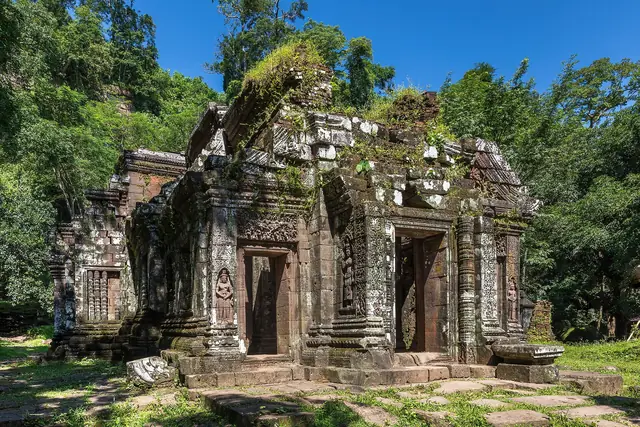
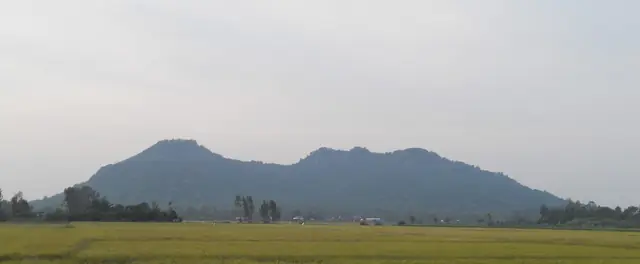
In the 6th century Chenla rose on the middle Mekong and swallowed Funan. Its kings looked up at a mountain in today’s southern Laos whose summit has a natural rock shaped like a linga, and called it Lingaparvata. Beneath it stands Wat Phou, where a spring flows from the cliff and was carried by channel over the linga in the sanctum. The site was worshipped from the 5th century and rebuilt in stone by the Khmer kings of the 11th and 12th. UNESCO listed Vat Phou and its cultural landscape in 2001. Laos is Buddhist today, yet the shrine is still the scene of a great full-moon festival every February.
04Angkor: the city of Yashodharapura
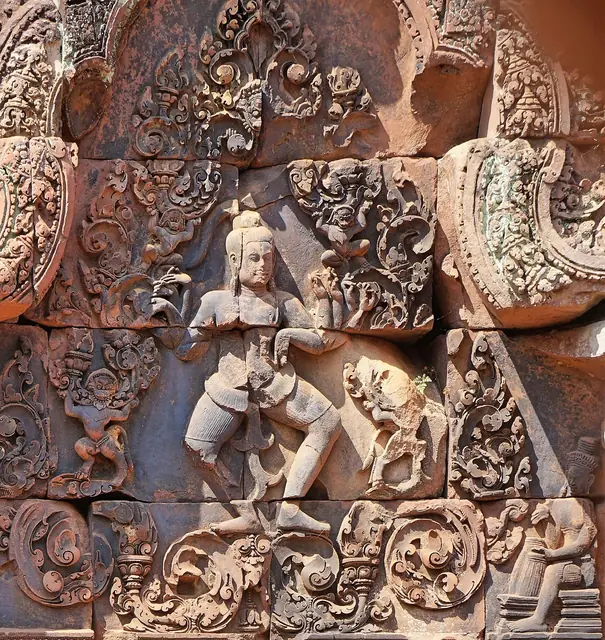
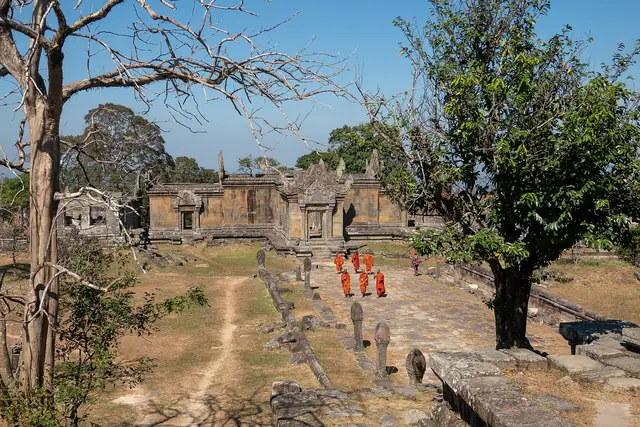
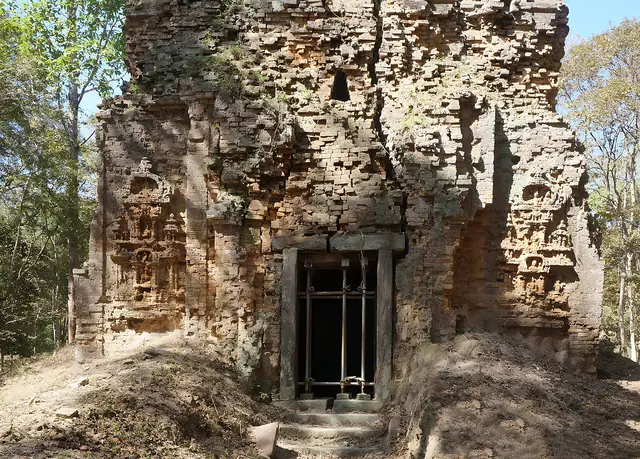
Jayavarman II’s rite of 802 on Phnom Kulen, then called Mahendraparvata, is known from the Sdok Kak Thom inscription of 1052, which names the Brahmin Hiranyadama and the priestly family that served the royal cult for 250 years. Yashovarman I built Yashodharapura around the temple-mountain of Phnom Bakheng, and the city we call Angkor grew from it. In 967 the Brahmin counsellor Yajnavaraha consecrated Banteay Srei to Shiva, small and carved in pink sandstone so finely that the Ravana shaking Kailasa on its pediment seems to move. On the Dangrek cliff, Preah Vihear, the shrine of Shikhareshvara, looks down on the plain.
05Angkor Wat, built for Vishnu
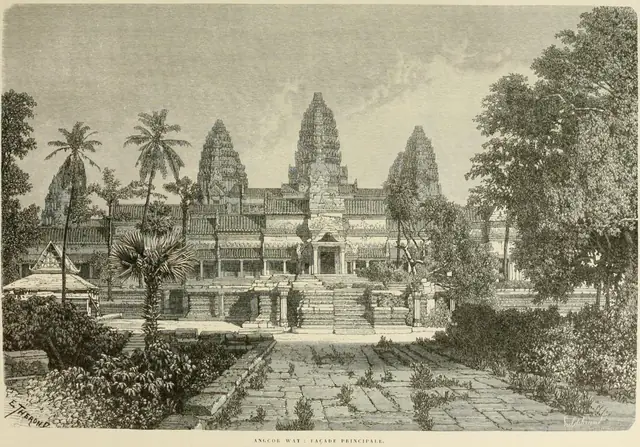
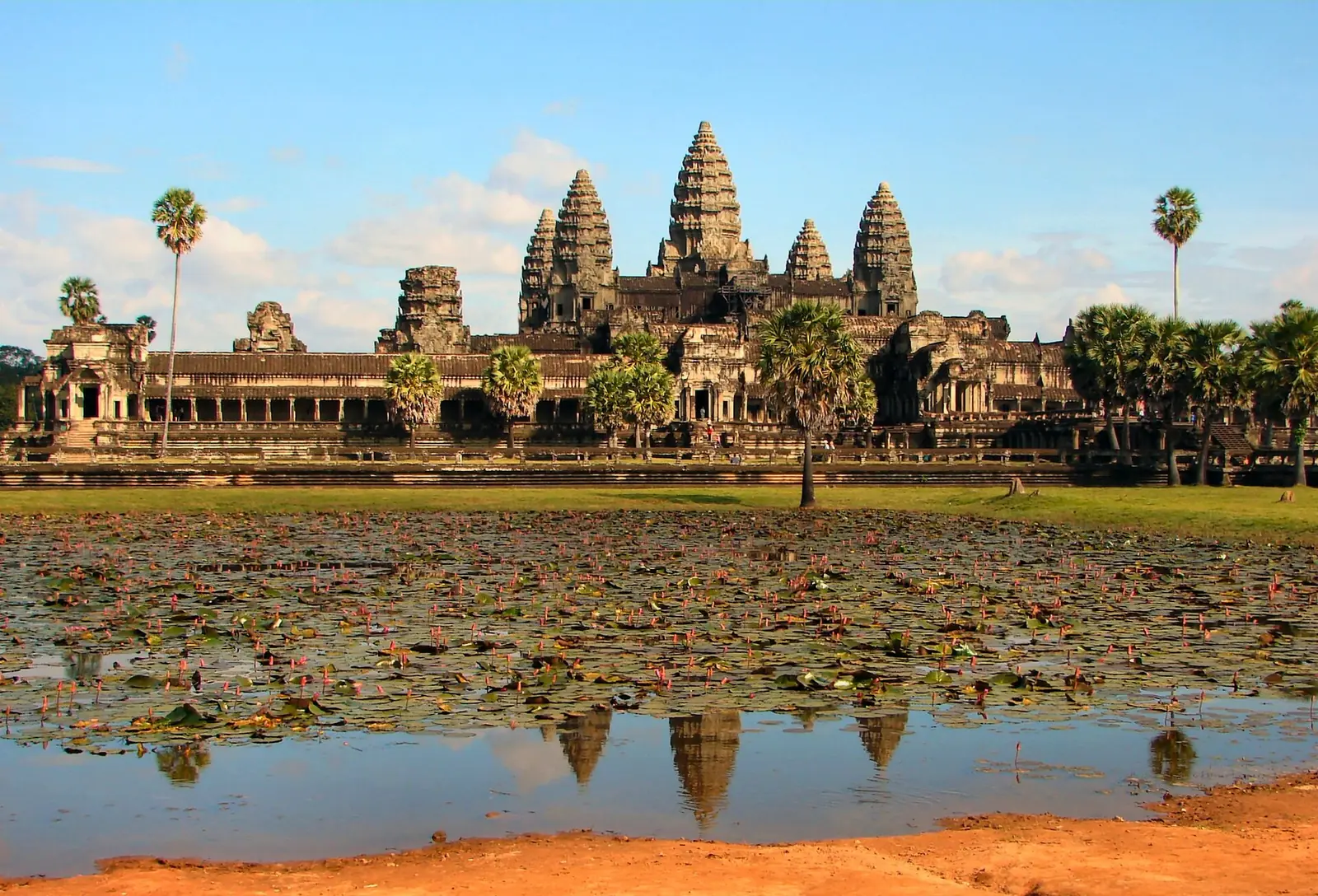
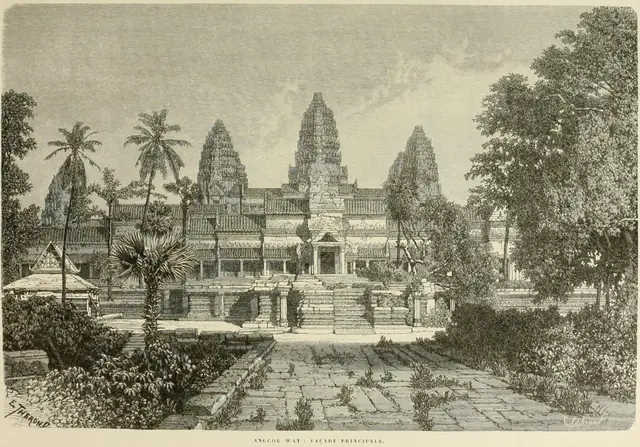
Suryavarman II, who ruled from 1113 to about 1150, built Angkor Wat as his temple to Vishnu. It faces west, unusual among Khmer temples, and its five towers stand for the peaks of Meru. The outer gallery carries about 800 metres of bas-relief: the battle of Kurukshetra, the battle of Lanka, Suryavarman’s own army on parade, and on the east side a panel of roughly 49 metres showing devas and asuras churning the Kshira Sagara with Vasuki as the rope and Vishnu as Kurma beneath. The temple was never wholly abandoned. Buddhist monks kept it from the 16th century, and Angkor Wat stands today on Cambodia’s national flag.
06Champa, the kingdom of the Cham
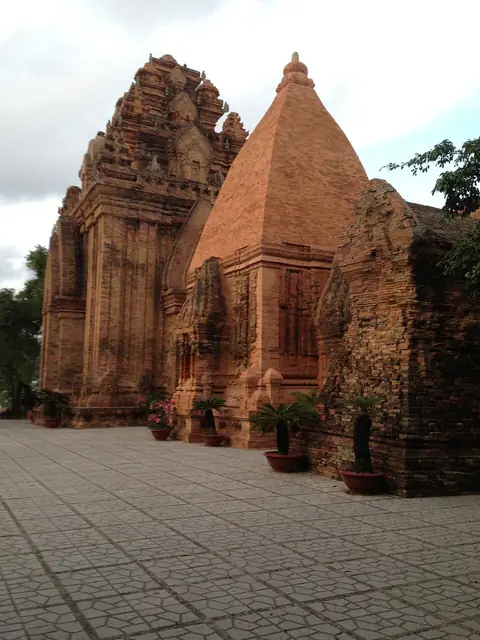
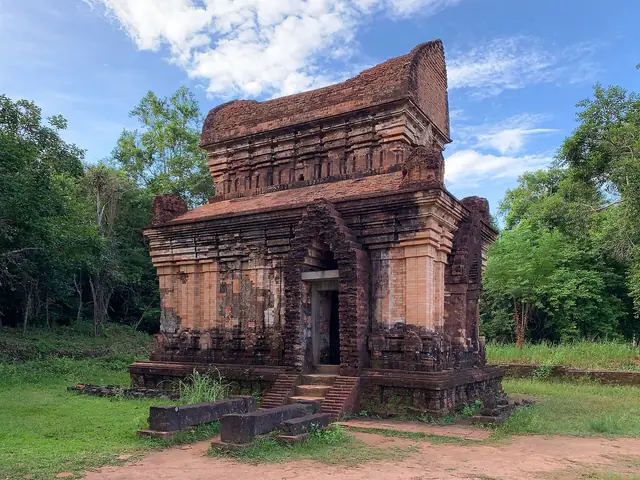
Along the coast of central Vietnam the Cham people kept a Hindu kingdom for more than a thousand years and named it Champa, after the city in Anga. In a valley near Da Nang, Bhadravarman founded the shrine of Bhadreshvara at My Son in the 4th or 5th century; his successors filled the valley with brick temples to Shiva, more than seventy of them. At Nha Trang the goddess Po Nagar, whom the inscriptions call Bhagavati, still has her brick towers above the river mouth. Dai Viet took the capital Vijaya in 1471. Champa shrank to Panduranga in the far south, which Emperor Minh Mang annexed in 1832.
07Siam, Ayutthaya and the court Brahmins
The Thai kingdoms took Buddhism as their faith and kept the Brahmins for the crown. Ayutthaya, founded in 1351, carries the name of Ayodhya, and the Thai Ramayana, the Ramakien, is the national epic; its scenes run along the cloister of the Temple of the Emerald Buddha in Bangkok. Royal Brahmins of the Devasathan in Bangkok still conduct the coronation rites and the Royal Ploughing Ceremony each May. Khmer Shiva temples such as Phanom Rung stand in northeast Thailand. In Myanmar, at Bagan, the Nathlaung Kyaung, dedicated to Vishnu, is the one Hindu temple left among two thousand Buddhist monuments.
08How the kings turned to the Buddha
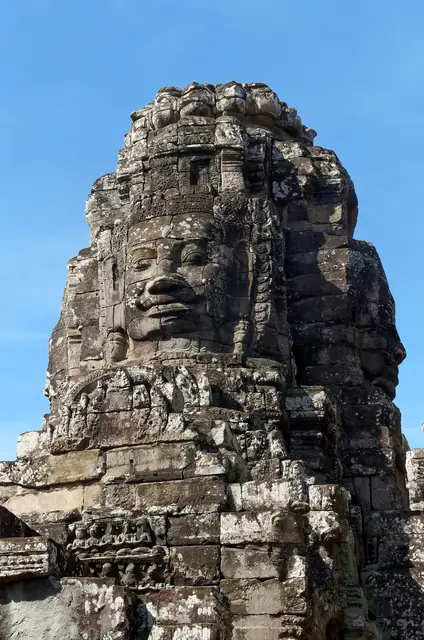
Jayavarman VII, who drove out the Cham invaders and ruled from 1181, was a devout Mahayana Buddhist; his Bayon at the heart of Angkor Thom carries more than two hundred serene faces. After him the Khmer court and people turned, over a century and more, to Theravada Buddhism from Lanka. No conquest forced it. Shiva lingas were recarved as Buddhas in some temples, and in others the Vishnu murtis were simply kept and garlanded. Ayutthaya sacked Angkor in 1431 and the capital moved south to the Phnom Penh region. The Brahmin rites of the palace outlived the temples.
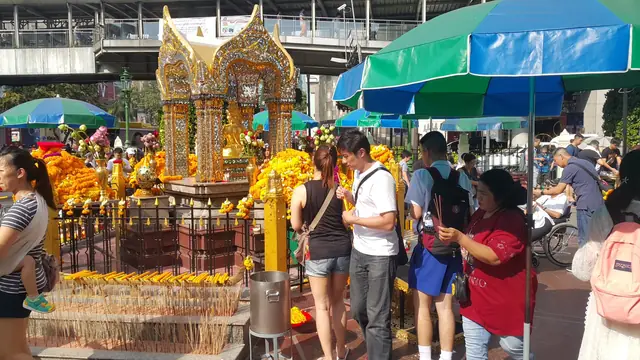
The Cham Balamon of Ninh Thuan and Binh Thuan in Vietnam are the last Hindus of the old Indic kingdoms of the mainland; their priests still keep the Kate festival at the Po Klong Garai towers each autumn. Across Cambodia, Thailand and Laos the Ramayana is danced, royal Brahmins serve the Thai crown, and in Bangkok crowds offer garlands to Brahma at the Erawan Shrine day and night.