Harsha’s advance was stopped, and the Narmada became the line between the northern and southern empires.
01Ravikirti’s verse
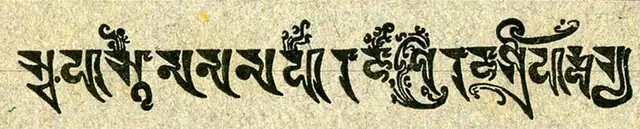
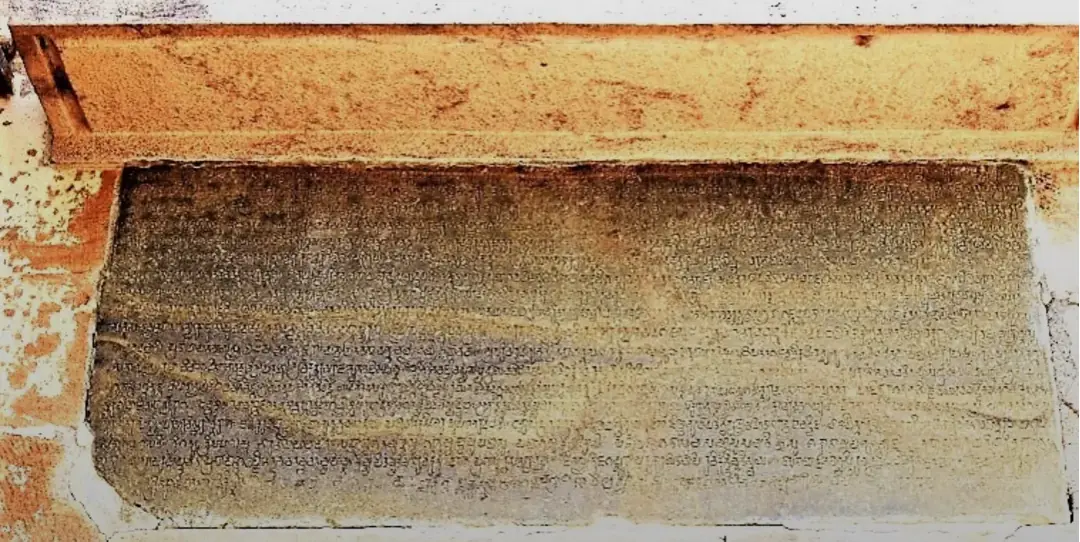
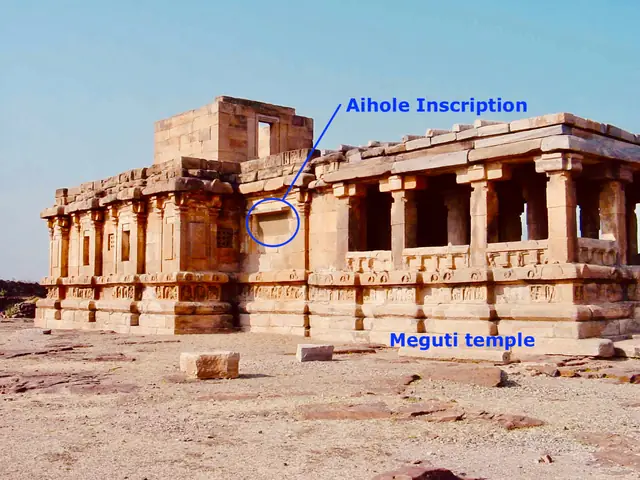
The Aihole inscription, composed by the poet Ravikirti in 634–635 CE and set into the wall of the Meguti temple, plays on Harsha’s name. Harsha, whose feet were lit by the jewels of a host of vassal kings, had his harsha, his joy, melt away in fear when he saw his rutting war elephants fall in battle. After this victory Pulakeshin took the title Parameshvara, lord paramount. The verse is the earliest dated mention of Harsha in a southern record.
02Xuanzang’s witness
Xuanzang, who stayed at Harsha’s court and also travelled through the Chalukya land, which he calls Mo-ho-la-ch’a, Maharashtra, wrote that Harsha had gathered troops from the five Indies and the best generals of every land and gone to punish this king, and had not been able to subdue him. The date is argued: the older view puts the battle before 619 from Pulakeshin’s grants; others place it nearer 630.
It set the Narmada as the frontier between north and south for the rest of the seventh century.