
Nagara
North India, from Himachal to the Vindhyas and Gujarat · From the Gupta age to today
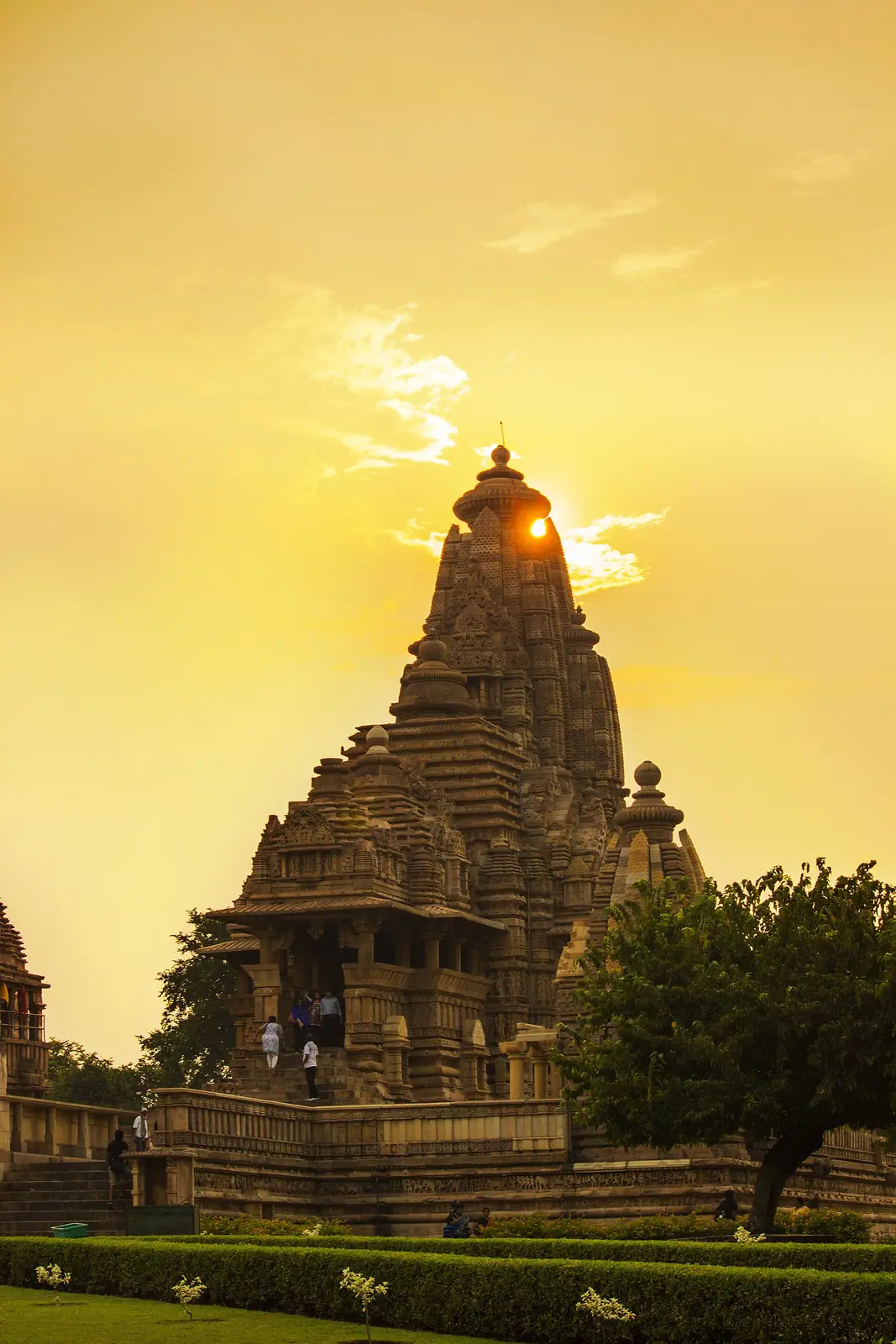
The northern temple is recognised by its tower: a shikhara with a curving outline, the rekha, rising over a square sanctum and capped with the amalaka and kalasha. The earliest stone temples of the Gupta age, at Deogarh and Sanchi, are flat-roofed; by the 7th and 8th centuries the curved tower is fully formed, as at Osian and Aihole’s northern-style shrines. Later builders clustered smaller towers, the urushringas, around the main one, so that the temple rises like a mountain range with Meru at its peak. The plan is stepped outward in projections, the rathas, which carry niches for the guardian deities of the directions.
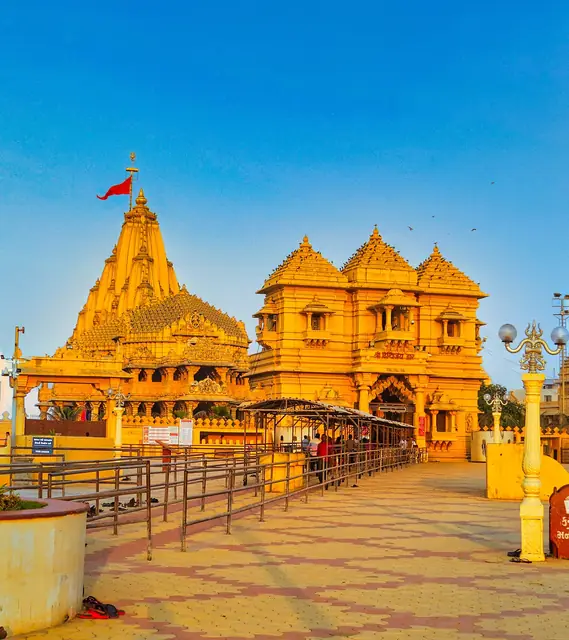
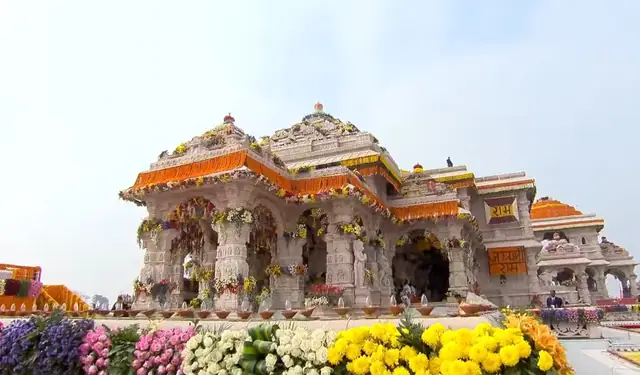
Two great regional schools grew out of it. In Bundelkhand the Chandelas raised the Khajuraho group between about 950 and 1050 on high platforms, with three halls and a sanctum strung along one axis and the skyline rising peak by peak to the main tower. In Gujarat and Rajasthan the Solanki or Maru-Gurjara school, from the 10th to the 13th century, carved every surface: the Modhera sun temple of 1026–27, the Rudra Mahalaya at Siddhpur, the Jain temples of Dilwara and Ranakpur, and the stepwell of Rani ki Vav share its vocabulary. The school is still alive; the Somnath temple consecrated in 1951 and the Ram Mandir at Ayodhya are built in the Nagara manner by Sompura families of Gujarat.
How to recognise it
- Curving shikhara crowned by amalaka and kalasha
- Square sanctum with projections (rathas) on each face
- Halls and sanctum on one axis, often on a raised platform
- Clustered subsidiary towers in later temples
- Ganga and Yamuna at the doorway
Great examples
 Ruined
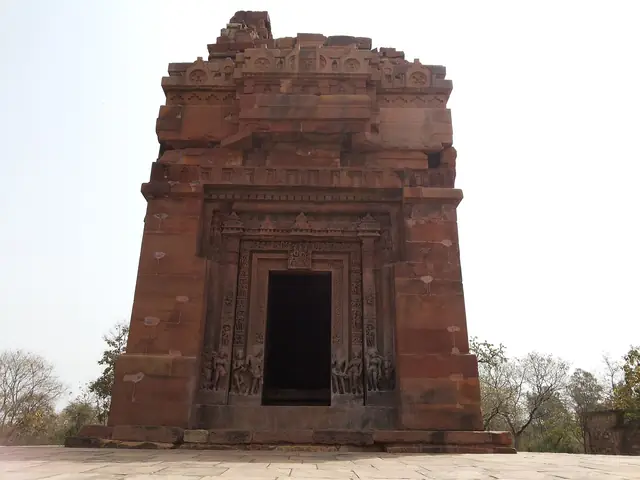
Dashavatara Temple, Deogarh
A Gupta stone temple of Vishnu on the Betwa, one of the earliest Hindu temples built to the panchayatana plan. Its three relief panels are among the masterpieces of Indian sculpture.
 Standing
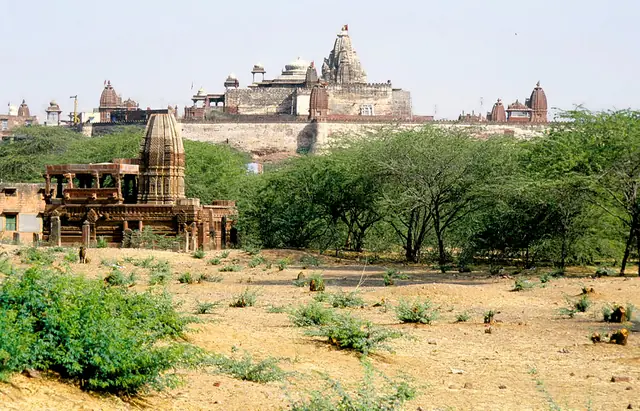
Osian Temples
A desert town on the old caravan road north of Jodhpur with some of the earliest surviving temples of western India: Harihara and Surya shrines of the Pratihara age, the Mahavira temple, and the living temple of Sachiya Mata on the hill.
 Standing
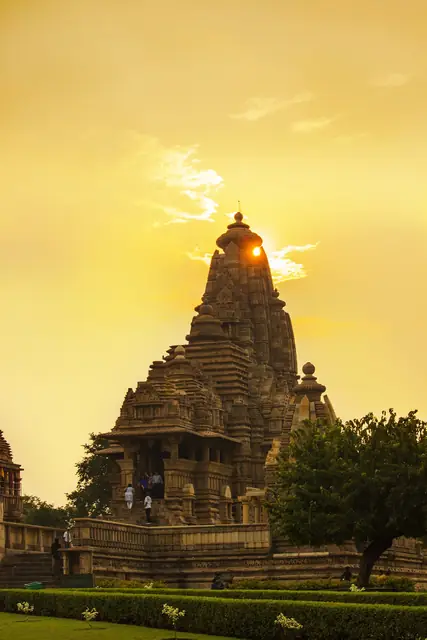
Khajuraho
The temple city of the Chandelas, where about 25 of perhaps 85 temples survive. The Lakshmana, Vishvanatha and Kandariya Mahadeva temples are the high point of the Nagara style, and the Matangeshvara is still in worship.
 Ruined
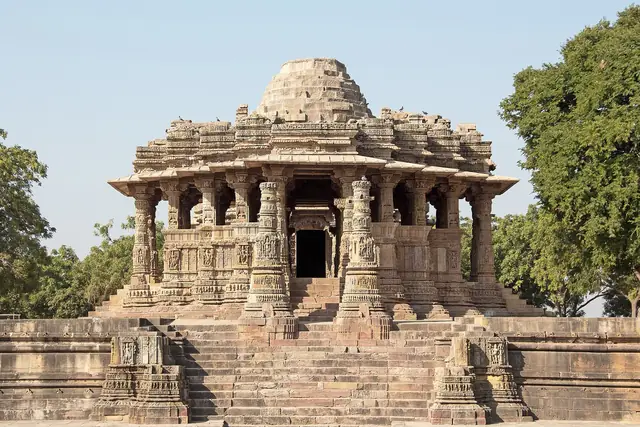
Sun Temple, Modhera
A Surya temple of the Chaulukya kings, raised on the Pushpavati river the year after Mahmud of Ghazni’s army passed through Gujarat. Worship ended long ago, but the stepped Surya Kund and the carved halls still stand.
 Destroyed
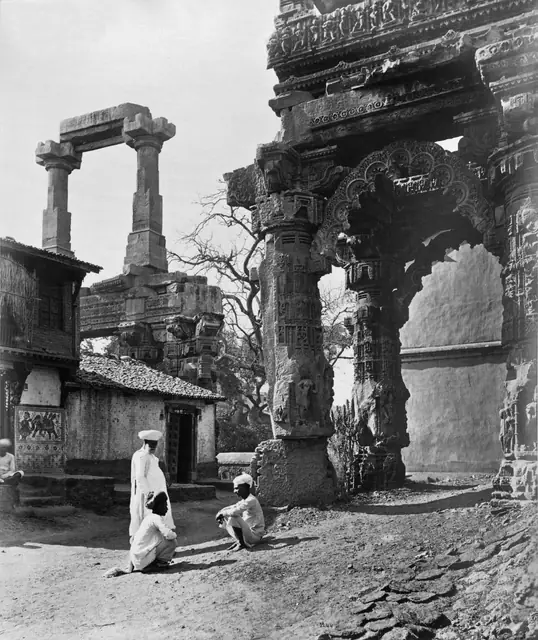
Rudra Mahalaya, Siddhpur
The greatest Shiva temple of the Chaulukyas, on the Sarasvati at Siddhpur. Broken in Alauddin Khalji’s invasion of 1299 and partly turned into a mosque by Ahmad Shah I in 1414–15, it survives as a few towering pillars and a torana.
 Rebuilt
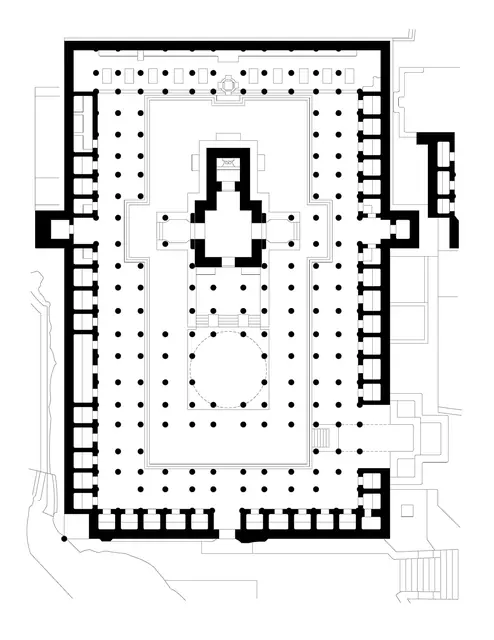
Dilwara Temples, Mount Abu
Five Jain temples on Mount Abu, plain outside and carved in white marble within so finely that the stone looks translucent. Damaged in the early 14th century, they were restored from 1321 by Jain families of Mandor.
 Standing
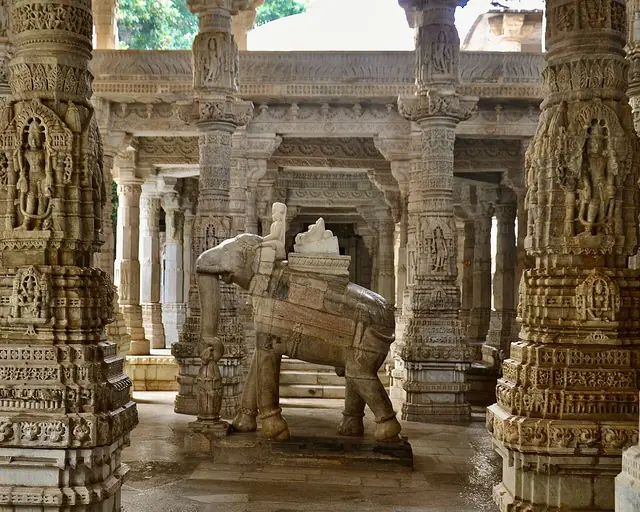
Chaumukha Temple, Ranakpur
A four-faced Jain temple in a wooded Aravalli valley, built by the merchant Dharna Shah on land given by Rana Kumbha of Mewar. It has 1,444 carved pillars, and tradition says no two are alike.
 Rebuilt
Somnath Jyotirlinga
The first Jyotirlinga, on the shore at Prabhas where the Sarasvati meets the sea. Raided, razed and rebuilt again and again for nine hundred years, it was raised once more by free India in 1951.
 Rebuilt
Shri Ram Janmabhoomi, Ayodhya
The birthplace of Shri Ram in Ayodhya, the capital of the Ikshvakus. A mosque stood on the spot from 1528; after five centuries of struggle and a unanimous Supreme Court judgment in 2019, a new temple was consecrated in 2024.
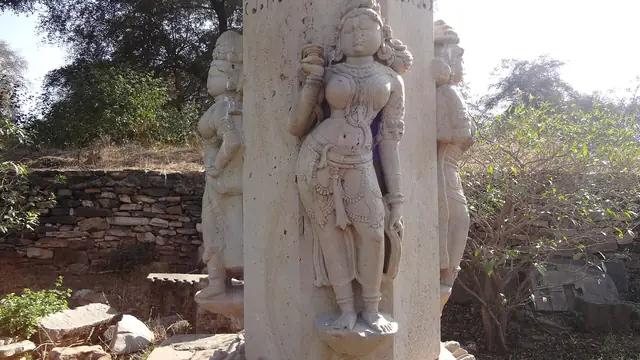 Ruined
Baroli Temples
A walled group of eight 10th-century temples by the Chambal, with a ninth outside, around a stepped kund. The Ghateshwara Mahadev temple is one of the finest of the Pratihara age.
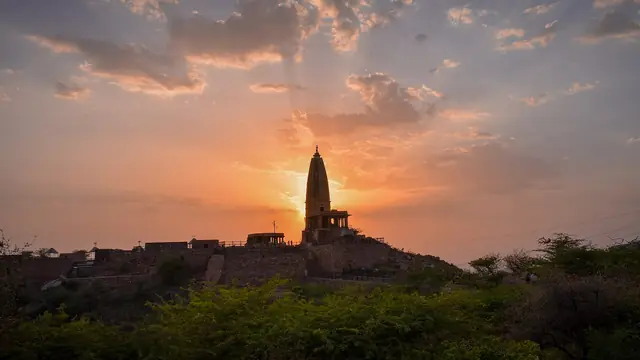 Ruined
Harshnath Temple
A Shiva temple on the summit of Harsha hill near Sikar, the family shrine of the Chahamanas of Shakambhari. Its inscription of 973 calls the mountain Shiva’s second Kailasa; the temple now stands in ruins beside a newer shrine of 1718.
 Standing
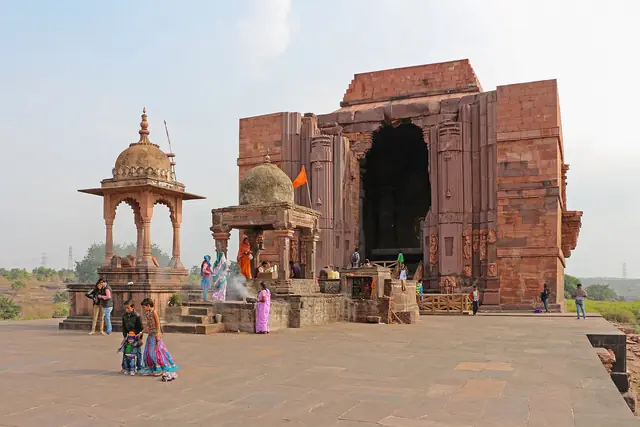
Bhojeshwar Temple, Bhojpur
An unfinished Shiva temple of Raja Bhoja on a ridge above the Betwa, holding one of the largest lingas in India. The builders’ plans, scratched on the surrounding rocks, survive with it.