What it says
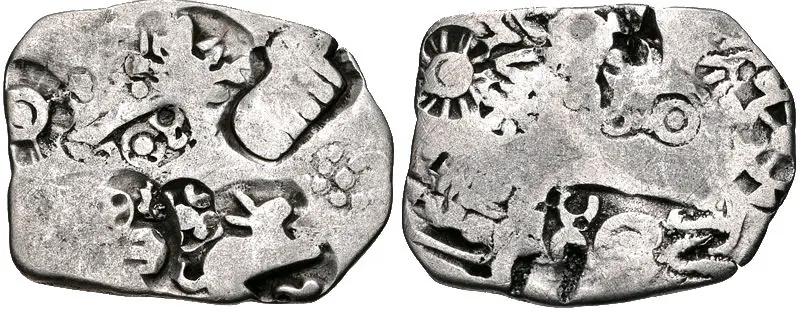
The standard piece weighed about 3.4 g, thirty-two ratis by the old gunja-seed weight. The Magadha and Maurya issues carry five punches on one face: the sun, a six-armed wheel, and others such as a hill of arches, a tree in a railing, an elephant or a bull. Earlier Janapada coins were bent bars in Gandhara and cup-shaped pieces in Kosala. The Arthashastra names the silver pana and its fractions.
What it proves
They show that the Janapadas and then the Mauryas ran a money economy with a common weight standard across north India.