What it says
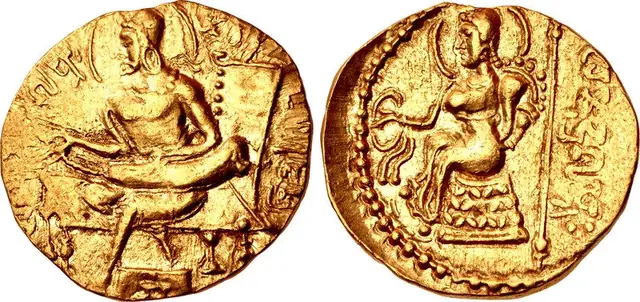
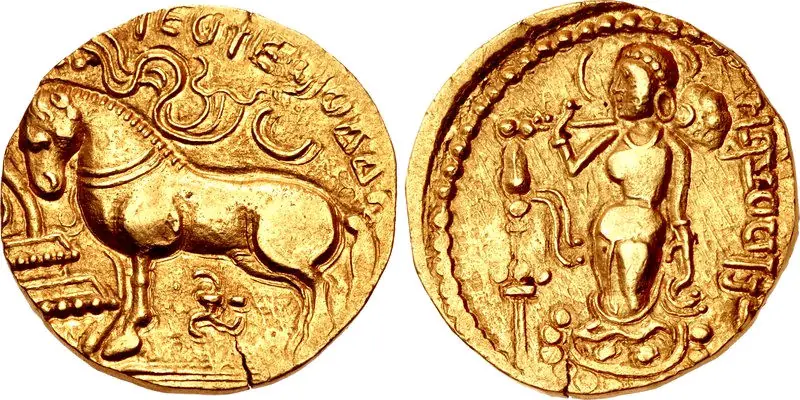
The front shows the horse before a yupa, the sacrificial post, with a pennant above. The inscription runs: “The king of kings, who has performed the horse sacrifice, having protected the earth, wins heaven.” The back shows the chief queen holding a chowrie, with the words “Ashvamedha-parakramah”, he whose valour is proved by the horse sacrifice. Kumaragupta I later struck an Ashvamedha coin of his own.
What it proves
It proves the Vedic Ashvamedha was performed in the 4th century CE; the records of Samudragupta’s descendants call him the restorer of the long-lapsed horse sacrifice.