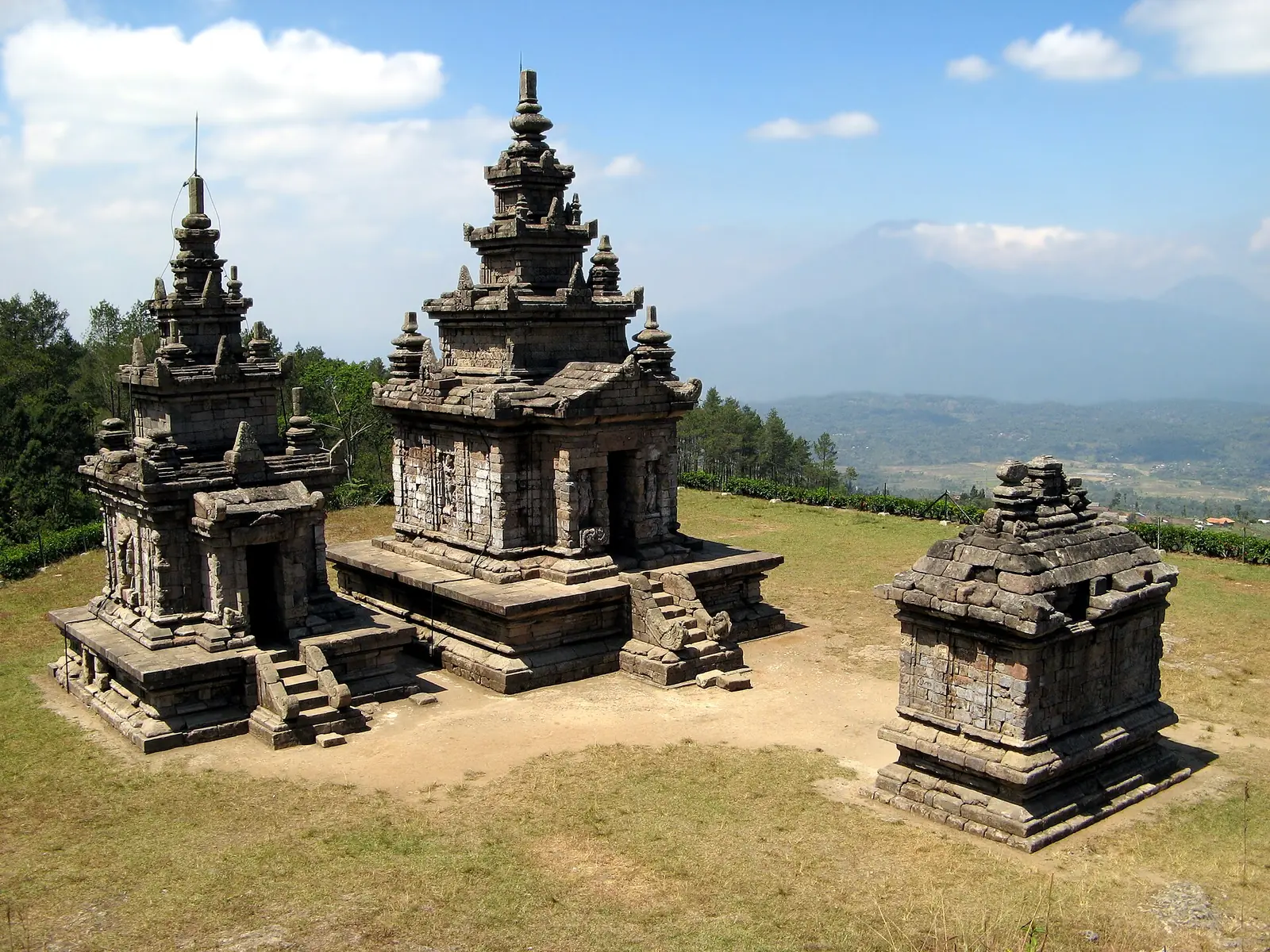
01Shrines on the ridge
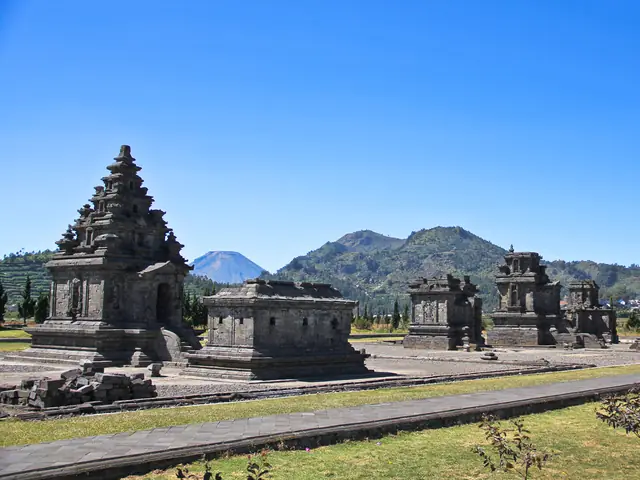
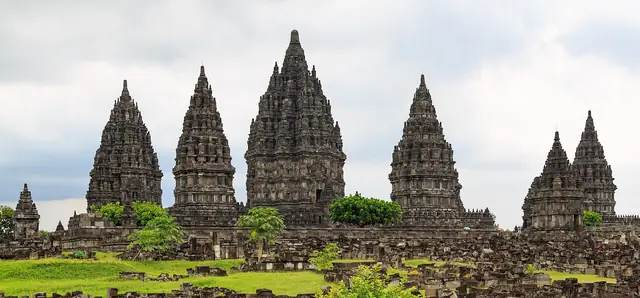
The temples stand in five groups on spurs of the mountain, linked by a path that climbs from one to the next, each group a main shrine facing its smaller attendant shrines. They are built of volcanic andesite, square cells on high bases with stepped roofs, plain but for the kala heads over the doors and the niches that once held Ganesh, Durga and Agastya. Like the Dieng temples they belong to the first phase of Hindu building in Central Java under the Mataram kings, before the great works of Prambanan; scholars place them between about 780 and 830. A sulphur spring in the ravine between the groups steams all year.
02Seven or nine
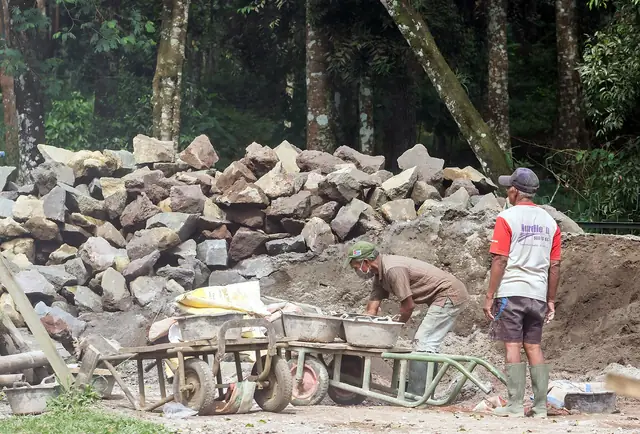
When the British lieutenant-governor Thomas Stamford Raffles had the site recorded in the early 19th century, seven groups were known, and he called it Gedong Pitoe, seven buildings. Two more were found later and the name became Gedong Songo. Some temples were rebuilt from fallen stones in the 20th century; others remain as bases only. The cool air, the views over Lake Rawa Pening and the walk between the groups draw many visitors, and Hindus of the region still come for ceremonies.
The life of this place
- c. 780–830The temples are built under the Mataram kings.
- Early 19th centuryRaffles has the site recorded as Gedong Pitoe.
Near Bandungan, about 45 km south-west of Semarang. The full circuit of the groups is about 3 km of uphill walking; horses can be hired.