
01The mountain of the linga
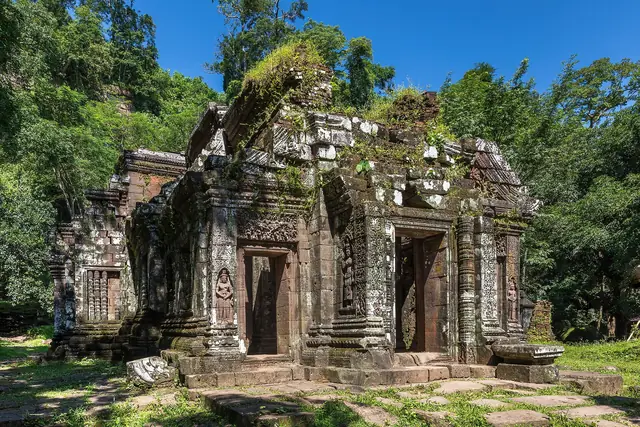
Above the Mekong in southern Laos stands a peak with a natural stone point on its summit. The Khmers called it Lingaparvata, the mountain that is itself a linga. The Chinese Sui history describes a temple near the Chenla capital where the king offered worship at night, and the Wat Phou temple at the foot of this mountain was rebuilt again and again over the next six centuries. Chenla’s early kings came from this country before they moved south.
02Ishanavarman’s city
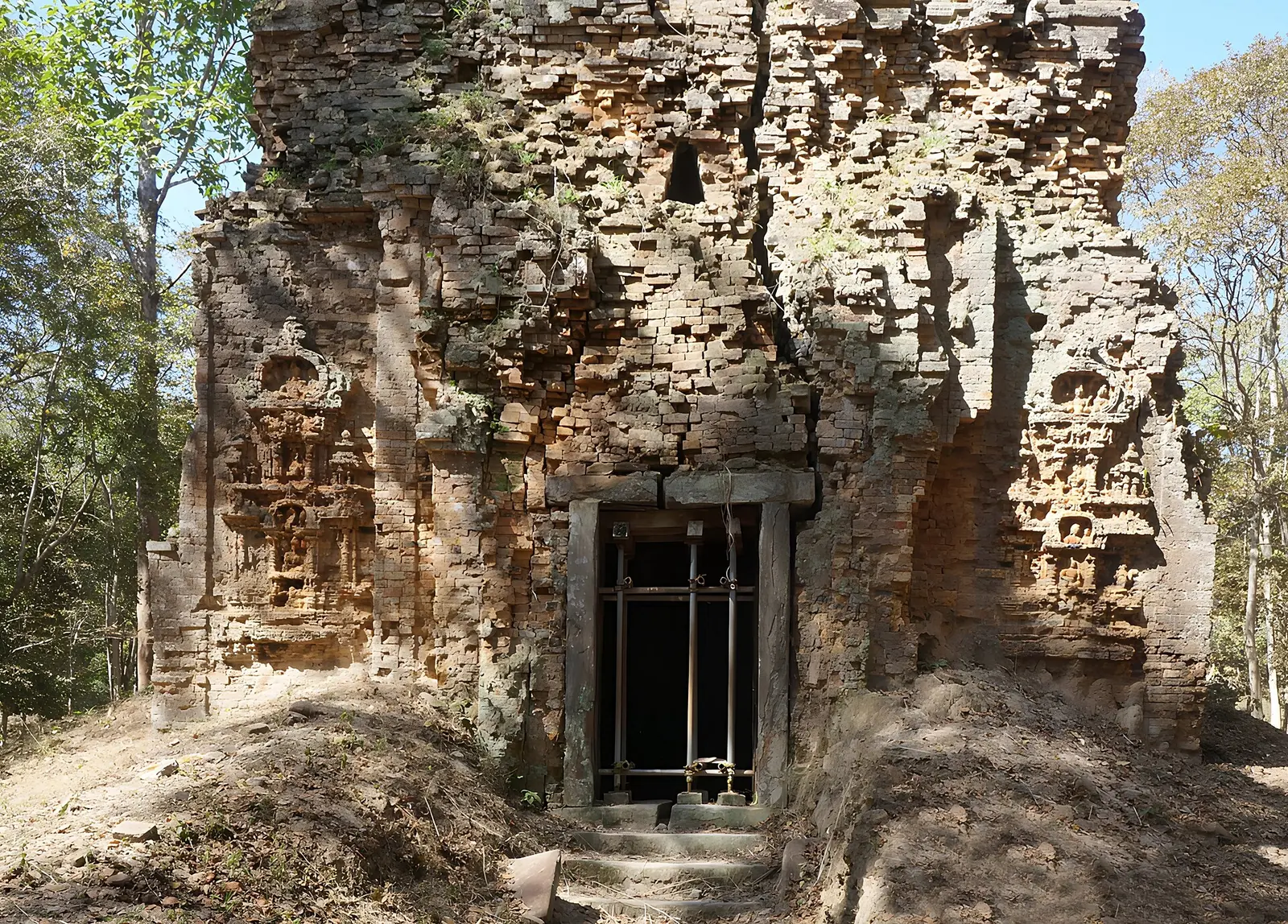
Bhavavarman I and his brother Chitrasena, who reigned as Mahendravarman, broke free of Funan in the later 6th century. Mahendravarman’s son Ishanavarman I built Ishanapura, today’s Sambor Prei Kuk, with more than a hundred brick shrines in walled groups. Some carry flying palaces carved into the brick, and the octagonal towers are found nowhere else. UNESCO listed the site in 2017. Ishanavarman also sent envoys to the Tang court in 616–617.
03Land and Water Chenla
After Jayavarman I died around 681 the kingdom broke up. Chinese records of the 8th century speak of a Land Chenla in the north and a Water Chenla along the delta and the coast, each with several rival lords. Out of this broken country a prince named Jayavarman returned from Java and, in 802, declared himself universal king on Mount Mahendraparvata. Chenla ends there, and the Khmer empire of Angkor begins.
The rulers
- 1Bhavavarman Ic. 550–600
- 2Mahendravarman (Chitrasena)Left Shaiva inscriptions along the Mekongc. 600–616
- 3Ishanavarman IBuilt Ishanapura (Sambor Prei Kuk)c. 616–637
- 4Bhavavarman IIc. 639–657
- 5Jayavarman ILast king of a united Chenlac. 657–681
What they left
- Sambor Prei Kuk, a UNESCO World Heritage site since 2017
- The early Wat Phou sanctuary below Lingaparvata
- The oldest dated Khmer-language inscription (Angkor Borei, 611 CE)
- Harihara images, Shiva and Vishnu in one body