
It began as a mutiny at Meerut on 10 May 1857, but within weeks rulers, landholders, peasants and townspeople across north and central India had risen, proclaimed Bahadur Shah Zafar emperor and fought under leaders such as Rani Lakshmibai, Nana Saheb, Tatya Tope, Kunwar Singh and Begum Hazrat Mahal.
The proof
- Mangal Pandey attacked his officers at Barrackpore on 29 March 1857 and was hanged on 8 April.
- The Azamgarh Proclamation of August 1857, issued in the name of the Mughal house, called zamindars, merchants, officials, artisans and pandits as well as soldiers to rise.
- The Government of India Act 1858 ended East India Company rule and placed India under the Crown.
01The claim
The word mutiny frames 1857 as a breach of military discipline: some sepoys, angry about cartridges greased with cow and pig fat, shot their officers and were put down. On this view there was no people behind it, no political aim and no idea of India, only a frightened army and some disappointed princes. The name stuck in British books for a hundred years, and for a long time in Indian ones too.
02Where it came from
For the British government after 1858 the word did useful work. A mutiny is a crime against lawful authority, so the hangings, the burning of villages and the blowing of men from cannon could be called punishment rather than war. Kaye’s many-volume history called it the Sepoy War, and later British writers settled on the Indian Mutiny. In 1907, fifty years on, the young Savarkar in London went through the records at the India Office and wrote the opposite case. His book was banned in India before publication, printed in Holland in 1909 and passed from hand to hand among revolutionaries.
03Far more than the barracks
After Meerut the rising spread to Delhi, Kanpur, Lucknow, Jhansi, Bareilly, Arrah and Gwalior. In Awadh nearly the whole countryside rose with the taluqdars. Kunwar Singh of Jagdishpur, close to eighty, led his men across Bihar and the eastern Gangetic plain. Rani Lakshmibai died fighting near Gwalior in June 1858; Tatya Tope kept a guerrilla war going into 1859. Hindus and Muslims fought side by side under Bahadur Shah Zafar’s name. The Company did not survive it: in 1858 Parliament took India from the Company and gave it to the Crown.
04The honest debate
Historians in free India did not all agree with Savarkar either. R. C. Majumdar’s The Sepoy Mutiny and the Revolt of 1857 (1957) argued that it was neither a planned national war nor merely a mutiny, and pointed out that the south, Punjab and many princes stayed out or helped the British. S. N. Sen’s official centenary history, Eighteen Fifty-Seven (1957), called it far more than a mutiny though less than a national war. All of them reject the bare word mutiny. You can hold that 1857 was a great war of resistance, led by patriots, and still admit it was not yet one nation rising as one.
05What to read
Read Savarkar’s book for the spirit of 1857 as the revolutionaries saw it, and Majumdar and S. N. Sen for two careful Indian verdicts from 1957. Rudrangshu Mukherjee’s Awadh in Revolt (1984) shows how a whole countryside rose. For the British side, Kaye’s volumes are long but full of documents. William Dalrymple’s The Last Mughal (2006) uses the Mughal court’s own papers from Delhi.
Read on
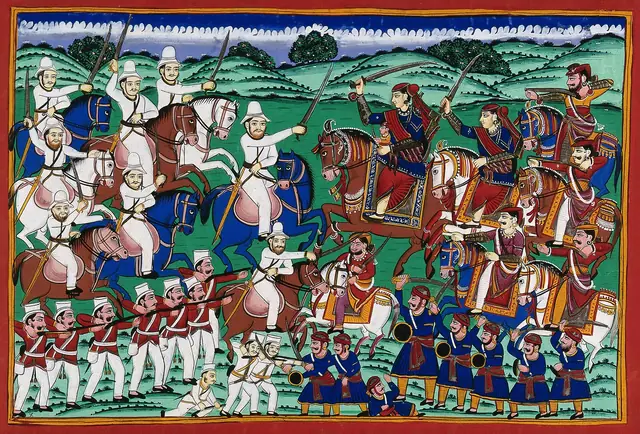
Company rule and the war of 1857
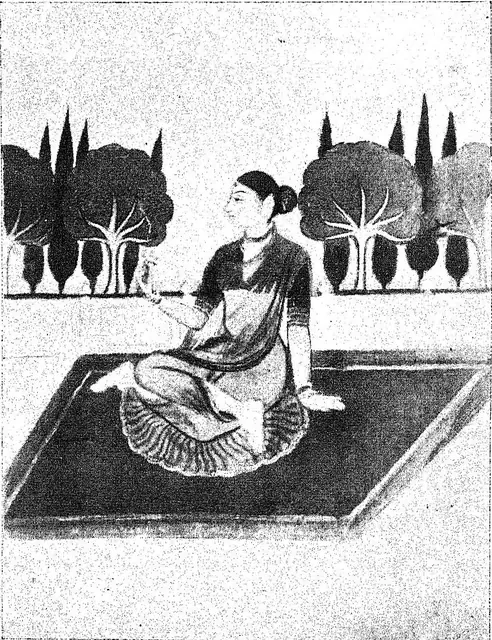
Rani Lakshmibai of Jhansi
Manikarnika Tambe, married into the ruling house of Jhansi, refused the Company’s annexation of her state and led its defence in 1858. She fell in battle near Gwalior on 18 June 1858.
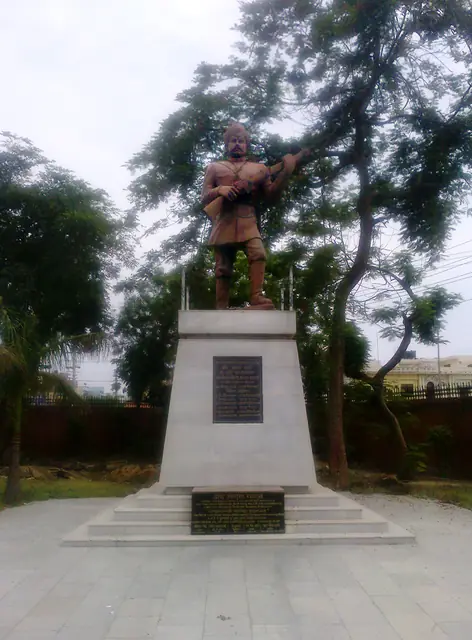
Mangal Pandey
A sepoy of the 34th Bengal Native Infantry who attacked his British officers on the parade ground at Barrackpore on 29 March 1857. He was hanged ten days later, six weeks before the rising at Meerut.
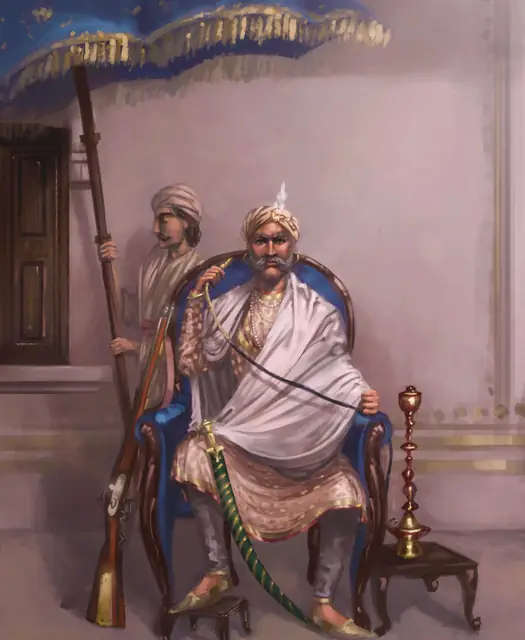
Veer Kunwar Singh
The eighty-year-old Ujjainiya Rajput chief of Jagdishpur in Shahabad led the rising of 1857 in Bihar and fought from Arrah to Azamgarh. He won his last battle at Jagdishpur on 23 April 1858 and died three days later.
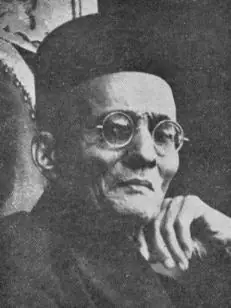
Vinayak Damodar Savarkar
Founder of Abhinav Bharat, historian of 1857, prisoner of the Cellular Jail for ten years, and author of Hindutva (1923). He presided over the Hindu Mahasabha from 1937 to 1943.
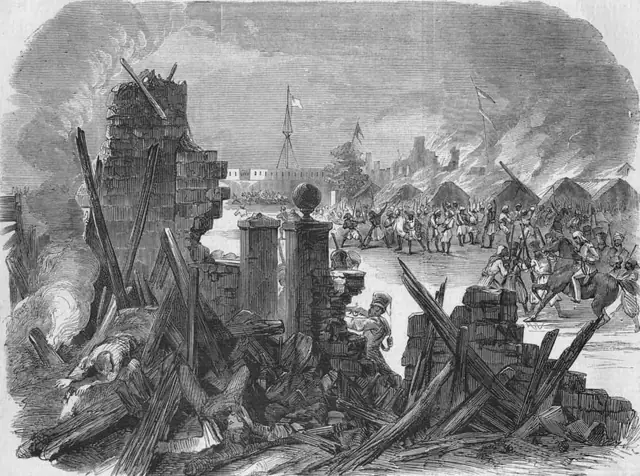
Meerut Rising
On a Sunday evening in May 1857 the sepoys of Meerut rose, and by the next morning they were at the gates of Delhi: the war of 1857 had begun.