
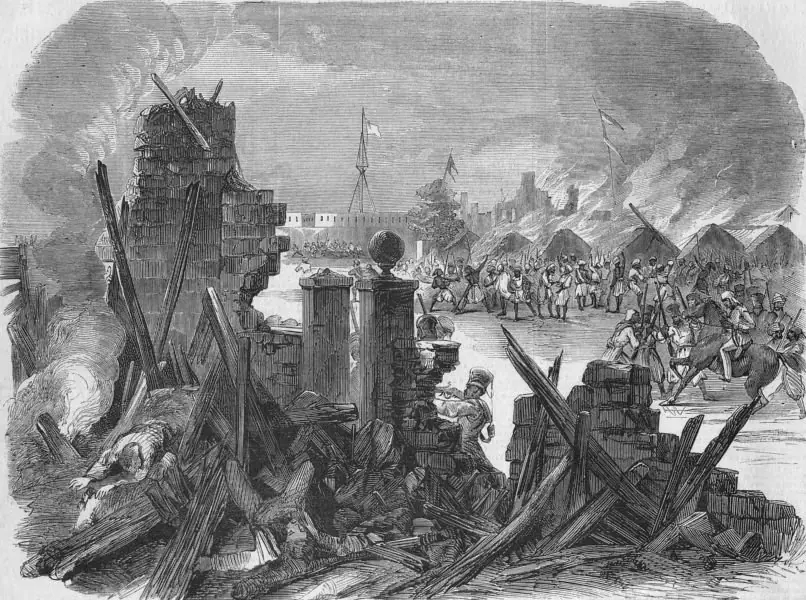
The sepoys freed their imprisoned comrades, killed many British officers and civilians, and marched through the night to Delhi.
01The cartridges
The new Enfield rifle’s cartridges, it was widely said, were greased with cow and pig fat and had to be bitten open. On 24 April 1857, 85 troopers of the 3rd Light Cavalry refused to take them. They were court-martialled and sentenced to long terms of hard labour, and on 9 May they were stripped of their uniforms and shackled before the whole garrison. Across north India the word had already spread from Barrackpore, where Mangal Pandey had fired on his officers on 29 March.
02Sunday, 10 May
In the evening of 10 May the sowars broke open the jail and freed their comrades, and the 11th and 20th Native Infantry joined them. Colonel Finnis of the 11th was shot, the first officer killed. Bungalows burned; officers, their families and others were killed in the lines and the bazaar. The British regiments in the cantonment, slow to act, did not pursue. Through the night the sepoys took the road south-west, and on the morning of 11 May they crossed the Yamuna into Delhi. The Augharnath temple, the old Kali Paltan mandir where sepoys worshipped, now holds a memorial to that day.
Meerut lit the war of 1857, which V. D. Savarkar in 1909 called the First War of Indian Independence.