01Anangapala’s Dhillika
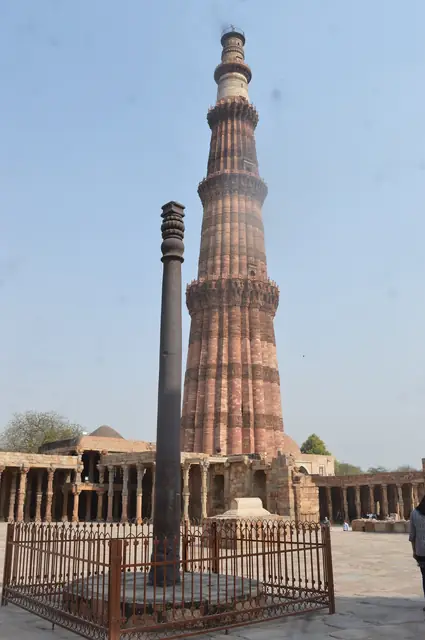
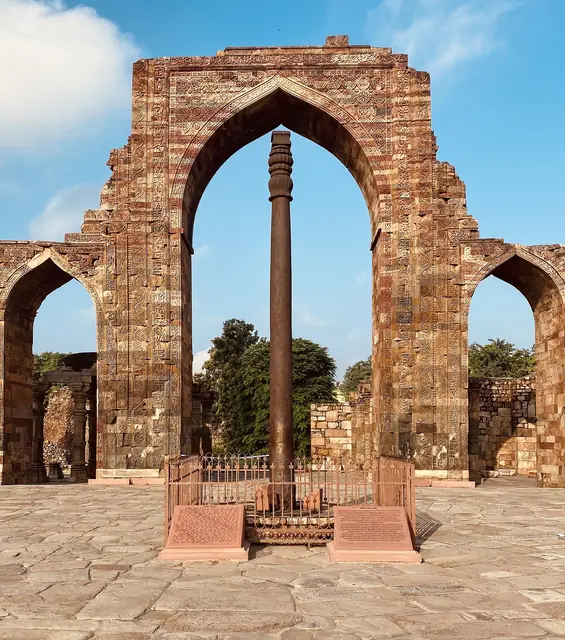
Bardic tradition places the founding of Dhillika by a Tomara Anangapala in the eighth century. Firmer ground comes with Anangapala II in the eleventh century, who built the walls of Lal Kot whose ruins still stand in Mehrauli, and the Anang Tal tank beside them. A short line scratched on the Iron Pillar in Mehrauli, dated Samvat 1109 (1052 CE), records Anangapala. The pillar itself is far older, of the Gupta age.
02Under the Chahamanas
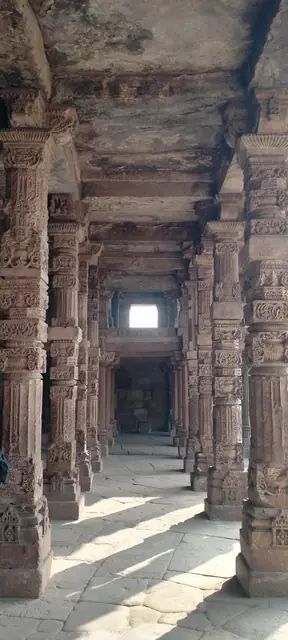
Around the 1150s Vigraharaja IV of Ajmer took Delhi, and the Tomaras ruled it after that as Chahamana vassals. Persian chronicles name a Govind Rai of Delhi who fought beside Prithviraj at both battles of Tarain; at the first, by their account, he wounded Muhammad of Ghor with a lance, and at the second he was killed. Delhi then passed to Qutb ud-Din Aibak, who raised the Quwwat-ul-Islam mosque inside Lal Kot from the materials of its temples, as its own inscription records.
03Man Singh of Gwalior
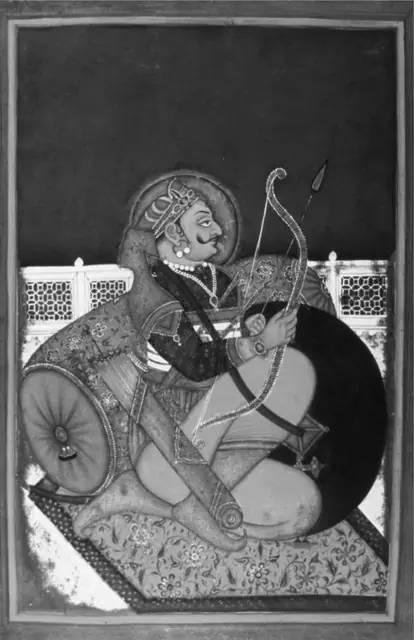
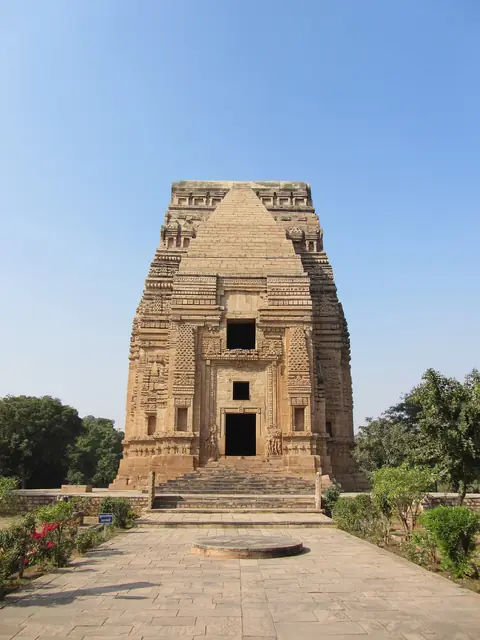
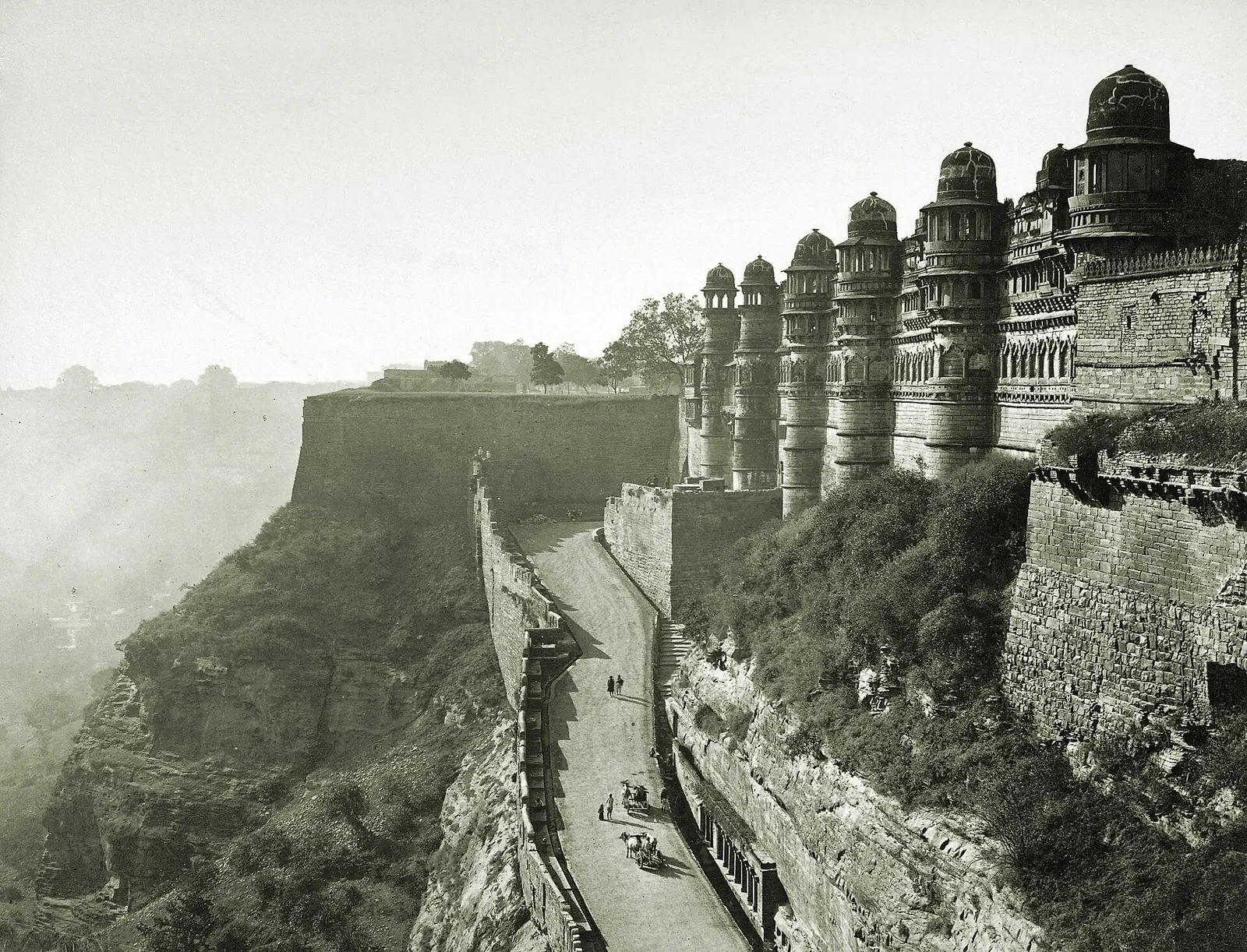
In 1394, in the confusion after Timur’s approach, Virasimhadeva Tomar took Gwalior fort. His heirs held it for 130 years. Raja Man Singh, who ruled from 1486, built the Man Mandir palace, its walls set with blue, green and yellow tiles of ducks, elephants and banana trees, which Babur admired in his memoirs. He loved music; the dhrupad style grew at his court, and the treatise Mankutuhal is credited to him. Ibrahim Lodi took Gwalior in 1523, and Man Singh’s son Vikramaditya died at Panipat in 1526.
The rulers
- 1Anangapala IFounder of Dhillika in bardic tradition8th century (tradition)
- 2Anangapala IIBuilt Lal Kot; Iron Pillar recordc. 1051–1081
- 3Govindaraja (Govind Rai)Fell at Second Taraind. 1192
- 4Virasimhadeva (Gwalior)Took Gwalior fortc. 1394–1400
- 5Dungarendra Singh (Gwalior)Jain rock images of Gwalior fort carvedc. 1425–1459
- 6Kirti Singh (Gwalior)c. 1459–1480
- 7Kalyanamalla (Gwalior)c. 1480–1486
- 8Man Singh (Gwalior)Man Mandir; patron of dhrupad1486–1516
- 9Vikramaditya (Gwalior)Lost Gwalior; died at Panipat 15261516–1523
What they left
- The walls of Lal Kot in Mehrauli, Delhi’s first fortified city
- Anang Tal tank
- Man Mandir palace and Gujari Mahal, Gwalior
- The dhrupad tradition of Gwalior