01Shiva in anger, Vishnu in peace
Kopeshwar means the lord in anger. The temple’s katha begins at Daksha’s yajna: Sati, insulted by her father, gave up her body in the sacrificial fire, and Shiva’s grief turned to rage. Bhagwan Vishnu brought him here to calm him. So in the sanctum two lingas sit side by side, Kopeshwar for Shiva and Dhopeshwar for Vishnu, and devotees take darshan of Vishnu first. There is no Nandi before the door, because Nandi, the temple says, had carried Sati to her father’s house and stayed with her.
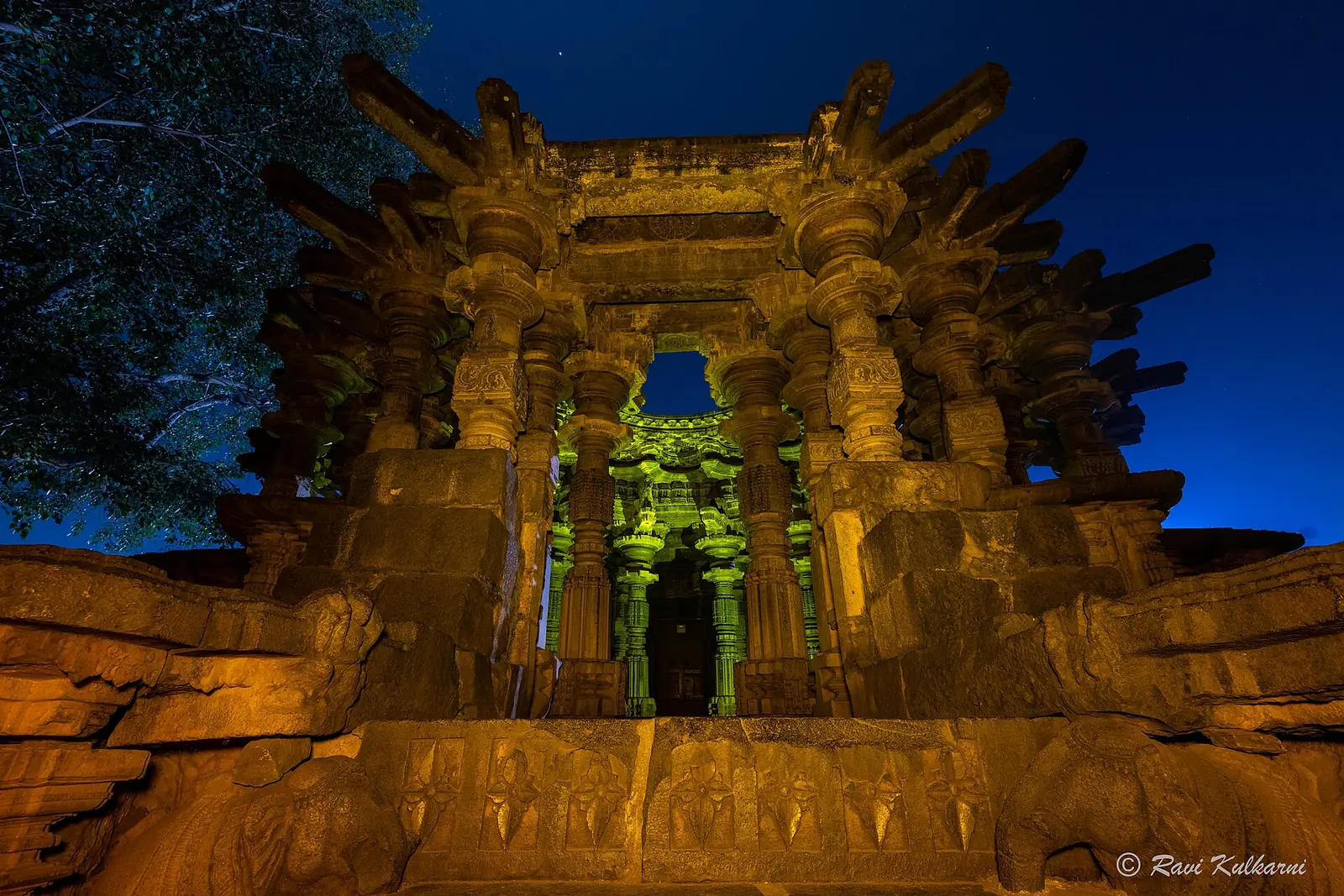
02The Swarga Mandapa
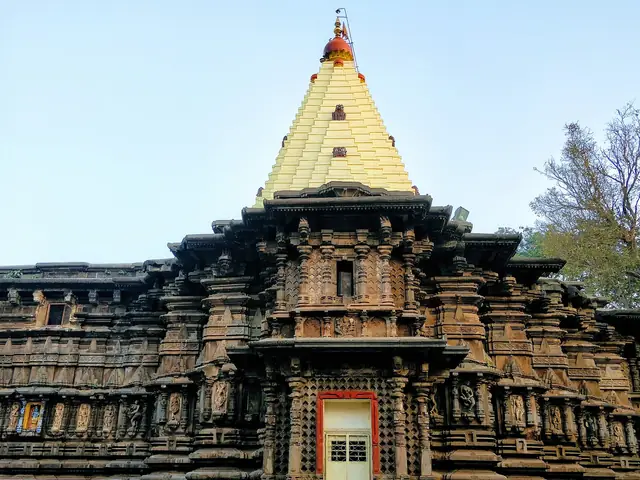
The front hall has a ring of pillars carrying a circular opening in the roof, so that a full circle of sky shows above a round stone slab on the floor. It is called the Swarga Mandapa, the hall of heaven. The outer walls carry rows of elephants at the base, nearly a hundred of them, each carrying the temple on its back, and above them dancers, musicians and the forms of the Devas. Work began under the Shilahara king Gandaraditya in the 12th century; an inscription of the Yadava king Singhana records a grant to the temple in the early 13th century. The shikhara was never completed, or fell; the temple is protected by the ASI and still in worship.
The life of this place
- 12th centuryBuilding begins under the Shilahara king Gandaraditya.
- Early 13th centuryAn inscription of the Yadava king Singhana records a grant to the temple.
Khidrapur is about 60 km east of Kolhapur and closer to Sangli and Miraj; carry water, as there is little near the temple.