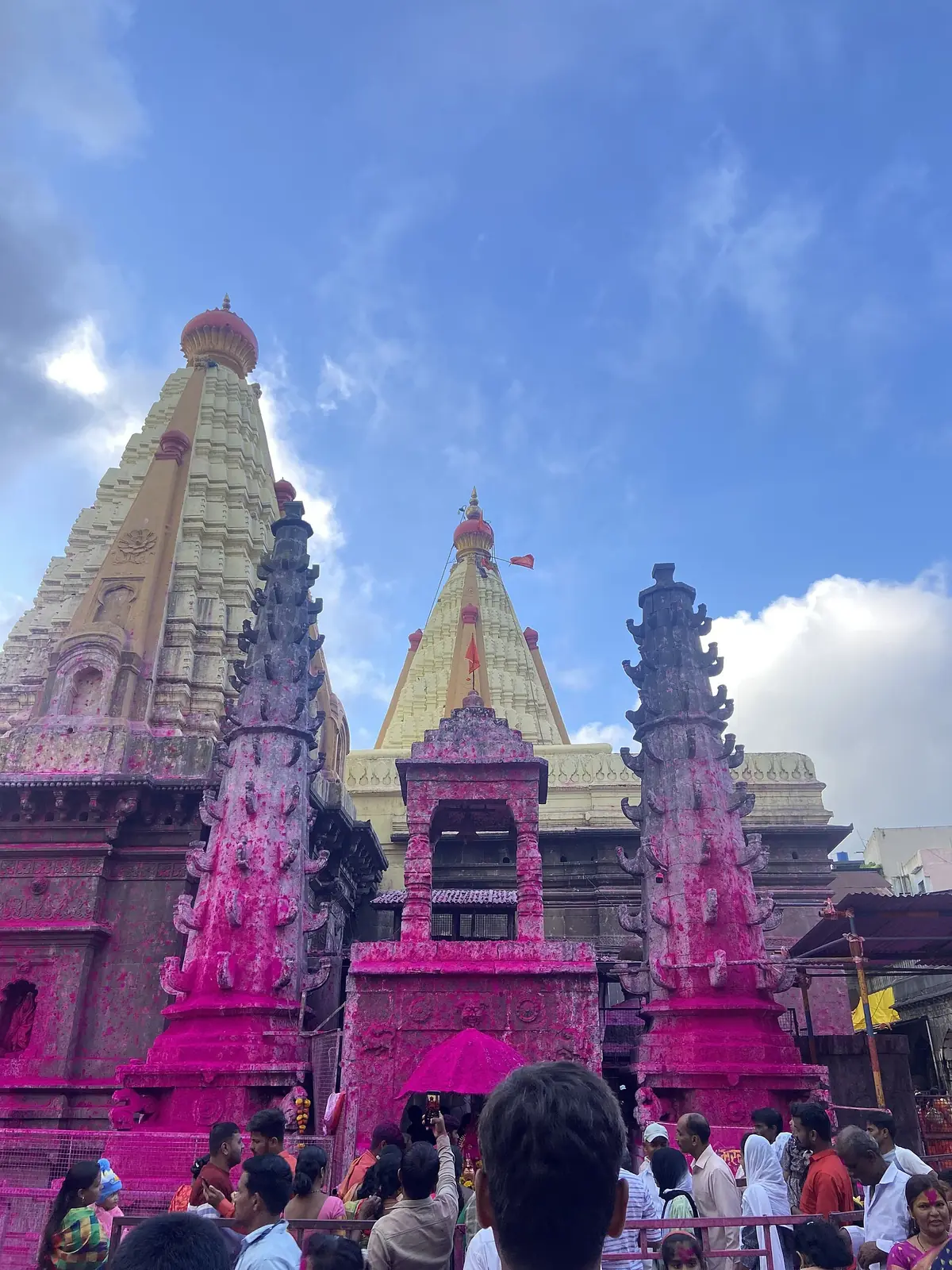
01Kedarnath of the Sahyadri
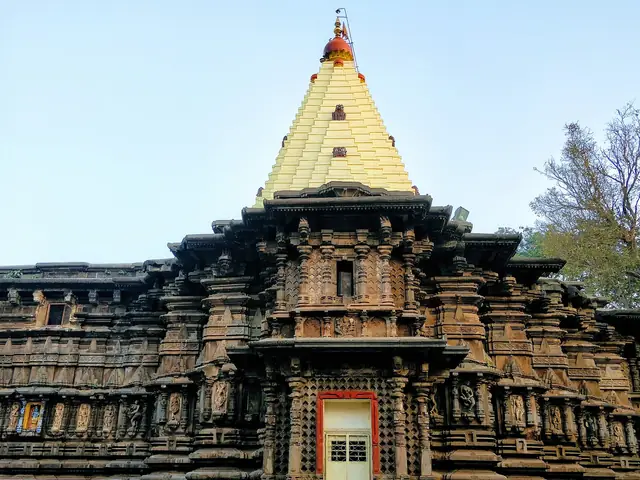
Jyotiba is also called Kedarnath and Kedareshwar, and devotees see in him Brahma, Vishnu, Mahesh and the fire of Jamadagni together. The temple’s katha tells that when Ratnasura troubled the land around Kolhapur, Jyotiba came at Mahalakshmi’s call and destroyed him on this hill, which took the name Ratnagiri. The main shrine, of dark basalt, faces east; beside it stand shrines of Ramling and of Chopadai Devi. Much of the present complex was raised in the 18th century under Maratha patrons, and families across Maharashtra and north Karnataka count Jyotiba as their kuladaivat.
02Chaitra yatra and the sasan kathi
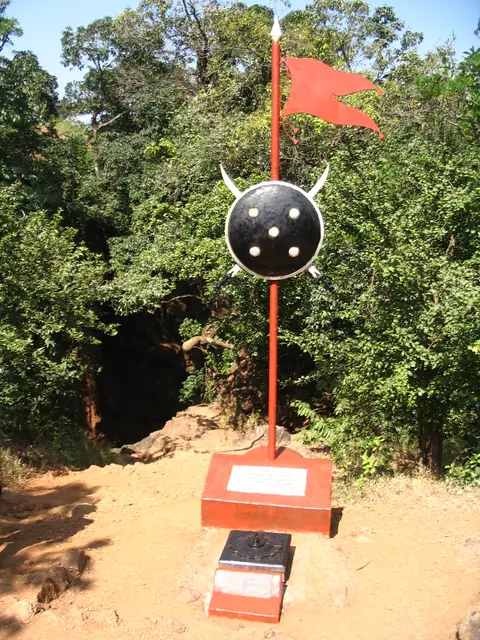
At the full moon of Chaitra the hill holds one of Maharashtra’s biggest fairs. Villages arrive with their sasan kathis, tall decorated poles carried upright through the crowd, and throw gulal until the stone, the people and the air are pink. The cry that runs through the yatra is “Changbhala!”, and the devotees are called gulalanna, those of the gulal. Sundays, Jyotiba’s day, bring steady crowds through the year.
The life of this place
- 18th centuryThe present black-stone temples are raised under Maratha patrons.
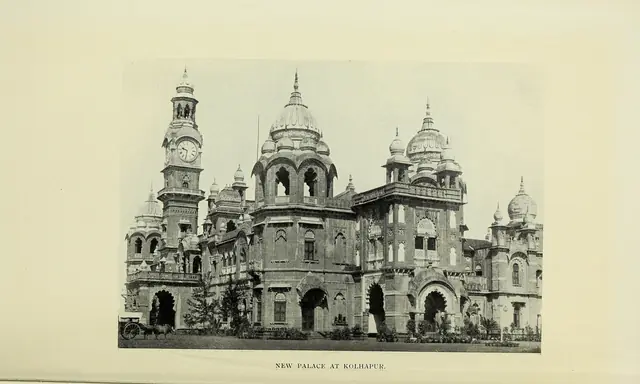
About 17 km north-west of Kolhapur by road; pair it with darshan of Mahalakshmi (Ambabai) in the city.