01The temple of the state
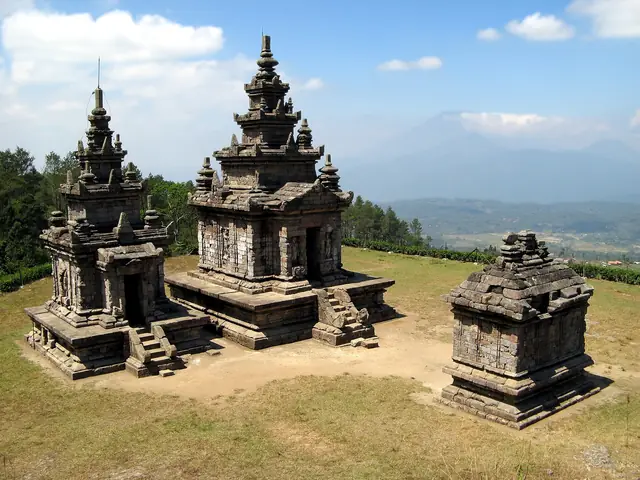
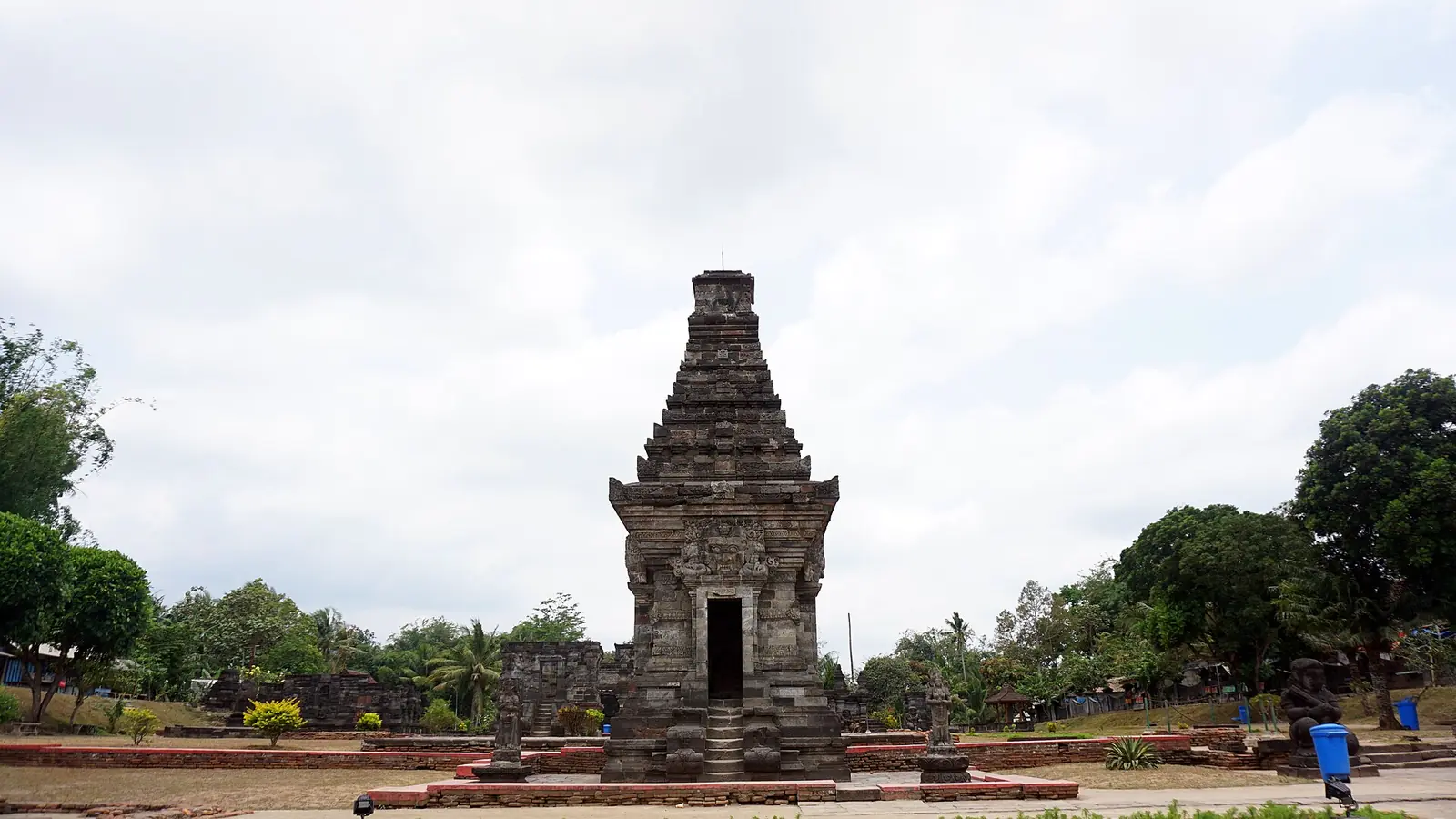
An inscription of 1197 records that a Kediri king set up worship at Palah, as the place was then called, to protect the land from the fury of Kelud, one of Java’s most violent volcanoes. Later kings kept adding to it for three centuries. The Nagarakretagama, the court poem of 1365, tells how King Hayam Wuruk came to Palah to worship the Lord of the mountain. The plan runs back from the gate through three courts, rising toward the mountain, the way Balinese pura are laid out today: open pavilion platforms in front, a small dated temple, a Naga temple wrapped in serpents, and at the rear the stepped base of the main sanctuary.
02Hanuman in Lanka
The first terrace of the main temple is carved with the Ramayana, read counter-clockwise, and it dwells on Hanuman: his crossing to Lanka, the burning of the city, the battle with the rakshasas, in a flat, puppet-like style close to the wayang of Java. The second terrace tells the Krishnayana, Krishna’s carrying off of Rukmini. The sanctuary that crowned the base has gone, but its guardian figures and the great stone base stand. Hindus of East Java still come for ceremonies.
The life of this place
- 1197Worship is founded at Palah under a Kediri king.
- 1365The Nagarakretagama records Hayam Wuruk’s worship at Palah.
About 12 km north-east of Blitar town. Open daily; the reliefs read best in the low light of morning.