01Terraces into the clouds
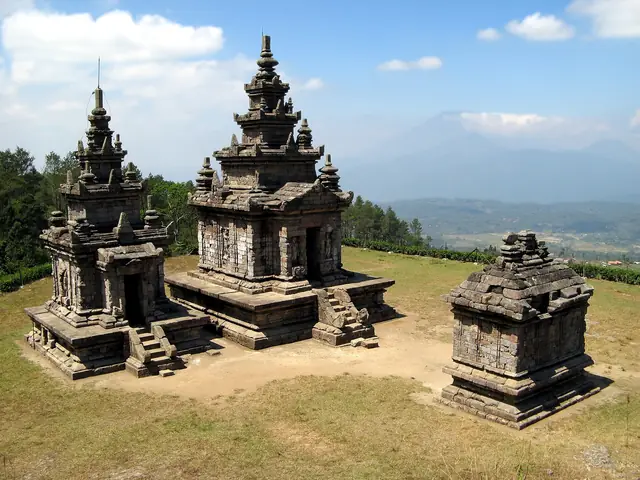
In the 15th century, as Majapahit weakened, its nobles and rishis withdrew to the slopes of Lawu and built sanctuaries there: Sukuh, and higher up, Cetho. Cetho climbs in a long series of terraces up the mountainside toward the summit, the old Javanese idea of the mountain as the seat of the gods and ancestors. One terrace has a great stone figure of a turtle and a garuda laid out in the ground, recalling the churning of the ocean and the katha of Garuda winning the amrita, the deliverance theme that runs through the Lawu temples. An inscription on the site is read as a date of the 1470s.
02Worship returns
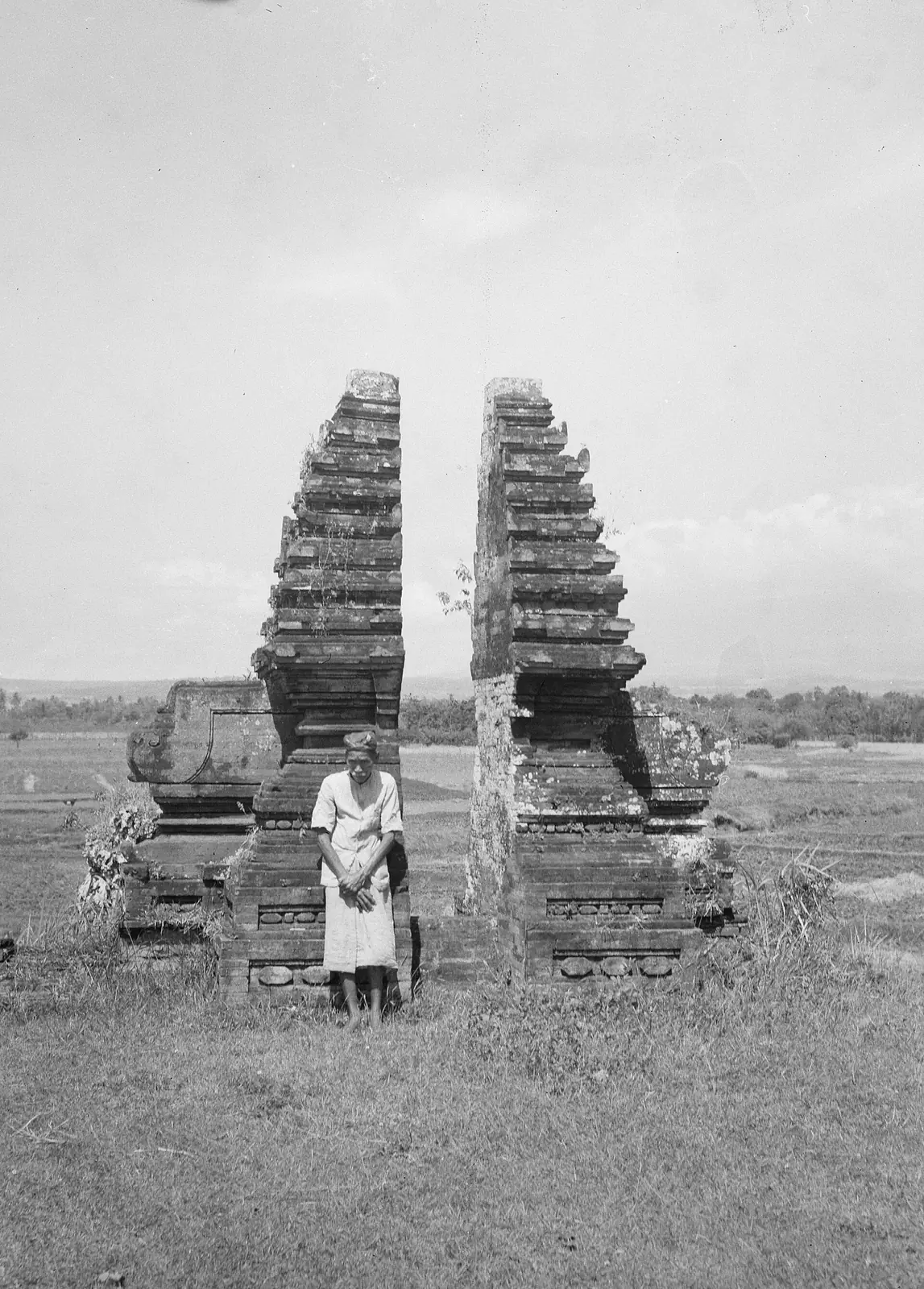
When Dutch archaeologists recorded the site in the 19th century it was in ruins. In the 1970s it was restored, and in the course of that work new structures were added, wooden pavilions and gates in a Balinese manner, so archaeologists treat the upper terraces with caution. The restoration brought worship back: Hindu families of the Lawu villages, and pilgrims from Bali, hold ceremonies here, and the split gates are hung with offerings at Galungan and other festivals. Morning mist often fills the tea gardens below.
The life of this place
- c. 1475The date read in the site’s inscription.
- 1970sThe temple is restored and worship resumes.
About 40 km east of Surakarta (Solo), above the Kemuning tea estate; Candi Sukuh is nearby. Visitors wear a sarong in the inner terraces.