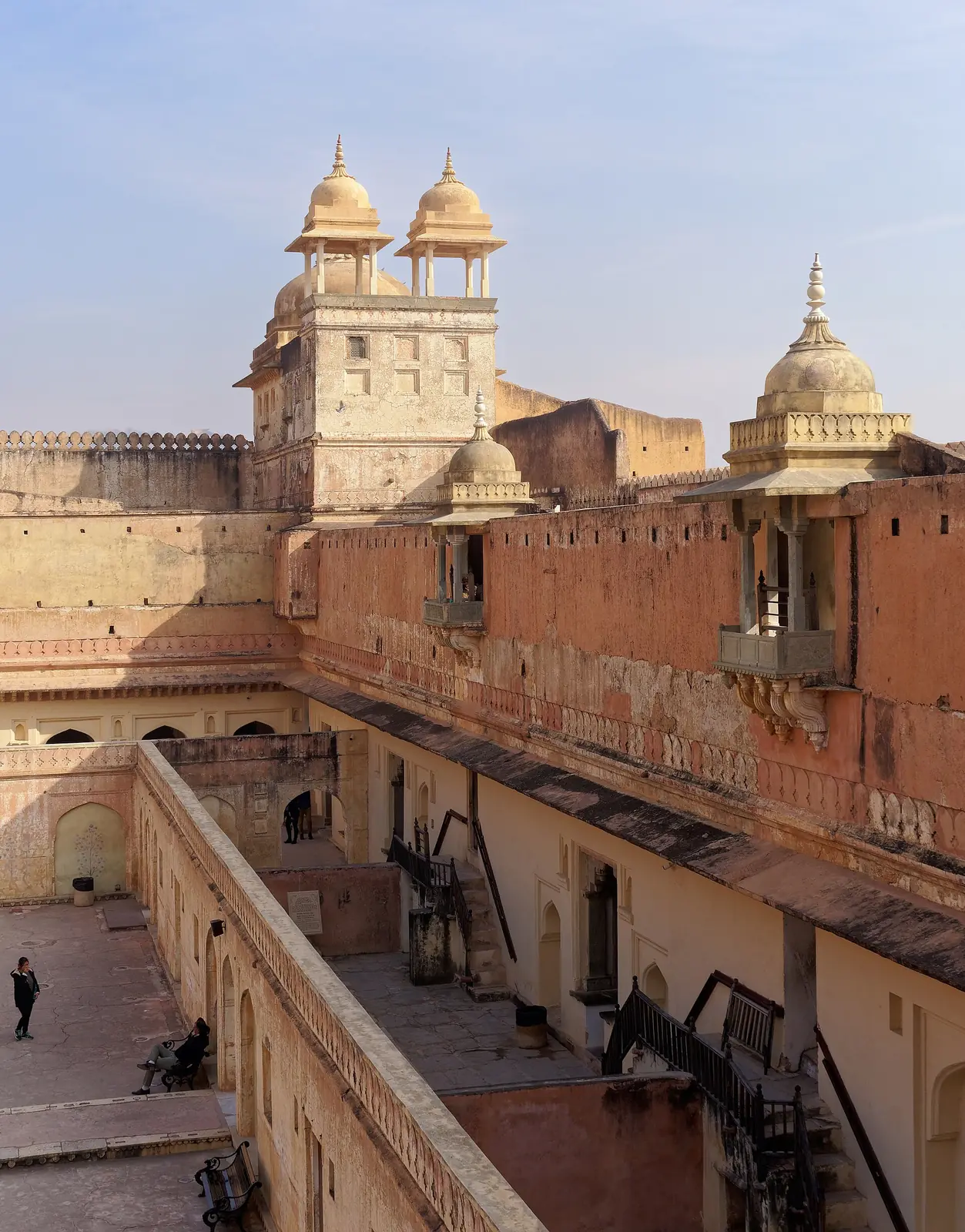
01Man Singh’s palace
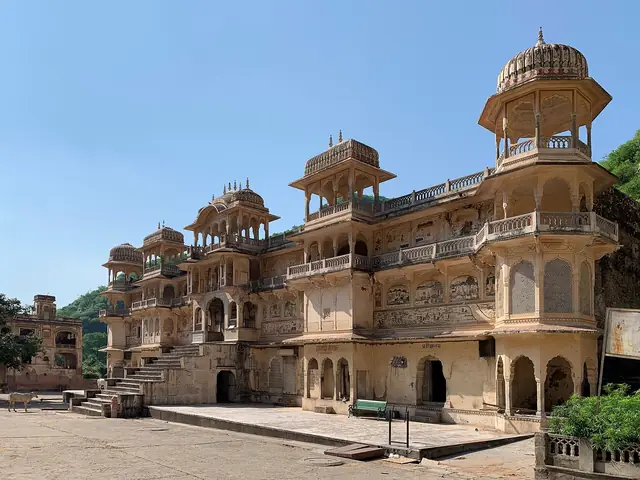
Amber was a Meena stronghold before the Kachwahas took it in the 11th century. The palace you walk through today was begun by Raja Man Singh I in 1592, Akbar’s great general, and enlarged by Mirza Raja Jai Singh I and his successors: the Diwan-i-Aam, the Ganesh Pol with its painted face, the Sheesh Mahal lined with convex mirrors. Above it on the ridge stand Jaigarh, with its cannon foundry, and the old walls that connect the two. In 2013 UNESCO listed Amber among the Hill Forts of Rajasthan.
02Shila Devi
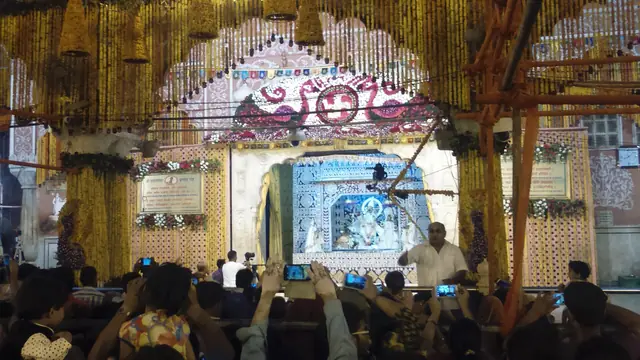
Inside the first court is the temple of Shila Devi, a form of Kali carved on a single black stone slab. The family tradition is that Man Singh brought the image from Jessore in Bengal after his campaign there around 1604, when he was Akbar’s governor of Bengal. The silver doors were added by Maharaja Sawai Man Singh II. The doors carry the Navadurga and the ten Mahavidyas worked in silver. Navratri is the temple’s great festival.
The life of this place
- 1592 CERaja Man Singh I begins the present palace.
- 1727 CESawai Jai Singh II founds Jaipur and the court leaves Amber.
- 2013 CEUNESCO lists it among the Hill Forts of Rajasthan.
11 km north of Jaipur. Shila Devi darshan is in the morning and evening; the palace is busiest from 10 a.m.