
Himalayan and Kath-Kuni
Uttarakhand, Himachal, Jammu and Kashmir, Nepal · 8th century to today
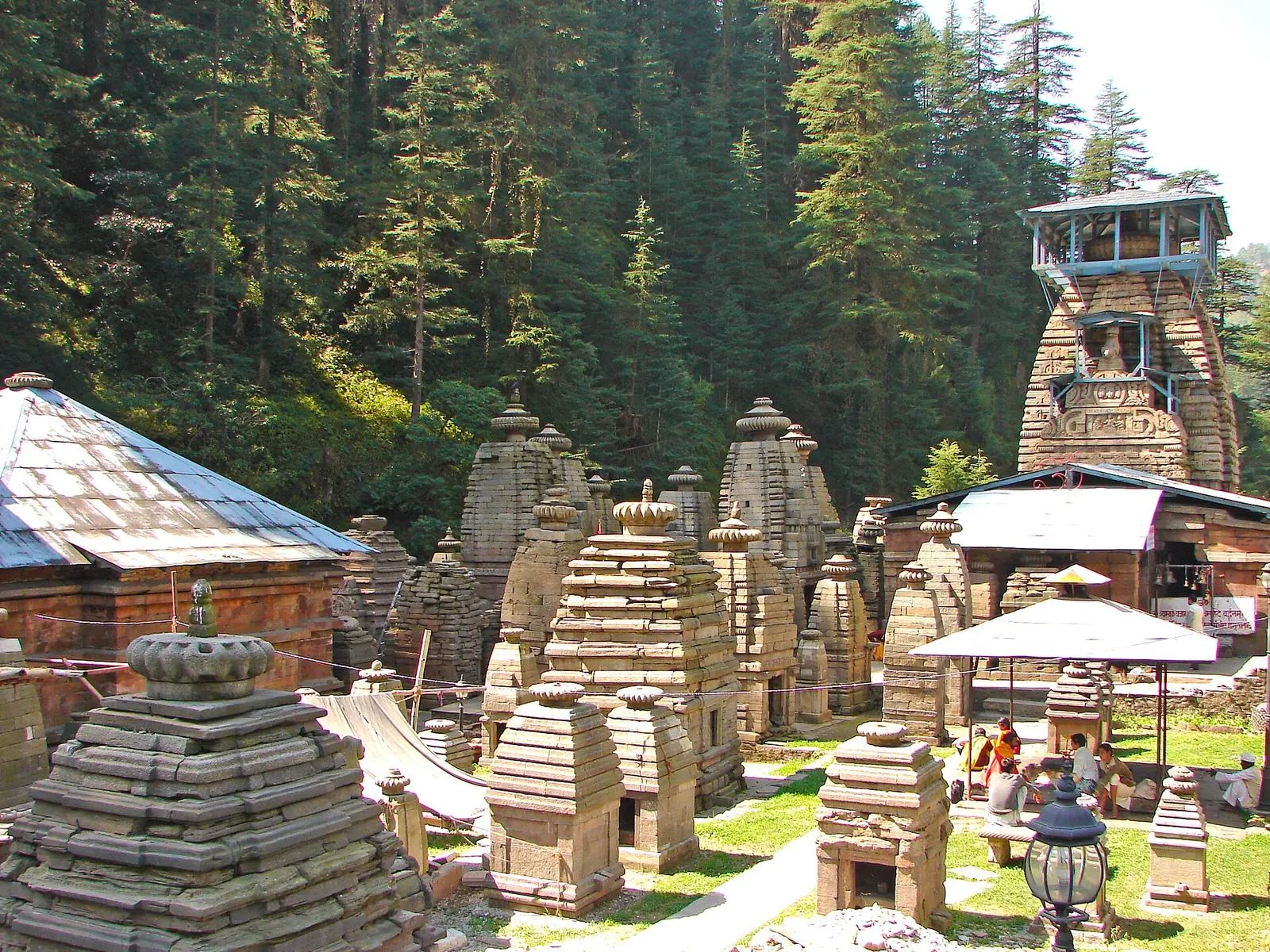
In the mountains two traditions sit side by side. One is stone: Nagara shikharas of the Katyuri and later kings, built from local grey stone with a wooden canopy, the chhatra, over the amalaka against snow. Jageshwar holds over a hundred such shrines in one deodar valley; Kedarnath, Baijnath in Kangra and the rock-cut Masrur group belong here, and Kashmir developed its own line, with trefoil arches and pyramidal roofs, at Martand, Avantipur and the Shankaracharya hill.
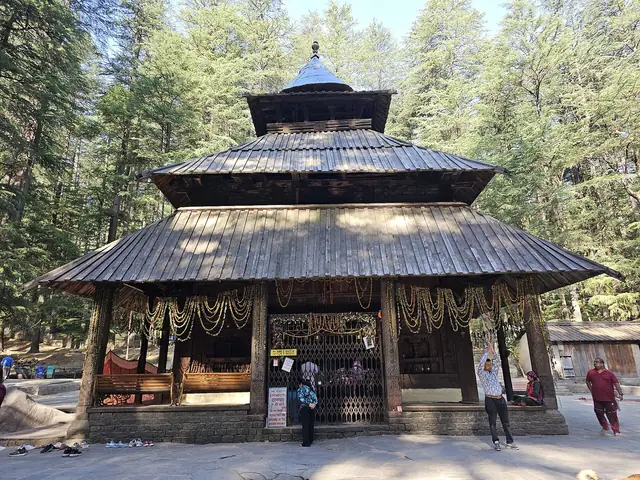
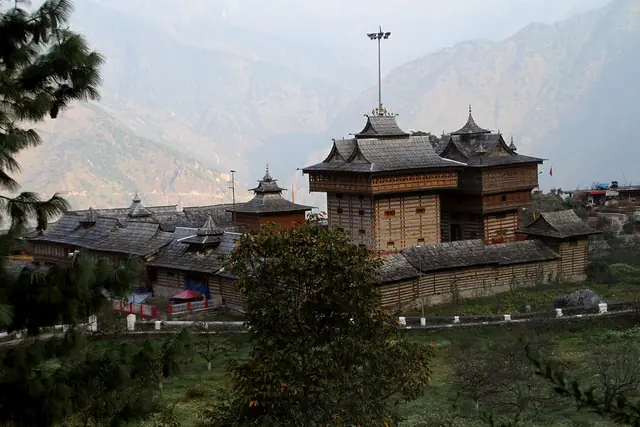
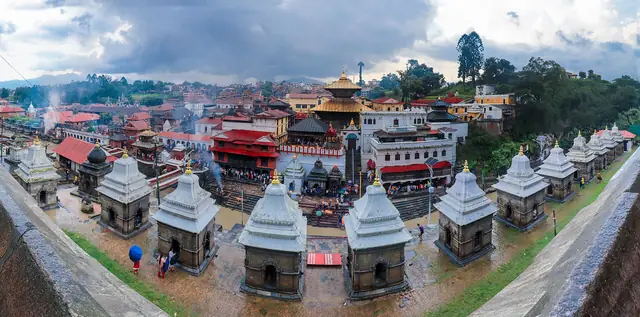
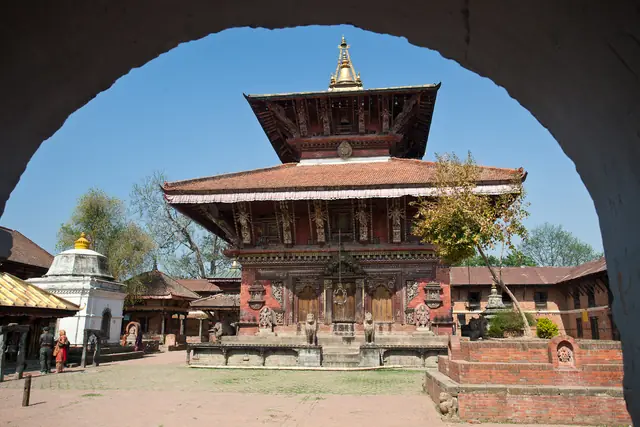
The other is timber. Kath-kuni, ‘wood-corner’, walls lay courses of deodar beams and dressed stone alternately without mortar, so the building flexes in an earthquake; Himachal temples built this way have stood for centuries. Roofs are of slate, either in stacked pagoda tiers, as at the Hidimba Devi temple at Manali of 1553, or as tall tower-houses like the Bhimakali at Sarahan. The Pashupatinath and Changu Narayan temples of Nepal are the great pagoda temples of the same mountain world.
How to recognise it
- Stone shikharas with wooden chhatra canopies
- Kath-kuni walls of alternating deodar and stone
- Slate roofs in pagoda tiers
- Kashmiri trefoil arches and pyramidal roofs
Great examples
 Standing
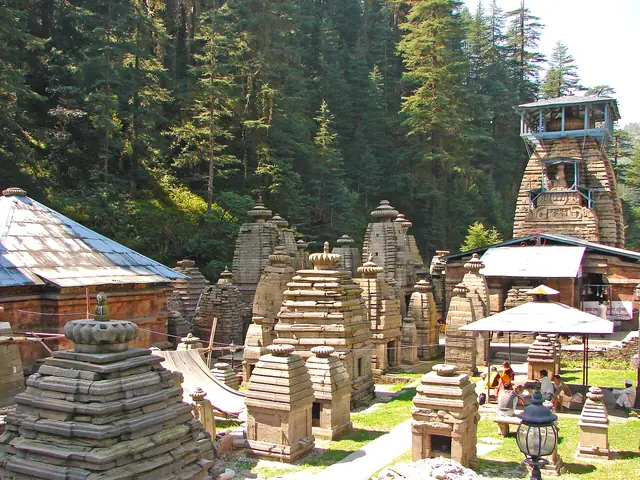
Jageshwar Temples
More than a hundred stone temples of Shiva crowded in a deodar valley in Kumaon. Some Kumaoni traditions count Jageshwar as the Nageshwar Jyotirlinga of Darukavana.
 Standing
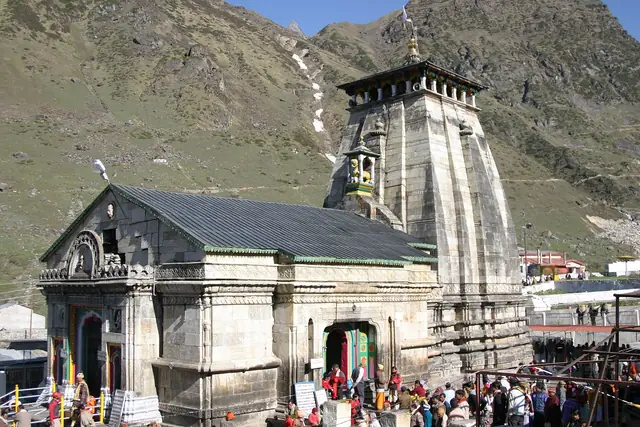
Kedarnath
The Himalayan Jyotirlinga at the head of the Mandakini, first of the Panch Kedar and one of Uttarakhand’s Char Dham. The linga is a rough triangular rock, the hump of Shiva in the form of a bull.
 Standing
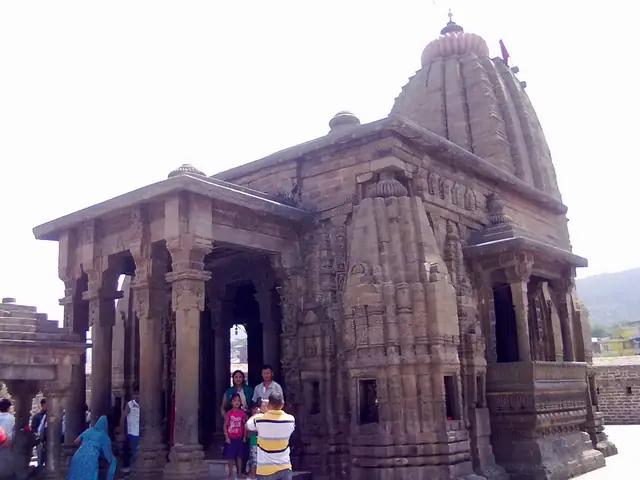
Baijnath Temple, Kangra
A Nagara stone temple of Shiva Vaidyanath, the Lord of physicians, built in 1204 by two merchant brothers, as its own inscriptions record.
 Ruined
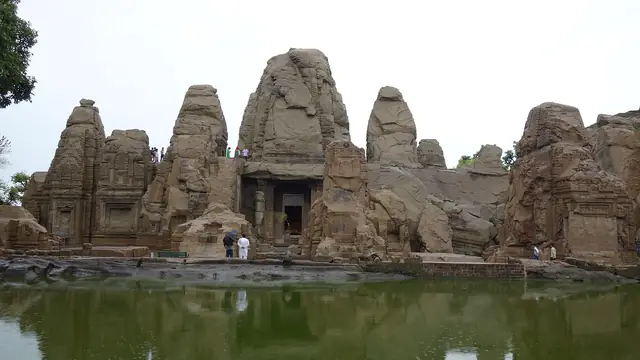
Masrur Rock-cut Temples
A group of fifteen Nagara temples carved, top down, out of one sandstone ridge in the Kangra hills, the only monolithic temple group of this kind in the Himalaya.
 Ruined
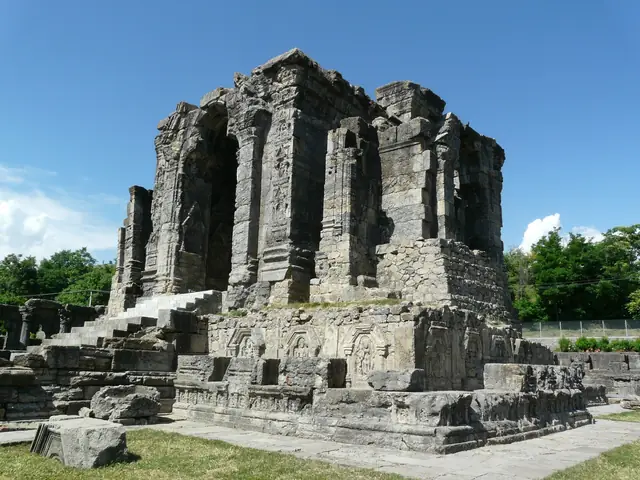
Martand Sun Temple
The great Surya temple of Kashmir on the Mattan plateau, built by the Karkota emperor Lalitaditya Muktapida and destroyed on the orders of Sultan Sikandar in the late 14th or early 15th century.
 Ruined
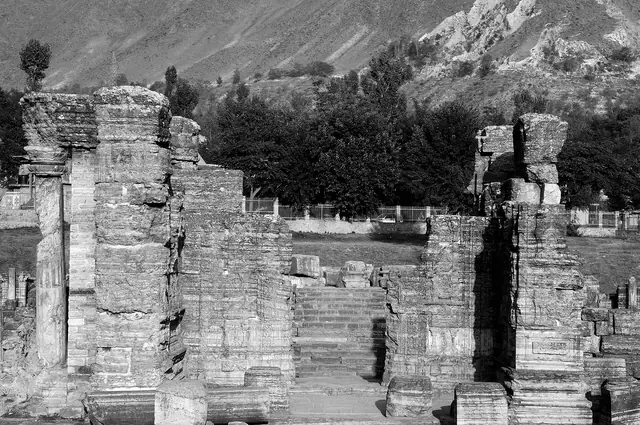
Avantiswami Temple
The Vishnu temple built by Avantivarman, founder of the Utpala dynasty, at his new town of Avantipura on the Jhelum. Its plinth, colonnade and carved gateway survive.
 Standing
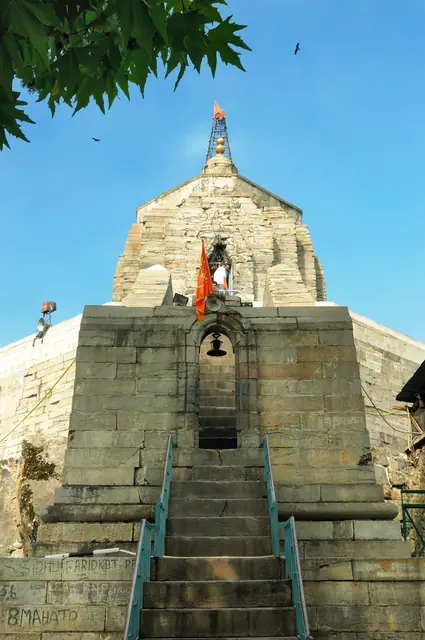
Shankaracharya Temple, Srinagar
A stone Shiva temple on the hill that rises about 300 metres above Srinagar and the Dal lake, linked by Kashmiri tradition with Adi Shankaracharya’s stay in the valley.
 Standing
Hidimba Devi Temple, Manali
A four-tiered wooden pagoda in a deodar forest, raised in 1553 over a rock where Hidimba is said to have sat in tapas. The Rajas of Kullu took her as their grandmother-goddess, and Dussehra in Kullu cannot begin until she arrives.
 Standing
Bhimakali Temple, Sarahan
The kuladevi of the Bushahr kingdom, in twin towers of the Kath-kuni style, wood and stone in alternate courses, with slate roofs and silver doors. Local tradition counts it among the Shakti Peethas.
 Standing
Pashupatinath
The holiest Shiva temple of Nepal, on the Bagmati in Kathmandu, where a four-faced linga of Pashupati is worshipped by priests from Karnataka.
 Rebuilt
Changu Narayan
A Vishnu temple on a ridge above the Kathmandu valley, holding the oldest dated inscription of Nepal, set up by the Licchavi king Manadeva I in 464 CE.