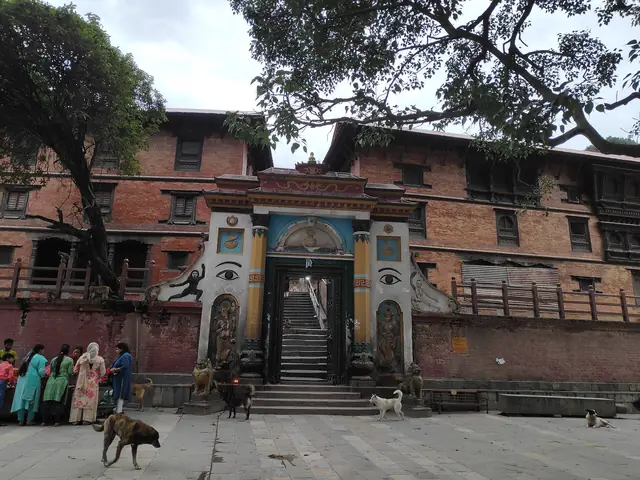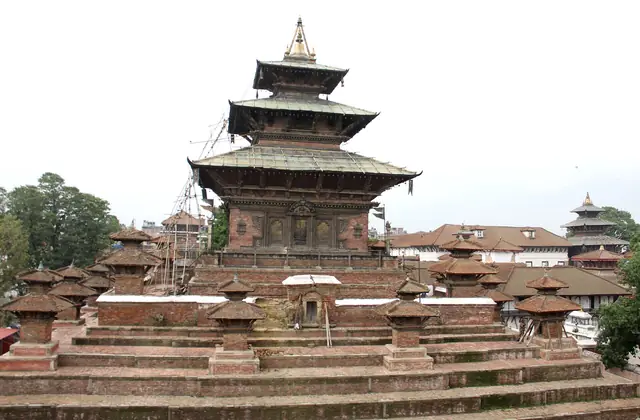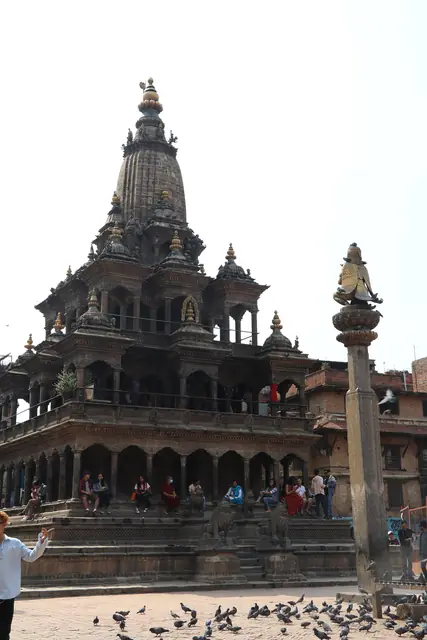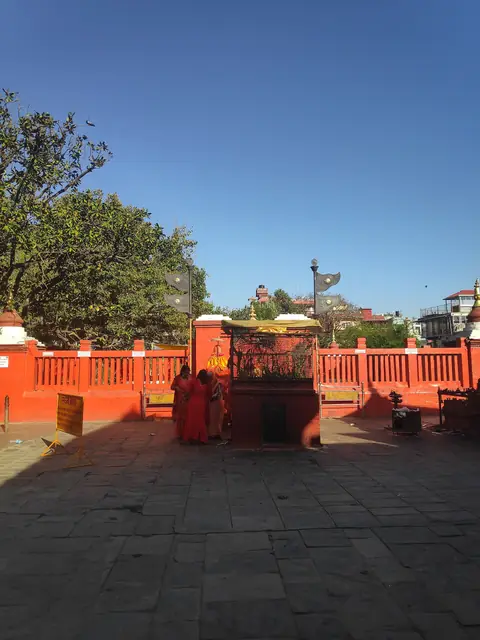
01The Lord of beings
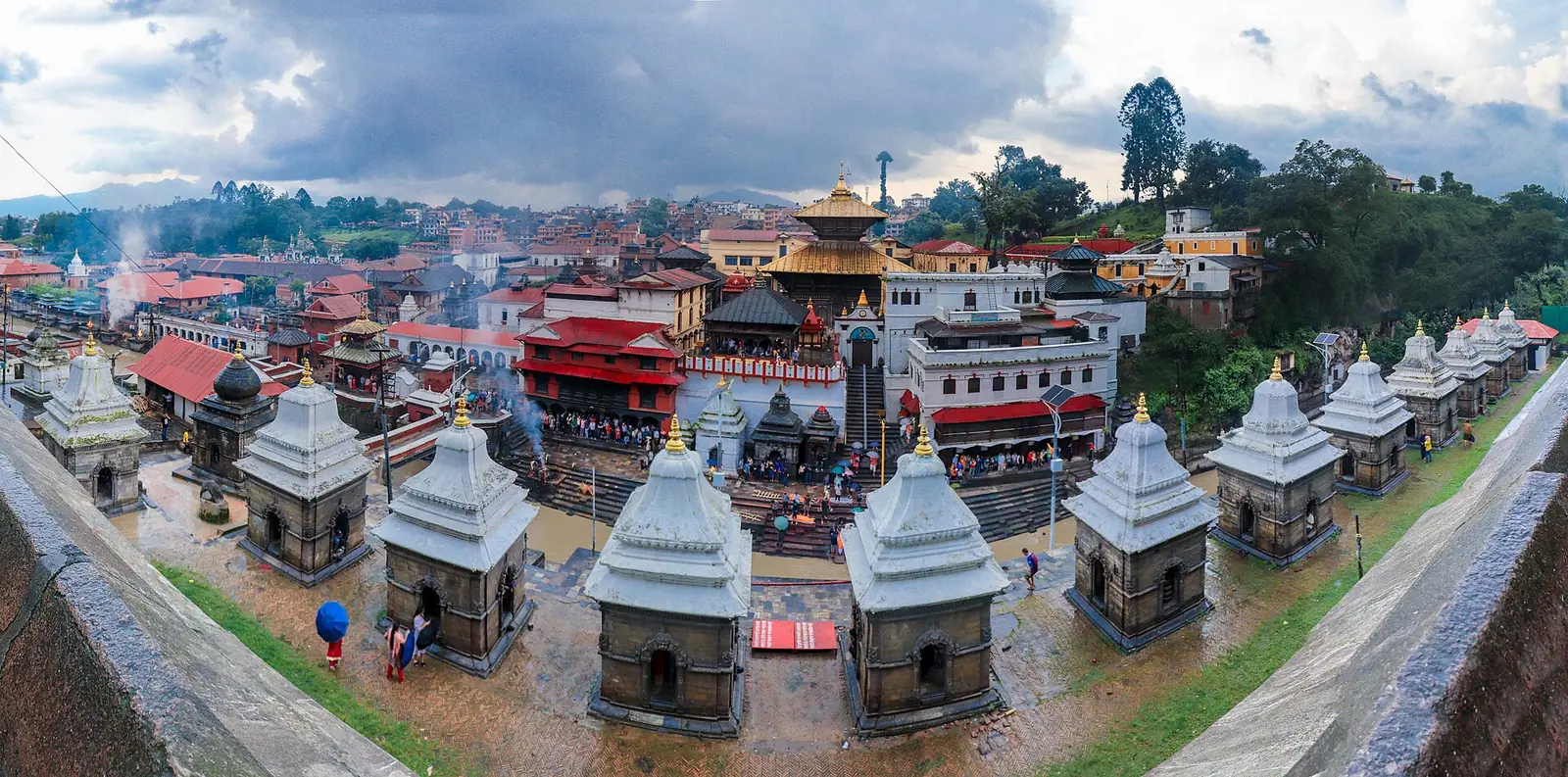
Pashupati, the Lord of all creatures, is how the Vedas and the Shaiva Agamas name Shiva as the one who frees the pashu, the bound soul, from its bonds. The linga here has a face on each of the four sides, with the fifth, Ishana, understood to face upward. It sits in a two-tiered pagoda with gilded roofs and silver doors, rebuilt by the Malla kings in the late seventeenth century on a shrine already ancient. A Licchavi inscription of King Jayadeva II, of 733 CE, stands in the temple grounds, and the Nepalese chronicles carry the shrine back further still.
02Priests from the south
The main worship at Pashupatinath has for centuries been done by Bhatta priests from Karnataka, trained in the Vedas, and tradition links this to Adi Shankaracharya’s visit to Nepal. Four priests serve as bhattas, with a mul bhatta at their head, and they alone touch the linga. Nepali chronicles record that in 1349 the Bengal sultan Shamsuddin Ilyas Shah raided the valley and broke the linga, and that it was set up again. On Maha Shivaratri hundreds of thousands come, and sadhus from all over Bharat gather on the banks.
03Arya Ghat and the 2015 earthquake
Below the temple the Bagmati runs past the cremation ghats. Arya Ghat, nearest the shrine, has long been where Nepal’s royal family and many devout Hindus were cremated, since dying and being burned at Pashupati is held to bring release. When the Gorkha earthquake struck on 25 April 2015 and brought down temples across the valley, the main shrine stood undamaged, though buildings around it cracked and the ghats became the city’s place of mourning for days.
The life of this place
- 733 CEInscription of the Licchavi king Jayadeva II set up in the temple grounds.
- 1349Sultan Shamsuddin Ilyas Shah of Bengal raids the valley and breaks the linga, per Nepali chronicles.
- 1979Inscribed as part of the Kathmandu Valley UNESCO World Heritage Site.
- 25 April 2015The Gorkha earthquake damages the complex; the main shrine stands.
Only Hindus (and Buddhists, Sikhs and Jains of Indian and Nepali origin) enter the main courtyard; others may view from the east bank. Go for the evening aarti on the Bagmati.