
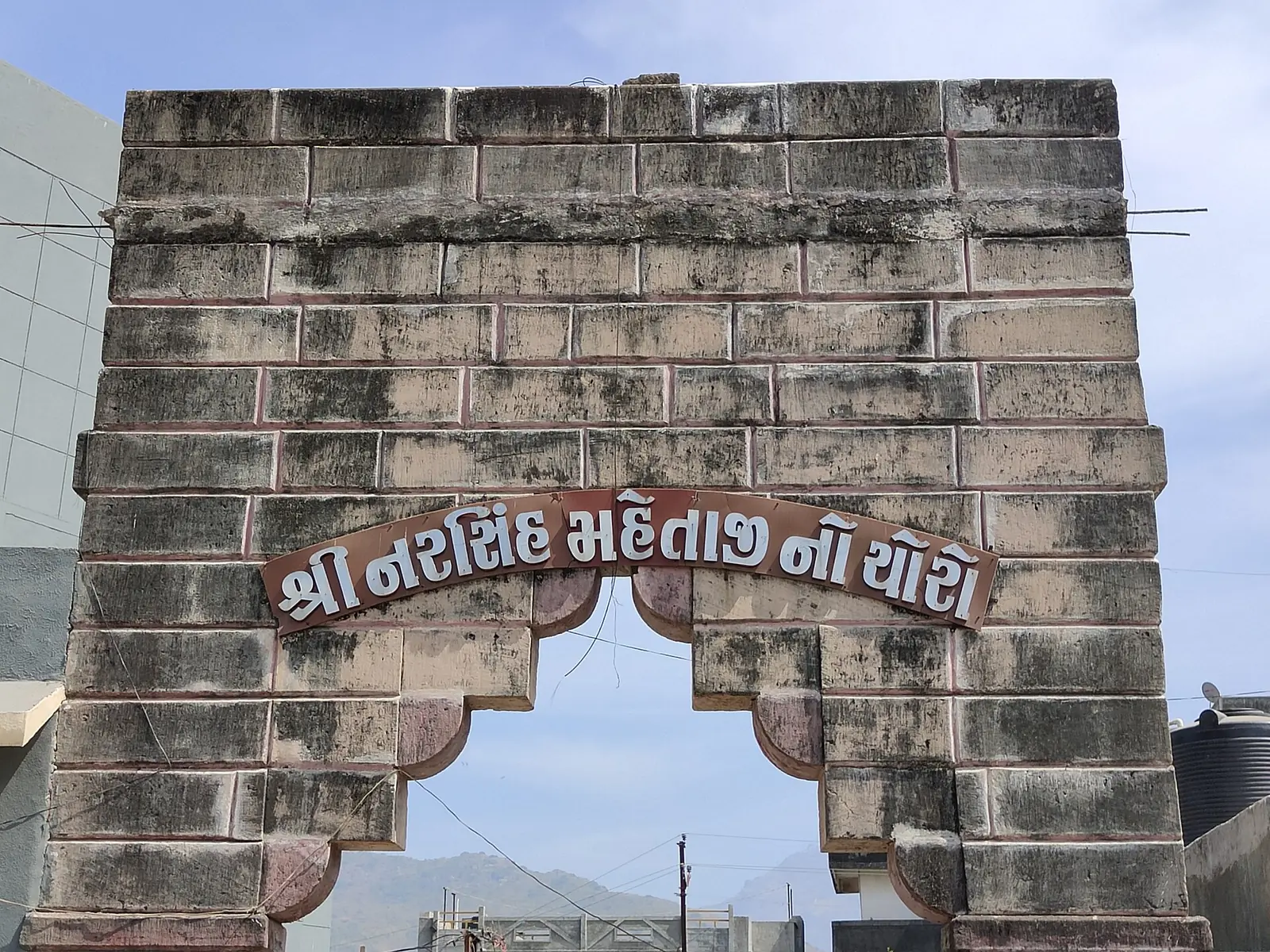
Narsinh Mehta, a Nagar Brahmana of Saurashtra, is honoured as the adi-kavi, the first poet, of Gujarati. Tradition says he lost his parents young and lived in his brother’s house at Junagadh, and that when his sister-in-law taunted him he went into the forest and sat before a Shivalinga for seven days without food. Mahadev appeared and, at his request, showed him the raas leela of Krishna in Vrindavan; he came back a Krishna bhakta and a poet. His life is remembered through his own autobiographical poems: the hundi, a draft he wrote on Shamalsha Seth of Dwarka, which the Lord himself paid; the mameru, the gifts for his daughter’s child, which Krishna supplied; the garland that fell on him from the murti at Junagadh before the Ra Mandlik. He mixed freely with all, and was reproached for singing among the poor, which he answered in song. He wrote prabhatiyas, the dawn songs of Gujarati homes, in the swinging jhulna metre, songs of Krishna’s childhood and raas, and padas of Vedantic wisdom. “Vaishnav jan to tene kahiye”, his portrait of the true devotee, became Mahatma Gandhi’s favourite hymn. Junagadh keeps Narsinh Mehta no Choro, the place where he held his kirtans.
Works
- Prabhatiyas (dawn songs)
- Hundi, Mameru and Har Mala (autobiographical poems)
- Raas and Shringar padas
- Jnana and bhakti padas
Every bhajan
वैष्णवजन तो तेने रे कहीये, जे पीड पराई जाणे रे. परदुःखे उपकार करे तोये, मन अभिमान न आणे रे.
Vaishnav Jan To Tene Kahiye
Narsinh Mehta · GujaratiVishnuअखिल ब्रह्मांडमां एक तुं श्रीहरि, जूजवे रूपे अनंत भासे;
Akhil Brahmandman Ek Tun Shri Hari
Narsinh Mehta · GujaratiShri Krishnaजागने जादवा कृष्ण गोवाळिया तुज विना धेनमां कोण जाशे ?
Jagne Jadava Krishna Govaliya
Narsinh Mehta · GujaratiShri Krishnaजळकमळ छांडी जाने बाळा, स्वामी अमारो जागशे जागशे, तने मारशे, मने बाळ हत्या लागशे