
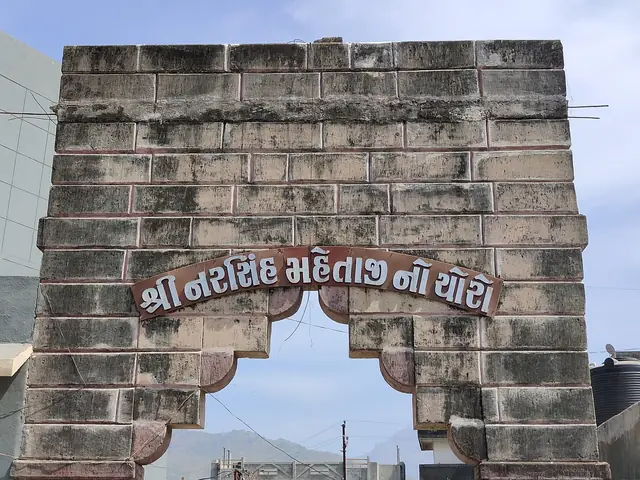
વૈષ્ણવજન તો તેને રે કહીયે, જે પીડ પરાઈ જાણે રે.
પરદુઃખે ઉપકાર કરે તોયે, મન અભિમાન ન આણે રે.
સકળ લોકમાં સહુને વંદે, નિંદા ન કરે કેની રે.
વાચ કાછ મન નિશ્ચલ રાખે, ધન ધન જનની તેની રે.
સમદ્રષ્ટિને તૃષ્ણા ત્યાગી, પરસ્ત્રી જેને માત રે.
જિહ્વા થકી અસત્ય ન બોલે, પરધન નવ ઝાલે હાથ રે.
મોહ માયા વ્યાપે નહિ જેને, દ્રઢ વૈરાગ્ય જેના મનમાં રે.
રામ નામ શું તાળી રે વાગી, સકળ તિરથ તેના તનમાં રે.
વણલોભી ને કપટ રહિત છે, કામ ક્રોધ નિવાર્યા રે.
ભણે નરસૈયો તેનું દર્શન કરતા, કુળ ઈકોતેર તાર્યા રે.
वैष्णवजन तो तेने रे कहीये, जे पीड पराई जाणे रे.
परदुःखे उपकार करे तोये, मन अभिमान न आणे रे.
सकळ लोकमां सहुने वंदे, निंदा न करे केनी रे.
वाच काछ मन निश्चल राखे, धन धन जननी तेनी रे.
समद्रष्टिने तृष्णा त्यागी, परस्त्री जेने मात रे.
जिह्वा थकी असत्य न बोले, परधन नव झाले हाथ रे.
मोह माया व्यापे नहि जेने, द्रढ वैराग्य जेना मनमां रे.
राम नाम शुं ताळी रे वागी, सकळ तिरथ तेना तनमां रे.
वणलोभी ने कपट रहित छे, काम क्रोध निवार्या रे.
भणे नरसैयो तेनुं दर्शन करता, कुळ ईकोतेर तार्या रे.
Vaishnav jan to tene re kahiye, je peed parai jane re,
par dukhe upkar kare toye, man abhiman na ane re.
Sakal lok man sahune vande, ninda na kare keni re,
vach kachh man nishchal rakhe, dhan dhan janani teni re.
Samadrishti ne trishna tyagi, parstri jene mat re,
jihva thaki asatya na bole, pardhan nav jhale hath re.
Moh maya vyape nahi jene, dradh vairagya jena man man re,
Ram nam shun tali re vagi, sakal tirath tena tan man re.
Vanlobhi ne kapat rahit chhe, kam krodh nivarya re,
bhane Narsaiyo tenun darshan karta, kul ikoter tarya re.
Meaning
Call that person a Vaishnava who feels the pain of others, who helps those in sorrow and does not let pride enter the mind.
Who honours everyone in the world and speaks ill of no one, who keeps word, deed and mind steady: blessed, blessed is the mother of such a one.
Who looks on all alike and has given up craving, for whom another’s wife is a mother, whose tongue never speaks a lie, whose hand never takes another’s wealth.
Whom delusion and maya do not grip, whose mind holds firm detachment, who is wholly absorbed in Rama’s name: all the tirthas are in that person’s body.
Free of greed and of deceit, having put away lust and anger: Narsinh says, by the sight of such a person, seventy-one generations are carried across.
About this bhajan
Narsinh Mehta of Junagadh, the first poet of Gujarati, describes a Vaishnava not by his tilak or his temple but by his conduct: he feels another’s pain and is not proud of helping. Mahatma Gandhi made it the first hymn of his ashram’s prayer book, and it was sung at his prayer meetings until the end, which carried it far beyond Gujarat. Indian schools and public ceremonies still sing it. The text follows the Gujarati Wikisource transcription of the printed Bhajan Sar Sindhu, where it is pada 117.
Bhajan Sar Sindhu, pada 117 (Gujarati Wikisource transcription)