
01The taunt and the forest
Born at Talaja and raised by his elder brother’s household after losing his parents young, Narsinh was a dreamer who would not work. His sister-in-law taunted him once too often. He walked out into the forest, the tradition says to an old Shivalinga near Gopnath, and sat there without food for seven days. Mahadev appeared, granted him a wish, and when Narsinh asked for what Shiva himself loved best, took him to Dwarka to see the rasa of Shri Krishna. He came back a singer.
02Junagadh and the hundi
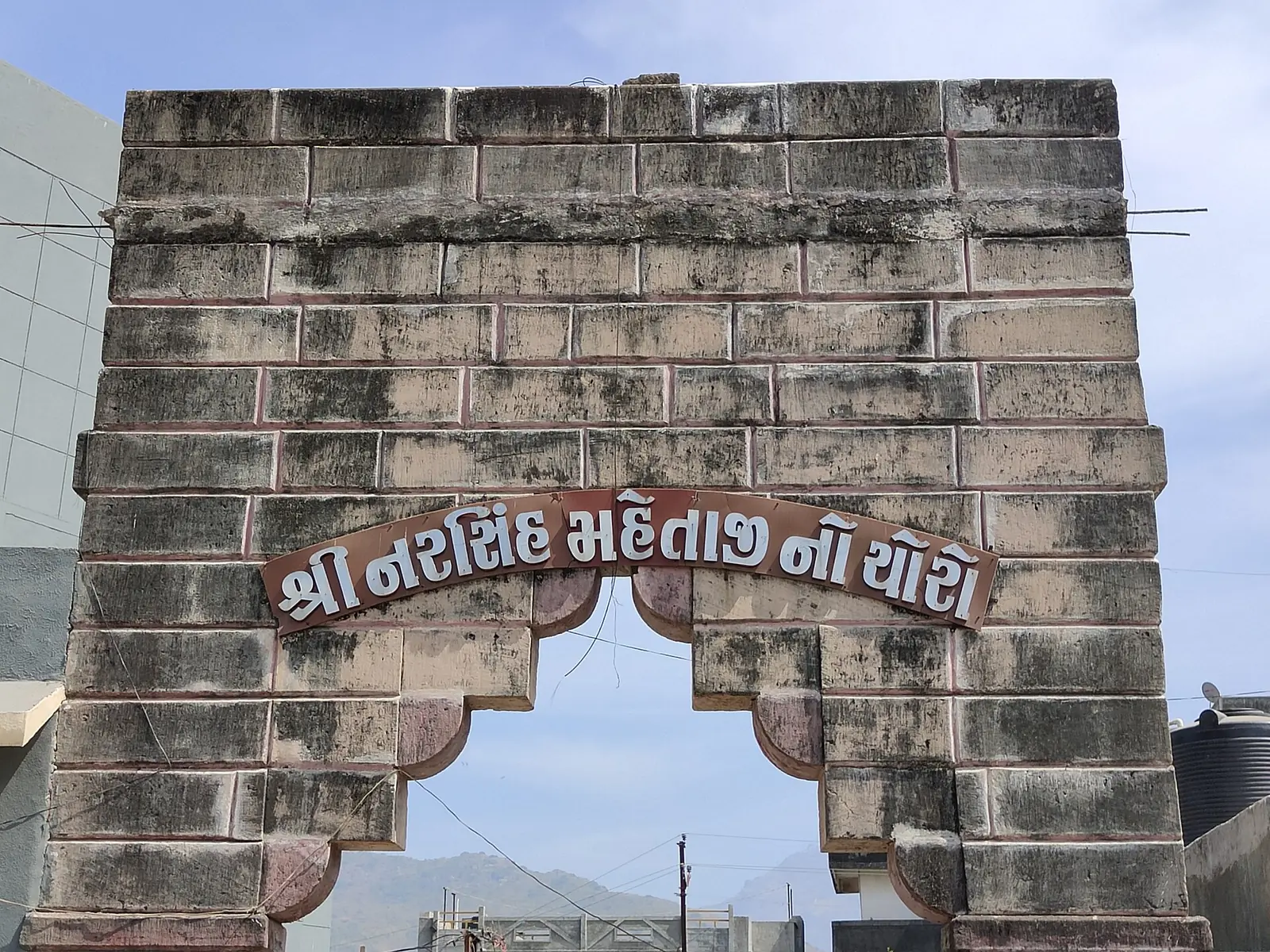
At Junagadh he lived poor and sang with anyone, which his caste-fellows held against him. The kathas of his life are told across Gujarat to this day. When he had no money for his daughter’s mameru, the gifts at her child’s ceremony, Krishna brought them. When pilgrims gave him money and took a hundi, a promissory note, payable at Dwarka, a merchant named Shamalsha Sheth paid it there, and Gujarat knows who Shamalsha was. The place where he sang, Narsinh Mehta no Choro, still stands in Junagadh.
“Call him a Vaishnava who feels the pain of others.”
Narsinh Mehta, pad “Vaishnav Jan To”