01The Satavahana record
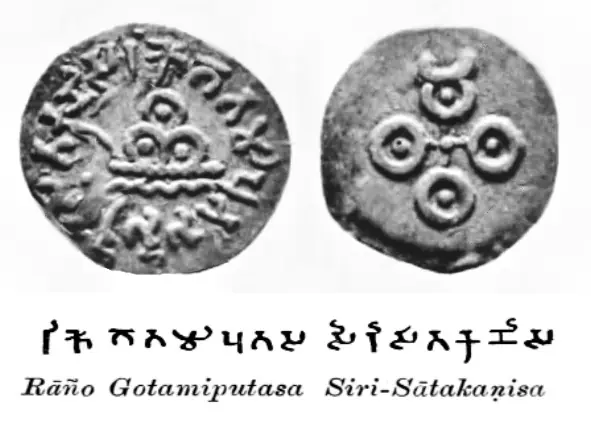
Local people call them Pandu Leni, the caves of the Pandavas, but the inscriptions name monks, merchants and kings. Cave 10 was given by Ushavadata, son-in-law of the Kshaharata Shaka ruler Nahapana, whose long inscriptions record gifts of villages, coconut groves and money lent to weavers’ guilds at interest for the monks’ clothing. Then the tide turned. In his eighteenth year Gautamiputra Satakarni, camped victorious at Nashik, granted land to the same monks. In Cave 3, in the nineteenth year of his son Vasishthiputra Pulumavi, the queen mother Gautami Balashri had the great Nasik prashasti carved: her son, it says, crushed the Shakas, Yavanas and Pahlavas, rooted out the Kshaharata line, stopped the mixing of the varnas, and his horses drank from three oceans.
02The caves themselves
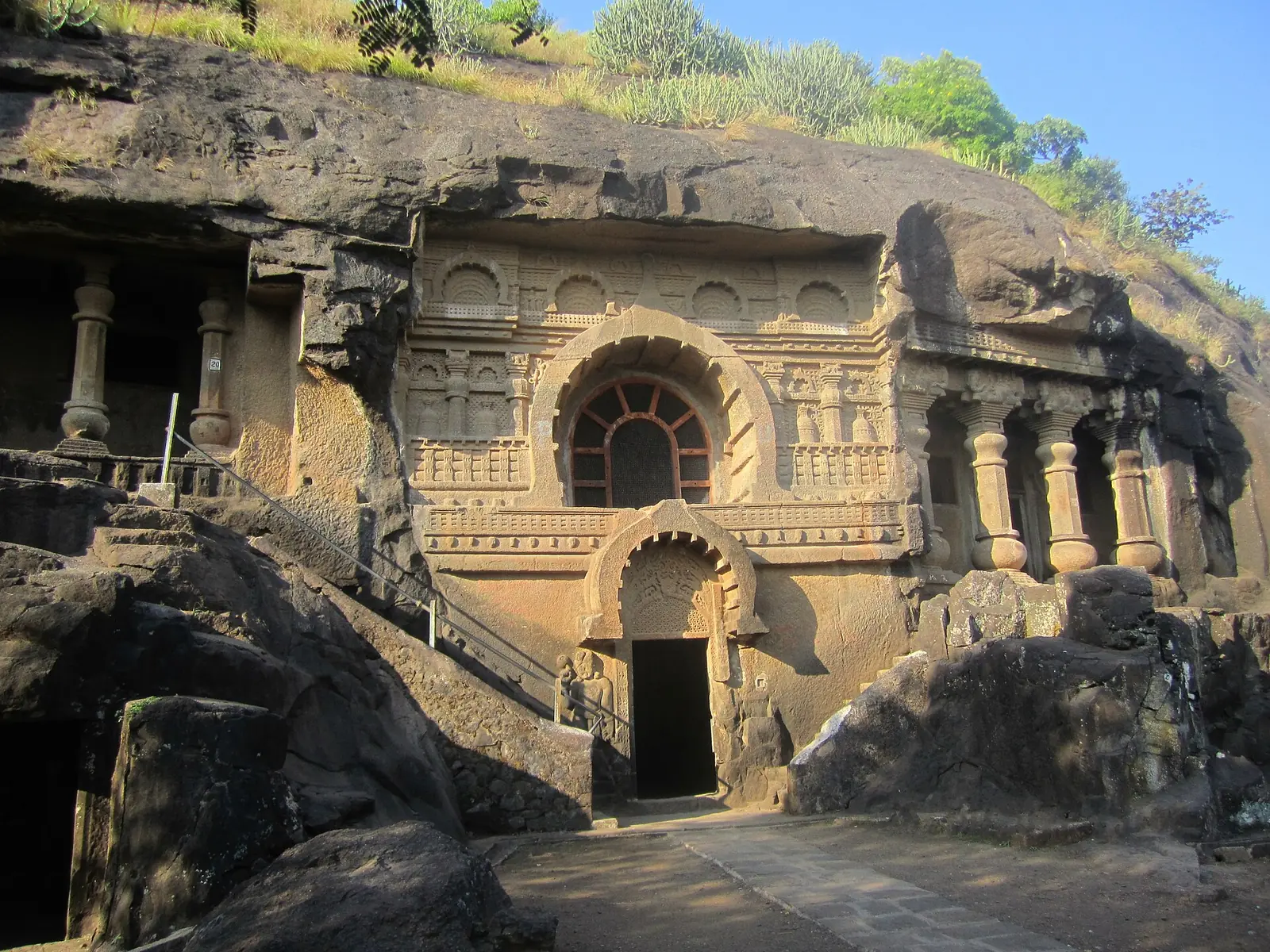
Cave 18 is the chaitya hall, the oldest, with a horseshoe window over its door and a stupa inside. Most of the others are viharas, square halls with cells for monks, their facades carved with pillars whose capitals bear animals and riders. Cave 3 has a porch of six pillars and a doorway flanked by guardians; Cave 10 is the finest of the viharas. Later centuries added images of the Buddha and Bodhisattvas inside some halls. The steps up the hill take about twenty minutes, and the view over Nashik and the Mumbai–Agra road is wide.
The life of this place
- c. 1st century BCEThe chaitya hall, Cave 18, is cut.
- early 2nd century CEUshavadata, Nahapana’s son-in-law, gives Cave 10 and its endowments.
- Year 18 of GautamiputraGautamiputra Satakarni, victorious over Nahapana, grants land to the monks of Nashik.
- Year 19 of PulumaviGautami Balashri has the Nasik prashasti cut in Cave 3.
About 8 km south-west of central Nashik on the Mumbai road; an ASI site, open daily.