01The seat of Sindh
The Chachnama, a 13th-century Persian translation of an older Arabic history, makes Aror the capital of the Rai dynasty of Sindh. When Rai Sahasi II died, his Brahmin minister Chach married the widowed queen and took the throne; from Aror he and then his son Dahir ruled a kingdom reaching from the sea at Debal to Multan and the borders of Kashmir. The Chinese pilgrim Xuanzang, who passed through Sindh in the 640s, describes a capital with many Buddhist monasteries and Deva temples and a king of the Shudra caste, which fits the Rai house before Chach.
02Fall, and a river that left
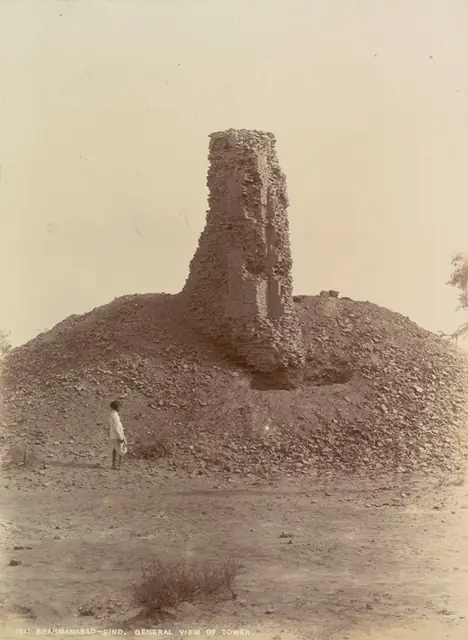
Dahir fell near Rawar in 712. His son held out in Aror for a time, but the Chachnama says the city opened its gates to Muhammad bin Qasim after its people were told of the king’s death. Aror stayed an important town under Arab rule. Some time around the 10th century the Indus shifted its course west, the city lost its water, and the people moved to Rohri and Sukkur. Today the ridge above the village of Aror carries broken walls, and a hilltop shrine of Kalka Devi that Sindhi Hindus still visit.
The life of this place
- c. 641Xuanzang visits the capital of Sindh.
- 7th centuryChach, minister of the Rai kings, takes the throne at Aror.
- 712–713After Dahir’s death Aror falls to Muhammad bin Qasim.