01Nana’s retreat
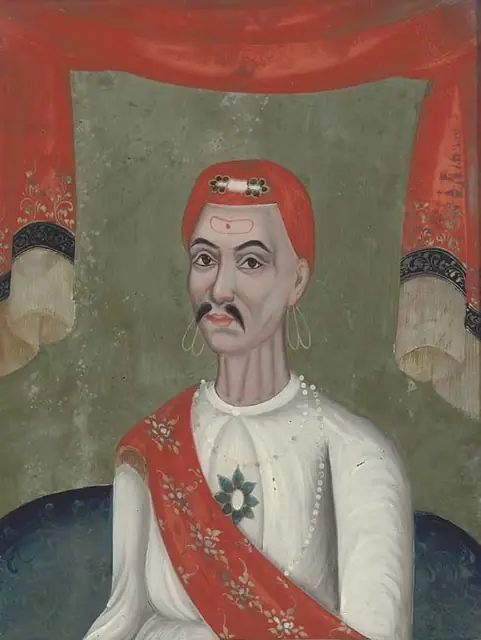
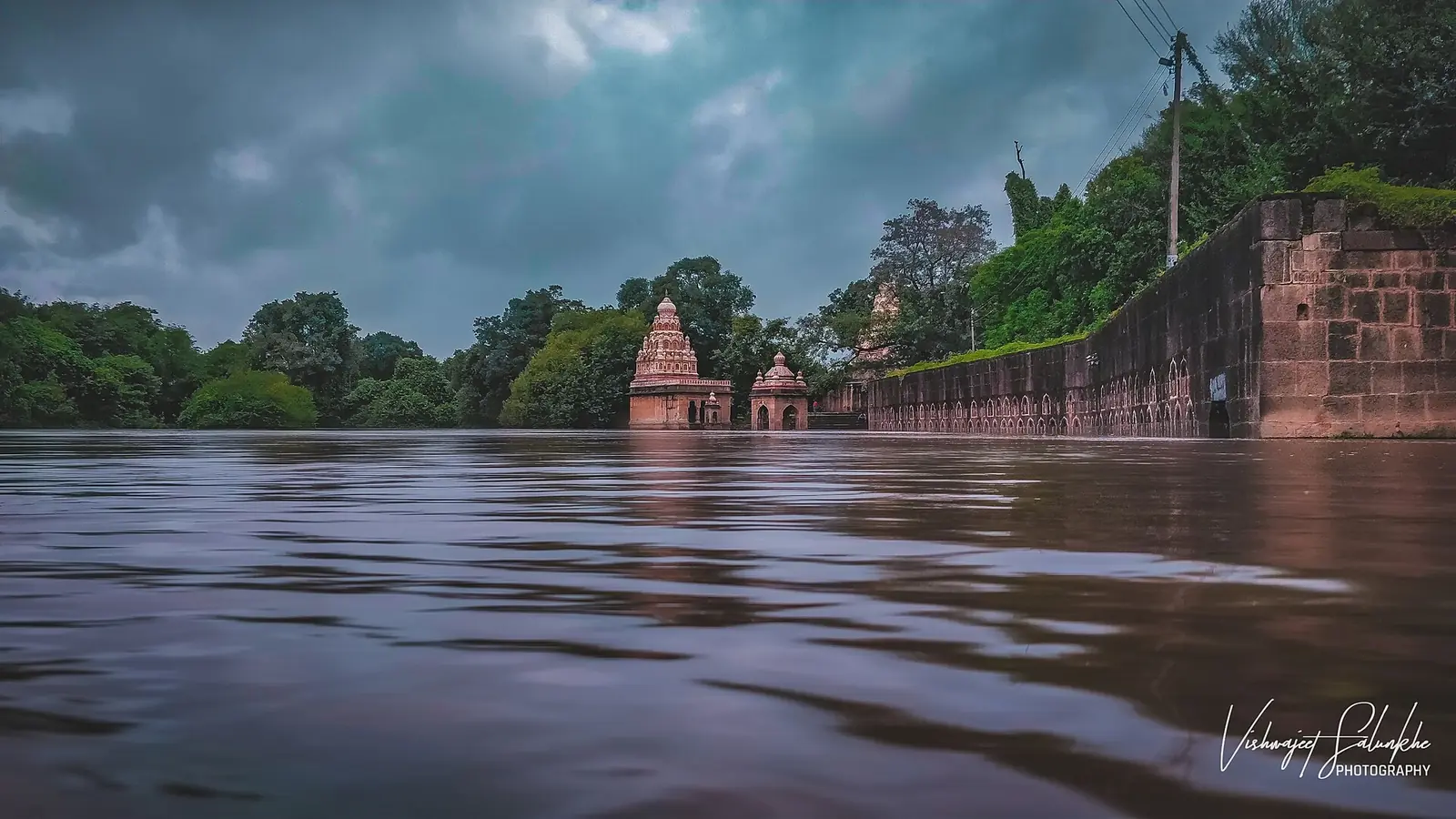
Balaji Janardan Bhanu, called Nana Phadnavis, ran the affairs of the Peshwas from the 1770s until his death in 1800, through the murder of Narayanrao, the first war with the British, and the boyhood of Sawai Madhavrao. Menavali was given to him as an inam, and here, a few kilometres from the temple town of Wai, he built a wada with a courtyard and carved woodwork, a ghat of stone steps down to the Krishna, and temples of Shiva as Meneshwar and of Vishnu on the bank. The wada is still lived in by his descendants.
02The Vasai bell
In 1739 Chimaji Appa, brother of Bajirao I, took Vasai from the Portuguese after a long siege. Church bells were carried off from the Portuguese towns of the coast and hung in temples across Maharashtra; the big bronze bell at the Menavali ghat, cast in Europe with a cross on its side, is one of the best known. The ghat, with its temples, steps and the bell in its stone frame, is one of the best-kept river fronts of the Peshwa period, and film crews come often.
The life of this place
- 1739Chimaji Appa takes Vasai from the Portuguese.
- 13 March 1800Nana Phadnavis dies at Pune.