01Malhar Rao and Ahilyabai
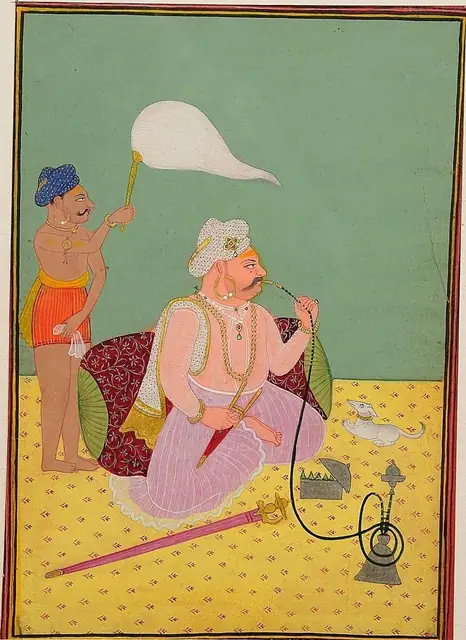
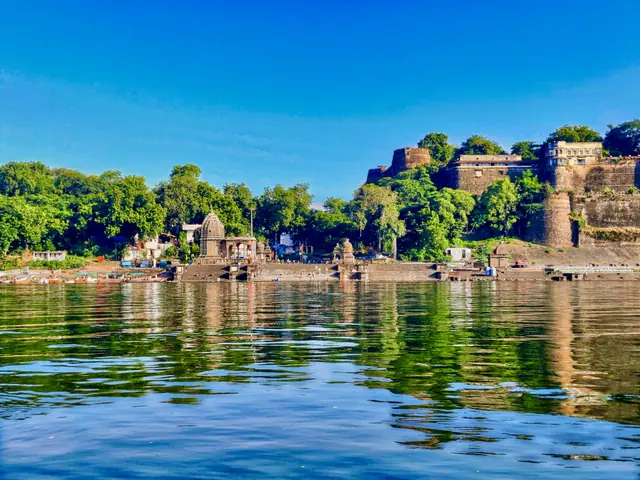
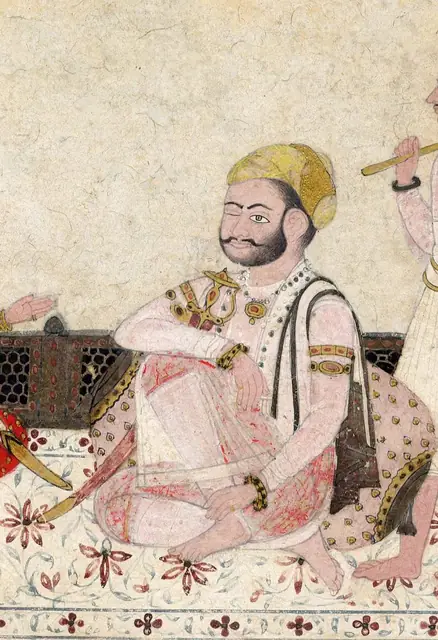
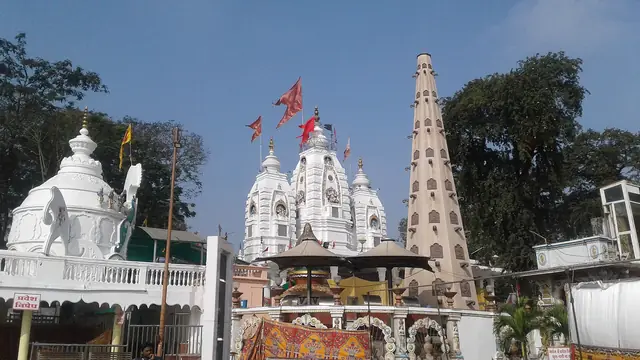
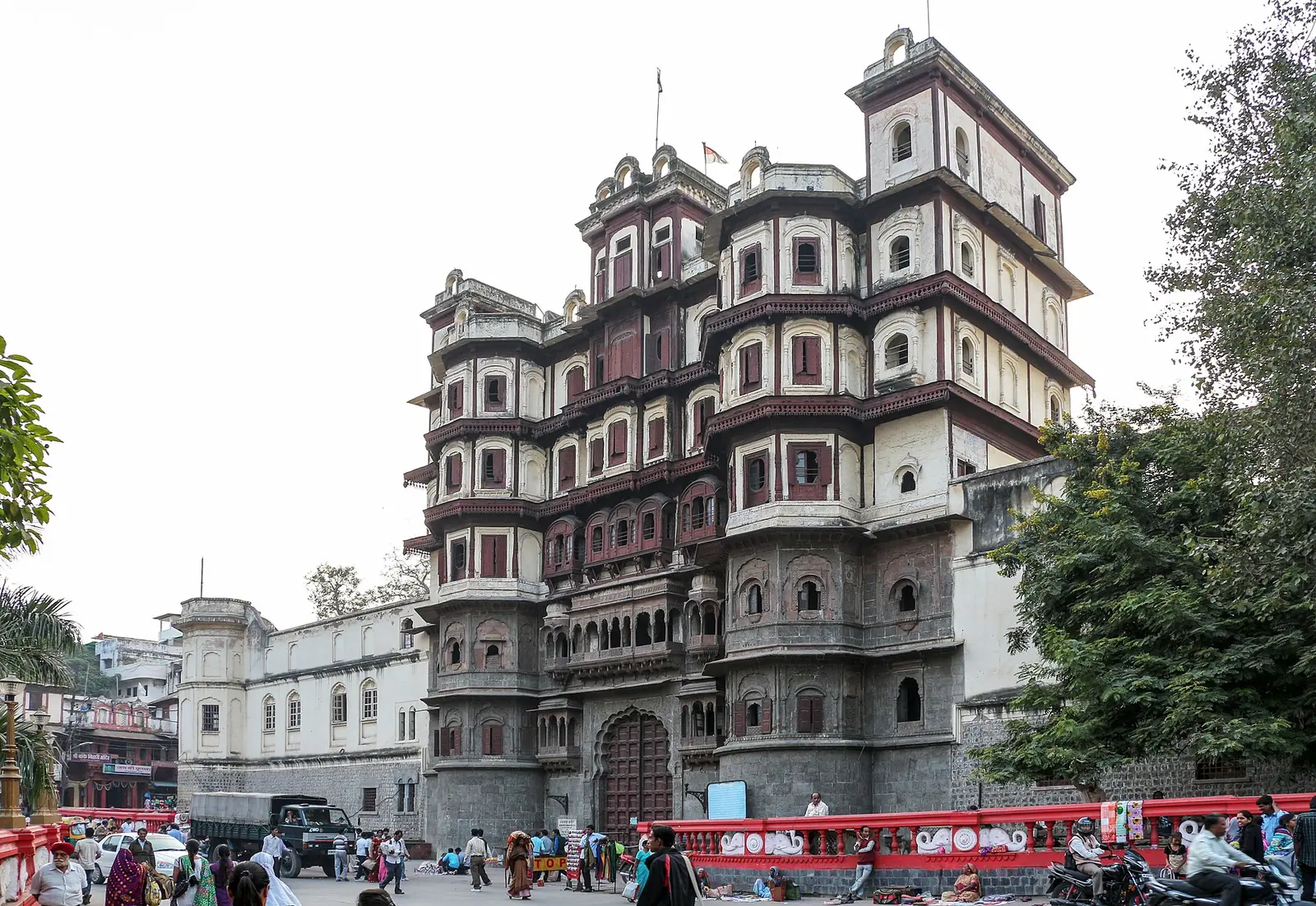
Malhar Rao Holkar, a shepherd’s son from near Jejuri, rose as one of Bajirao I’s cavalry commanders, and in the 1730s the Peshwa granted him Indore and a great part of Malwa. The Rajwada, the Holkar palace in the middle of the old bazaar, was begun around 1747. His son Khanderao fell at Kumher in 1754, and after Malhar Rao’s death in 1766 and his grandson’s soon after, Khanderao’s widow Ahilyabai took the government. She ruled from Maheshwar on the Narmada, and her grants rebuilt or endowed temples and ghats across Bharat: the present Kashi Vishwanath of 1780, a Somnath temple beside the ruined one, ghats at Haridwar and Gaya. Indore’s Khajrana Ganesh is also remembered as her work.
02Sack, treaty and capital
In October 1801 Daulat Rao Scindia’s army under Sarje Rao Ghatge defeated Yashwantrao Holkar outside Indore and sacked the town, burning the Rajwada. Yashwantrao recovered and beat the Peshwa and Scindia at Pune the next year. After the Holkar army was defeated by the British at Mahidpur in December 1817, the Treaty of Mandsaur in January 1818 made the state a British ally, and the capital moved from Maheshwar to Indore. The Rajwada was burnt again in the riots of 1984 and was restored in the 2000s. Holkar Indore joined Madhya Bharat in 1948.
The life of this place
- 1730sThe Peshwa grants Indore and much of Malwa to Malhar Rao Holkar.
- c. 1747The Rajwada is begun.
- 1767Ahilyabai Holkar takes up the government, ruling from Maheshwar until 1795.
- October 1801Scindia’s army under Sarje Rao Ghatge sacks Indore and burns the Rajwada.
- January 1818Treaty of Mandsaur; Indore becomes the Holkar capital.
- 1948Indore state joins Madhya Bharat.
- 1984The Rajwada is burnt in riots; restored in the 2000s.
The Rajwada and the Krishnapura chhatris of the Holkars are in the old city; Khajrana Ganesh is in the east. Maheshwar, Ahilyabai’s capital, is 90 km south.