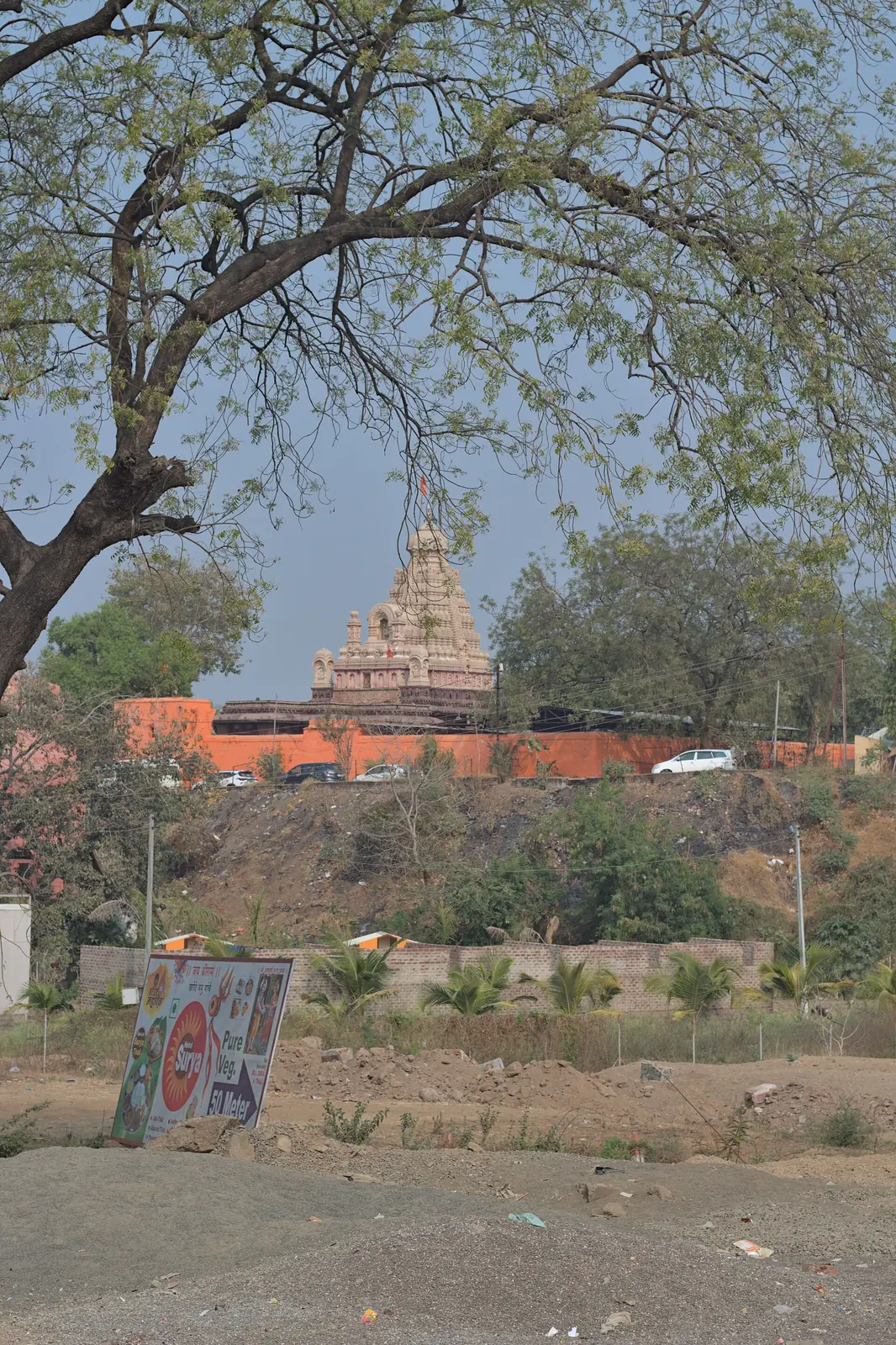
01Ghushma’s hundred lingas
The Shiva Purana closes its account of the twelve Jyotirlingas here. Ghushma, a devout woman of the Devagiri country, shaped a hundred and one clay lingas each day, worshipped them and let them go in a lake. Her elder sister Sudeha, jealous of Ghushma’s son, killed the boy and threw his body into that same lake. Ghushma did not break off her puja. When she went to the water to release the lingas, her son walked out alive, and Shiva appeared before her. At her asking he stayed, and took her name: Ghushmeshvara, now said Grishneshwar. Women still pray here for children and for their safety.
02Fallen and raised twice
Verul lay inside the Yadava kingdom of Devagiri, which fell to the Delhi Sultanate between 1296 and 1318, and the temple was damaged in those wars. In the 16th century Maloji Bhosale, the patil of Verul and grandfather of Chhatrapati Shivaji, rebuilt it; the Bhosale family’s old seat is in this village. The shrine suffered again in the long Mughal–Maratha wars. The temple standing today, of red basalt with a five-tiered shikhara and carved walls of Vishnu’s avatars, was rebuilt in the 18th century by Ahilyabai Holkar of Indore, who also restored Kashi Vishwanath and Somnath.
The life of this place
- 1296–1318The Devagiri kingdom falls to the Delhi Sultanate; the temple is damaged in these wars.
- 16th centuryMaloji Bhosale, grandfather of Shivaji, rebuilds the temple.
- 18th centuryAhilyabai Holkar rebuilds the temple in its present red-stone form.
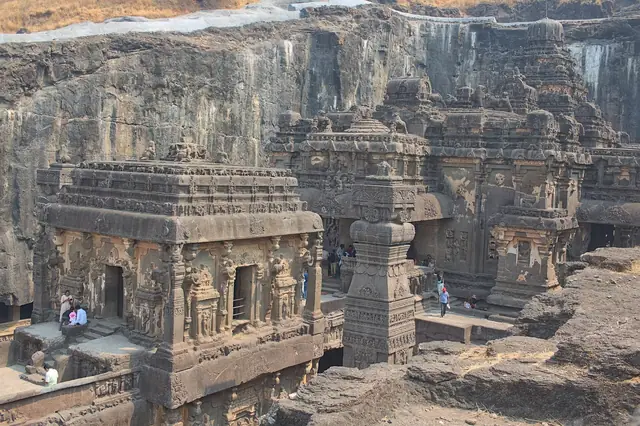
About 30 km from Chhatrapati Sambhajinagar (Aurangabad) and 1 km from the Ellora caves. Men enter the sanctum bare-chested, by old custom.