01Edicts for a conquered land
The rock at Dhauli carries Ashoka’s Major Rock Edicts I to X and XIV. Edicts XI to XIII are left out, and XIII is the one in which, elsewhere, the king counts the dead of Kalinga and speaks of his remorse. In their place stand two Separate Edicts, addressed to the mahamatras of Tosali, the provincial seat. They tell the officers that all men are the king’s children, that no one is to be imprisoned or tortured without cause, and that the frontier people should not fear him. The inscription was found by Markham Kittoe in 1837 and read with the help of James Prinsep, in the same years in which Ashoka’s script was first deciphered.
02The elephant and the stupa
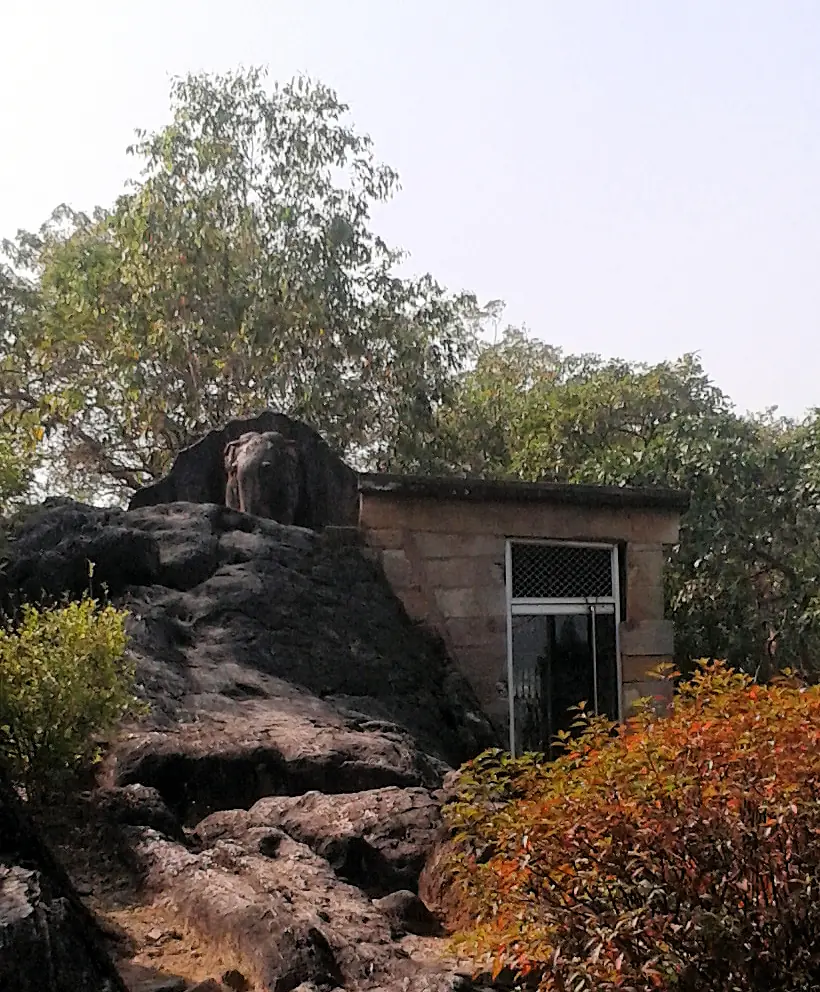
Above the inscription the rock has been shaped into the head, trunk and forelegs of an elephant coming out of the hill, among the oldest rock-cut sculptures in Odisha. The elephant was a sign of the Buddha, and the edicts end at one point with the word for the white elephant. Most scholars place the battlefield of the Kalinga war in the plain below, and local people say the Daya ran red. On the summit the Japan Buddha Sangha and the Kalinga Nippon Buddha Sangha built the white Shanti Stupa in 1972. An old Shiva temple stands near it, and the hill is a place of worship as much as a monument.
The life of this place
- c. 261 BCEAshoka conquers Kalinga; the war is fought in this region.
- c. 260–250 BCEThe rock edicts and the Separate Kalinga Edicts are cut at Dhauli.
- 1837Markham Kittoe finds the inscription.
- 1972The Shanti Stupa is built on the summit.
About 8 km south of Bhubaneswar; the edicts are at the foot of the hill under a shelter, the stupa on top.