01A city laid out in a square
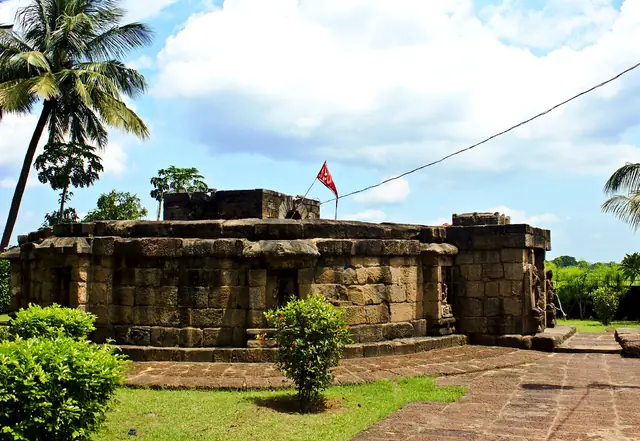
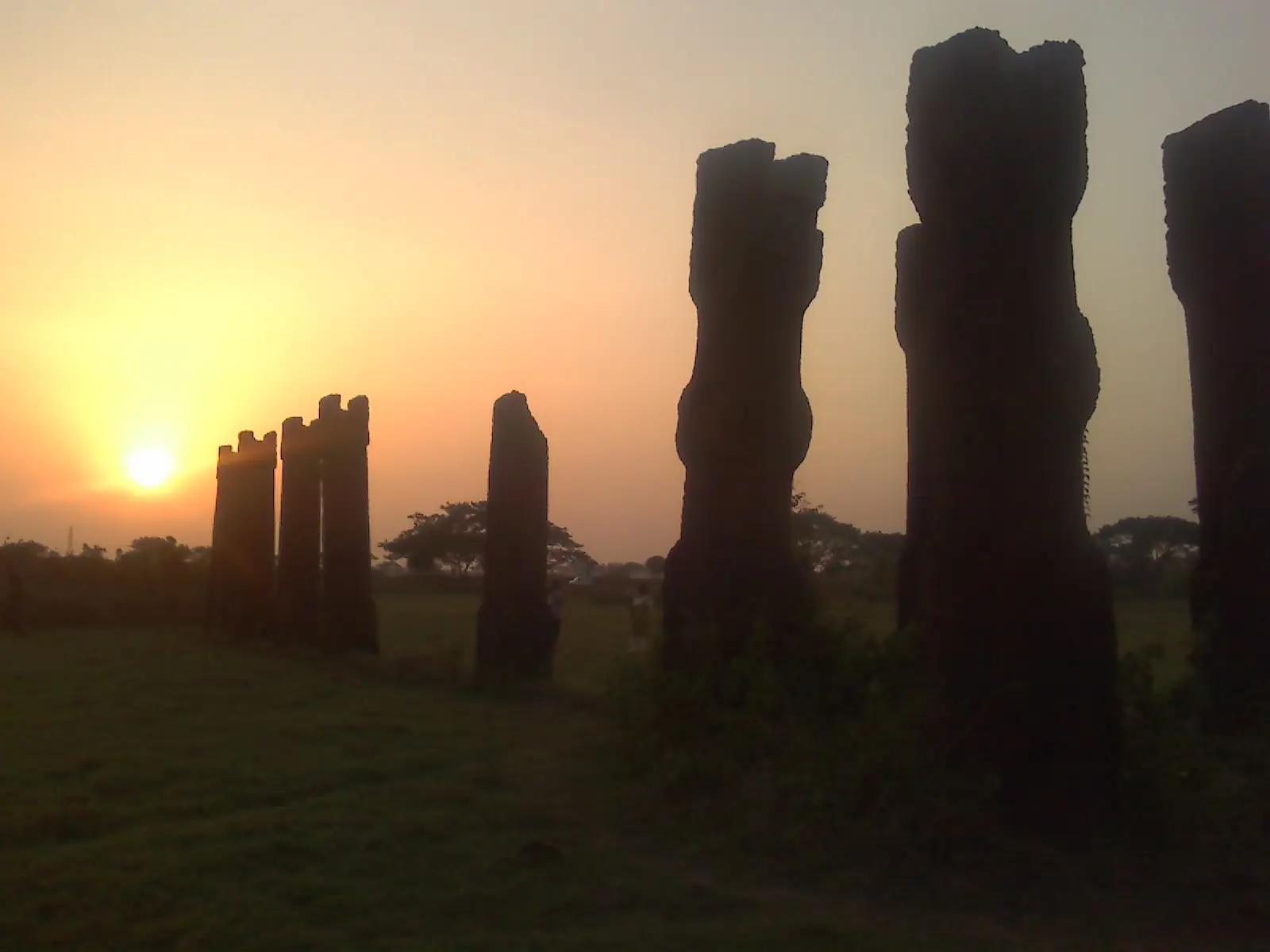
The walls run about 1.2 km on each side, a near-perfect square of rammed earth faced with laterite, with two gateways on each side. B. B. Lal dug here in 1948 and found that the rampart had been raised in stages from about the 3rd century BCE, and that the town lived on into the 4th century CE. Fresh excavations in the 2000s by R. K. Mohanty and Monica L. Smith showed streets, house plots and wells inside, and a crowded city of perhaps tens of thousands. In the middle stand the ‘sixteen pillars’, tall laterite columns of a hall whose purpose is still argued.
02Kharavela’s Kalinganagari?
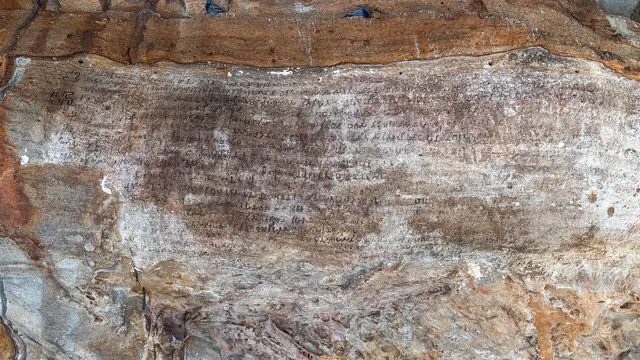
The Hathigumpha inscription on Udayagiri hill, only a few kilometres away, says that in the first year of his reign Kharavela repaired the gates, walls and buildings of Kalinganagari that a storm had damaged, and rebuilt its tanks. The size of Sisupalgarh, its date and its nearness to the Jain caves he cut have led many historians to see it as that capital. The inscription does not name the site, so the identification stays a strong likelihood, not a proven fact.
The life of this place
- c. 3rd century BCEThe first rampart was raised around the settlement.
- 1948 CEB. B. Lal of the ASI excavated the gateways and rampart.
- 2000sNew excavations mapped the streets and houses inside the walls.