01Cuttack, the ICS and the Congress
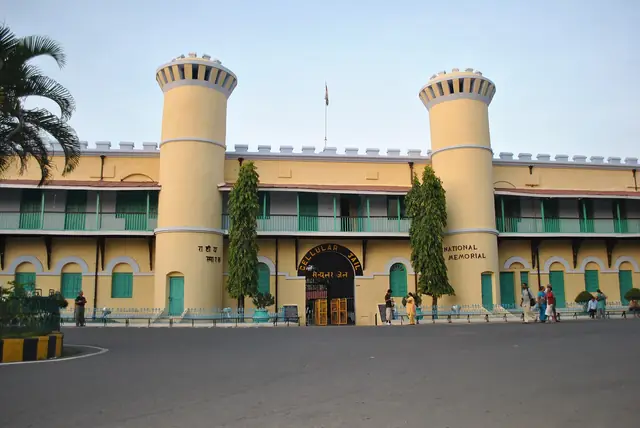
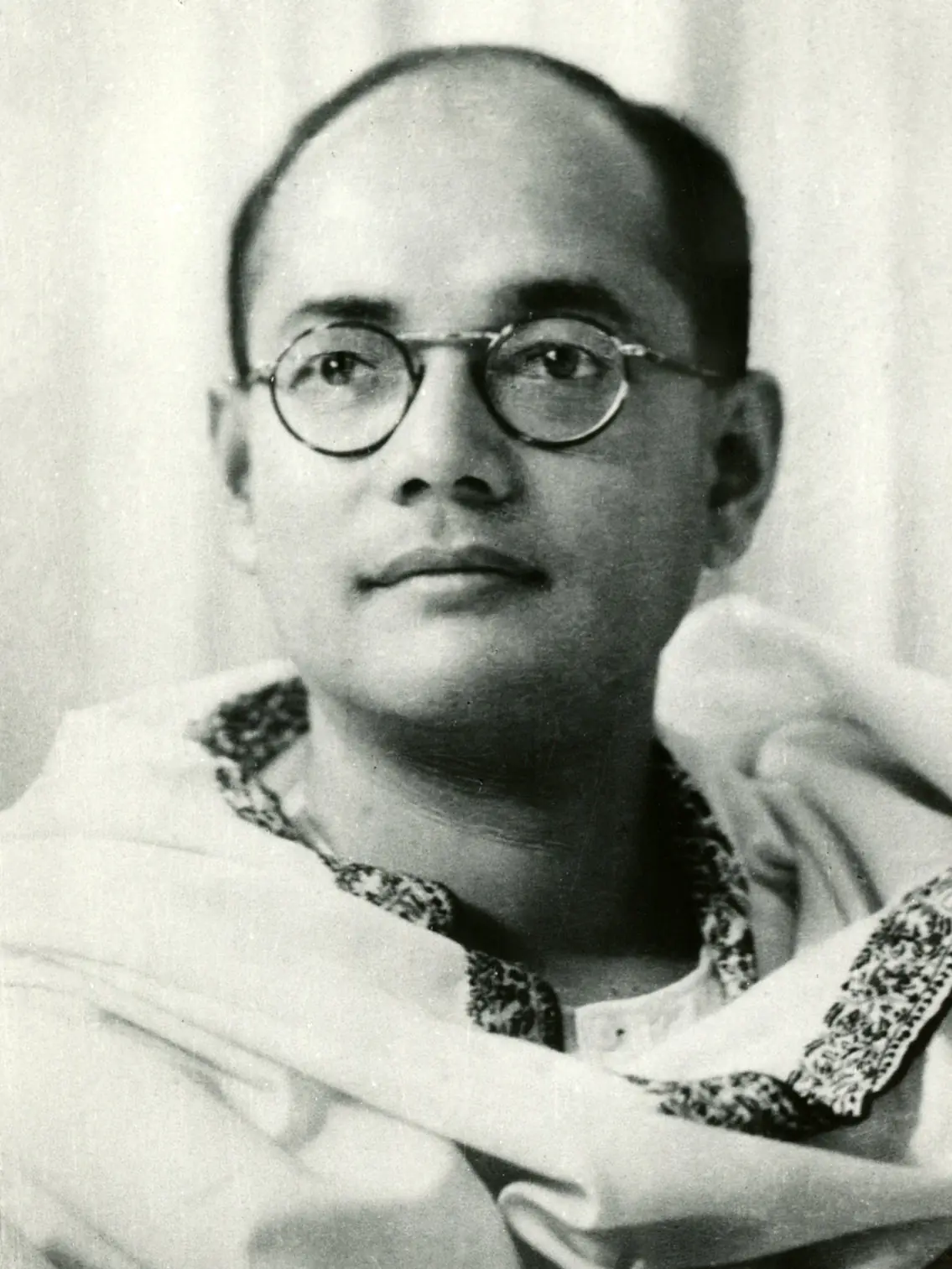
He was born at Cuttack, the ninth child of the lawyer Janakinath Bose. As a boy he read Vivekananda and Ramakrishna, and once ran away to the Himalayas in search of a guru. He passed fourth in the Indian Civil Service examination in 1920 and resigned in April 1921, writing that one cannot serve two masters. Under C. R. Das he worked for the Congress in Bengal, spent 1925–27 in Mandalay jail, and became Mayor of Calcutta in 1930. He was elected Congress president at Haripura in 1938 and again at Tripuri in 1939, beating Pattabhi Sitaramayya. Opposed by Gandhi and the Working Committee, he resigned in April 1939 and formed the Forward Bloc.
02The escape and Azad Hind
Held under house arrest in Calcutta, he slipped out on the night of 16–17 January 1941 disguised as a Pathan insurance agent, Mohammed Ziauddin, and reached Berlin by way of Peshawar, Kabul and Moscow. In 1943 he travelled by German and Japanese submarines to East Asia. At Singapore he took command of the Indian National Army on 4 July 1943 and on 21 October proclaimed the Provisional Government of Azad Hind. On 30 December 1943 he raised the tricolour at Port Blair. The INA fought alongside the Japanese at Imphal and Kohima in 1944. At Rangoon on 4 July 1944 he asked the Indians of East Asia for blood in return for freedom. ‘Jai Hind’ became the greeting of his army.
03Taihoku and the inquiries
After Japan surrendered he flew from Saigon. The Shah Nawaz Committee (1956) and the Khosla Commission (1974) concluded that his plane crashed at Taihoku in Taiwan on 18 August 1945 and that he died of burns that night; ashes said to be his are kept at the Renkoji temple in Tokyo. The Justice Mukherjee Commission reported in 2005 that he did not die in that crash, a finding the government did not accept. The Red Fort trials of INA officers in 1945–46 stirred the whole country and the armed forces. Since 2021 his birthday, 23 January, is kept as Parakram Diwas.
“Give me blood, and I will give you freedom!”
Speech to Indians in Rangoon, 4 July 1944