
The sieges of Kohima and Imphal were broken by 22 June 1944, and the Japanese and INA forces fell back into Burma with very heavy losses.
01Moirang, 14 April 1944
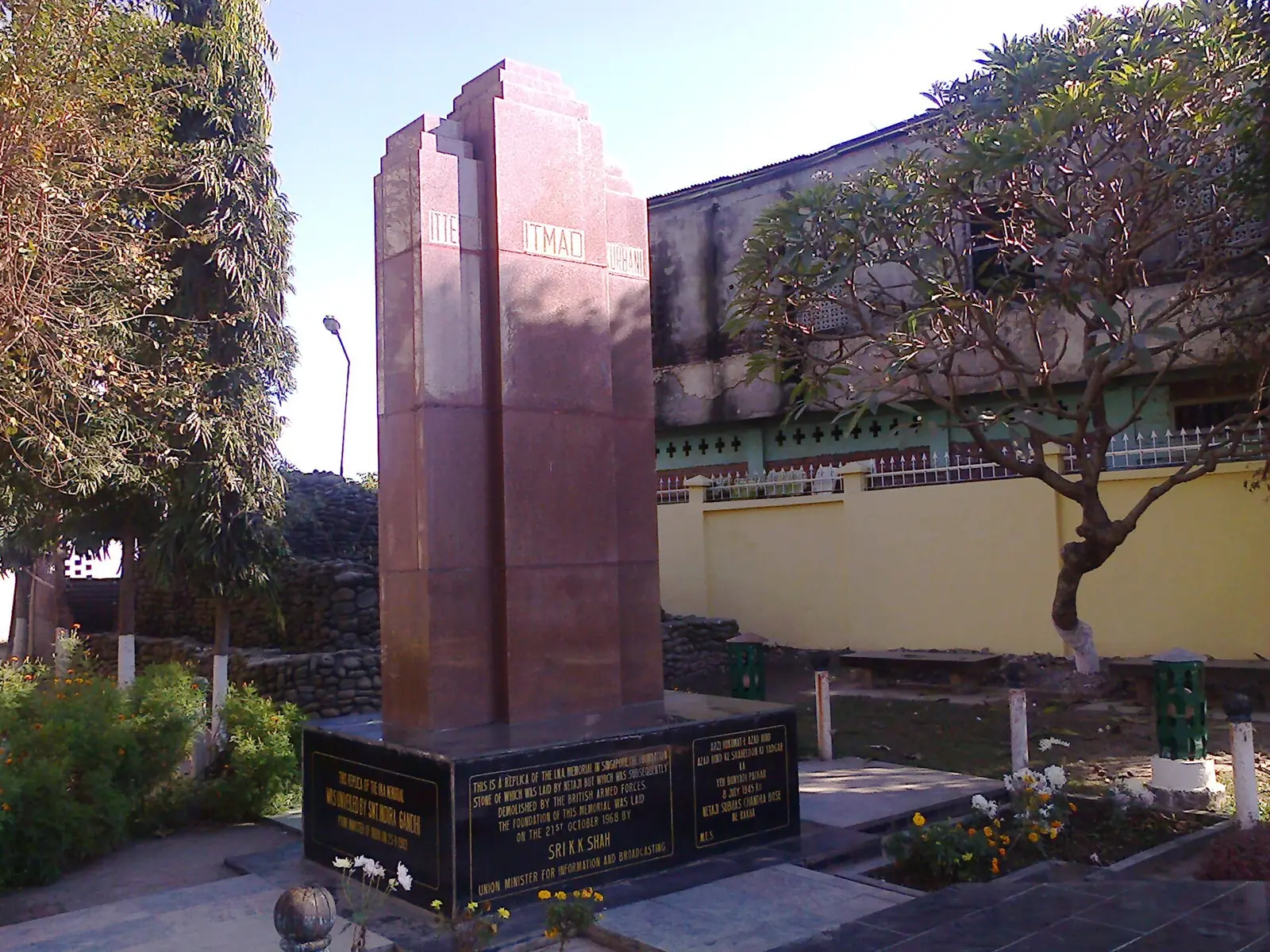
In March 1944 the Japanese launched their U-Go offensive across the Chindwin to take Imphal and Kohima. Units of the INA’s 1st Division, among them the Subhas Brigade under Shah Nawaz Khan, fought on the Arakan and Imphal fronts. On 14 April 1944 an INA party under Colonel Shaukat Malik raised the tricolour at Moirang in Manipur, the first time the flag of Azad Hind flew on Indian soil held by its army. The INA Memorial and Museum now stands there.
02The monsoon retreat
Kohima was besieged from early April; the fighting across a tennis court in the Deputy Commissioner’s bungalow became famous. Imphal held out, supplied by air. When the monsoon broke the attackers were starving and without supplies; the road from Kohima to Imphal was opened on 22 June. The retreat into Burma cost the Japanese and the INA thousands of men to hunger and disease. In 1945 the trial of Shah Nawaz Khan, Prem Sahgal and Gurbaksh Singh Dhillon at the Red Fort stirred the whole country.
The INA lost the battle, but the Red Fort trials that followed shook the loyalty of the Indian armed forces to the Raj and hastened its end.