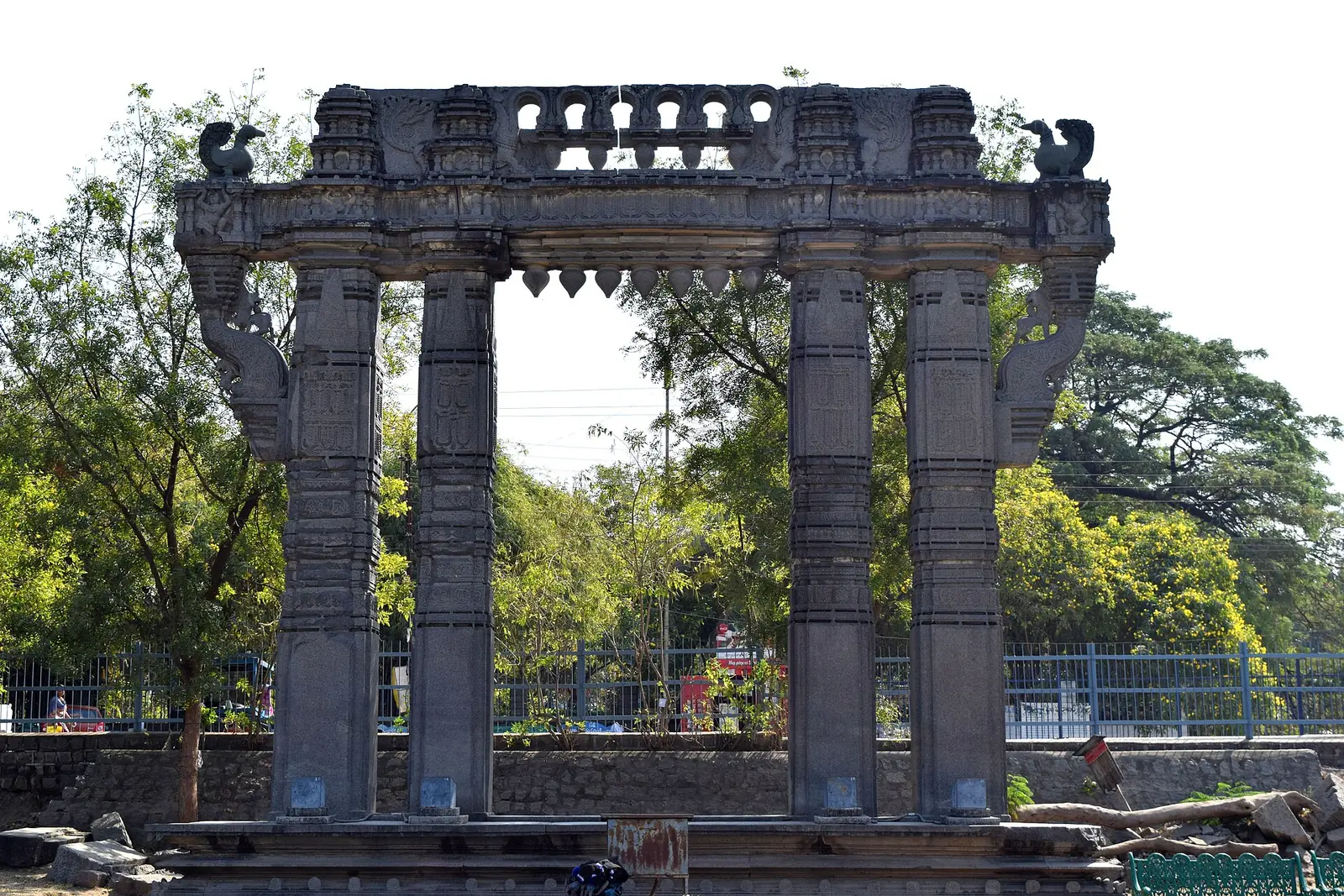
01A daughter on the throne
Ganapatideva had no son. He trained his daughter in arms and statecraft, and she was formally named his heir; inscriptions give her the masculine title Rudradeva Maharaja. When she took full power around 1262, several nobles refused to serve a woman and rose against her. The Seuna Yadava king Mahadeva marched on Orugallu. She held the fort, drove the Yadava army back across her frontier, and brought the rebel chiefs to heel one by one. The double ring of walls at Warangal, stone inside and earth outside, was strengthened in her years.
02Seen by a Venetian
Marco Polo, sailing down the eastern coast around 1290, landed at Motupalli, the Kakatiya port, and wrote that the kingdom had been ruled for forty years by a queen, a lady of great discernment who kept justice and peace and was loved by her people more than any lord before her. He also noted the fine cotton cloth of the region. The Chandupatla inscription of 1289 records her death together with her general Mallikarjuna Nayaka; historians link it to her war with the rebel Kayastha chief Ambadeva. Her grandson Prataparudra came to the throne after her.