
Zero as a number, with rules for working with it, is set out by Brahmagupta in 628 CE. The Arabs learned the nine figures and zero from India and called them Hindi numerals; Europe then learned them from the Arabs and called them Arabic.
The proof
- Brahmagupta’s Brahmasphutasiddhanta (628 CE) gives rules such as: a number minus itself is zero.
- The Chaturbhuj temple inscription at Gwalior fort (876 CE) writes 270 and 50 with a round zero.
- Al-Khwarizmi’s book of about 825 on calculating with Hindu numerals reached Europe in Latin as Algoritmi de numero Indorum.
- Fibonacci’s Liber Abaci (1202) teaches the "nine figures of the Indians".
01How the name changed on the road
Arab mathematicians were honest about where the figures came from. They called them al-arqam al-hindiyya, the Indian numerals, and Al-Khwarizmi’s name became the word algorithm. Europeans met the system in Arabic books and named it for the people they learned it from. Indian astronomers had worked with place value and an empty place for centuries before Brahmagupta treated shunya as a number in its own right. On a wall at Gwalior you can still see the zero carved in 876, the oldest dated zero in India that stands where it was cut.
Read on
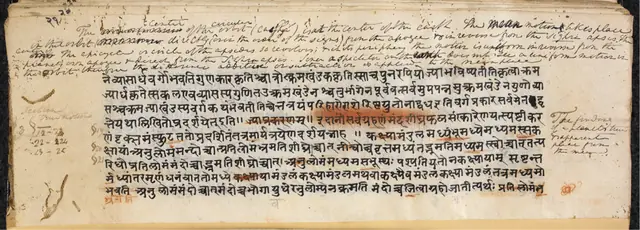
Brahmagupta
Brahmagupta of Bhillamala (Bhinmal) wrote the Brahmasphutasiddhanta in 628 CE, at thirty. It is the first text to treat zero as a number with its own rules of addition, subtraction and multiplication, and to give rules for negative numbers.
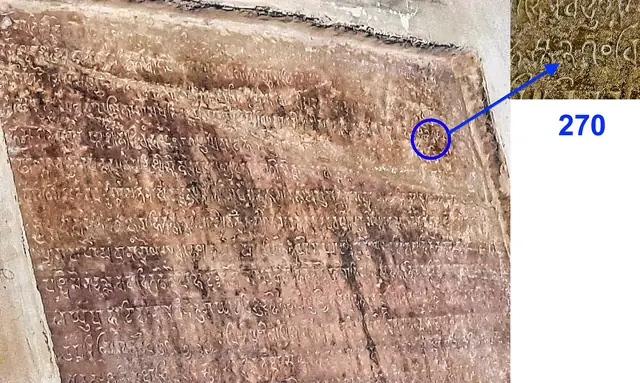
Zero at the Chaturbhuj temple, Gwalior
A temple endowment record in which the numeral zero is written as a small circle, the oldest such zero in stone whose date is certain.
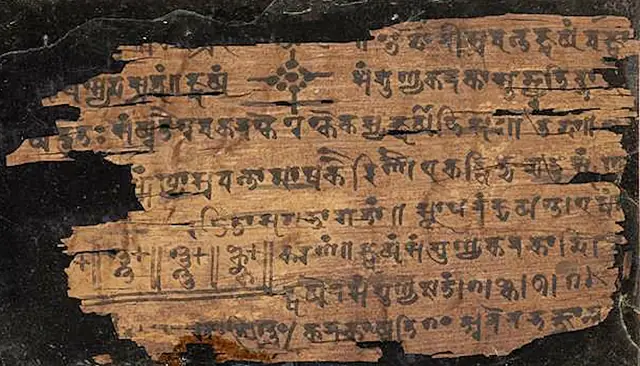
The Bakhshali manuscript
Seventy fragile leaves of birch bark holding a book of arithmetic in Sharada script, in which zero is written as a dot.
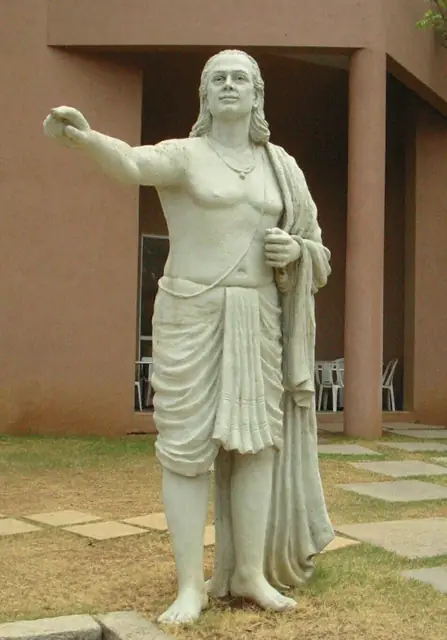
Aryabhata
Aryabhata wrote the Aryabhatiya at Kusumapura (Pataliputra) at the age of 23. In 121 verses he gave π as 3.1416, a table of sines, and the rotation of the Earth on its axis, and he explained eclipses by the shadows of the Earth and Moon.