
Khmer, Cham and Javanese
Cambodia, Vietnam, Laos, Thailand, Indonesia · 5th–15th century; Bali to today
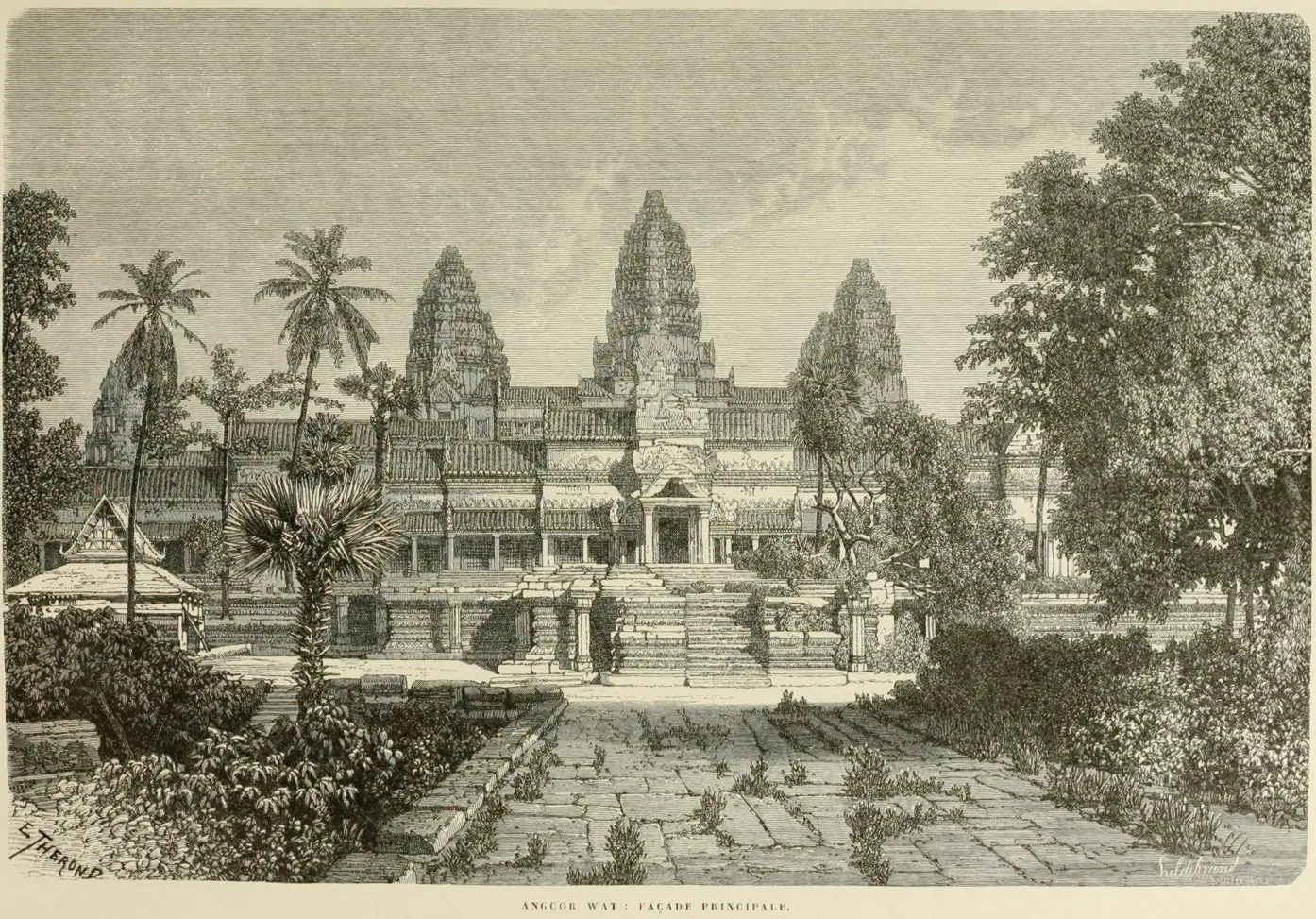
The kings of Southeast Asia took the Shilpa texts and the Agamas from India and built temples that are their own. The Khmer temple-mountain set five towers on a stepped pyramid, Meru with its four lesser peaks, inside walls and moats that stood for the ranges and oceans around it. Suryavarman II’s Angkor Wat, dedicated to Shri Vishnu in the 12th century, is the largest religious monument on earth, and its galleries carry the Samudra Manthan in a relief about 49 metres long. Banteay Srei of 967, in pink sandstone, and Preah Vihear on its cliff are Shaiva.
The Cham of central Vietnam built in brick, tall single towers called kalan, at My Son and Po Nagar. In Java the Prambanan complex, inscribed in 856, raises tall towers for Shiva, Vishnu and Brahma with the Ramayana carved around the balustrade. In Bali the temple became an open courtyard, the pura, with split gates and tiered meru roofs, and there it is still the centre of village life.
How to recognise it
- Temple-mountain with five towers (Khmer)
- Moats and walls as the cosmic oceans and ranges
- Brick kalan towers (Cham)
- Long relief galleries of the Itihasa and Puranas
- Open pura courtyards and meru roofs (Bali)
Great examples
 Standing
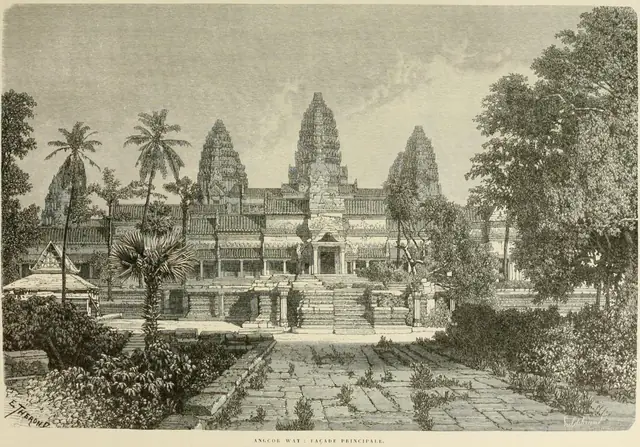
Angkor Wat
The largest Hindu temple ever raised, built by the Khmer king Suryavarman II for Bhagwan Vishnu. Its five towers stand for Meru, and they are on the flag of Cambodia.
 Standing
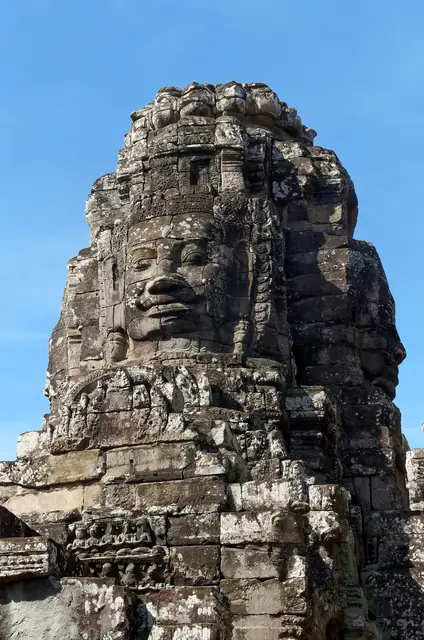
Bayon, Angkor Thom
The state temple at the centre of Angkor Thom, built by Jayavarman VII as a Mahayana Buddhist shrine. It is in a Hindu history because the Khmer world around it was Hindu, and because a later king turned it back to Shiva and Vishnu.
 Standing
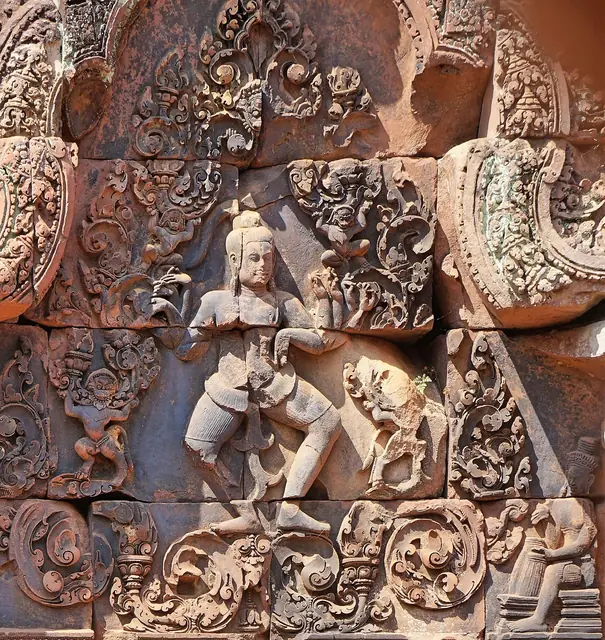
Banteay Srei
A small Shiva temple of pink sandstone, carved so finely that it is called the jewel of Khmer art. It was built not by a king but by a royal guru.
 Ruined
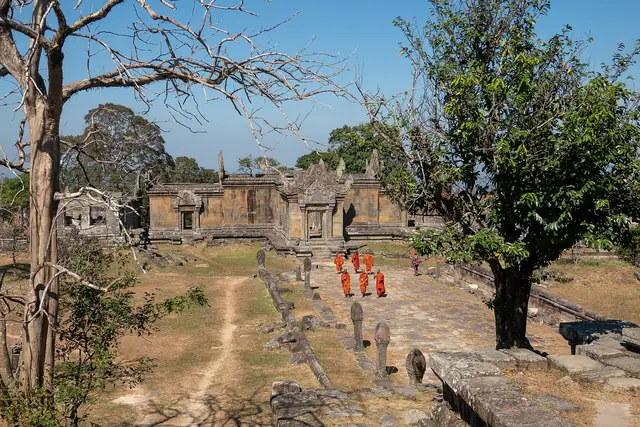
Preah Vihear (Shikhareshvara)
A Shiva temple strung along a cliff of the Dangrek mountains, ending at a drop of more than 500 metres over the Cambodian plain. Cambodia and Thailand have argued over it for a century.
 Ruined
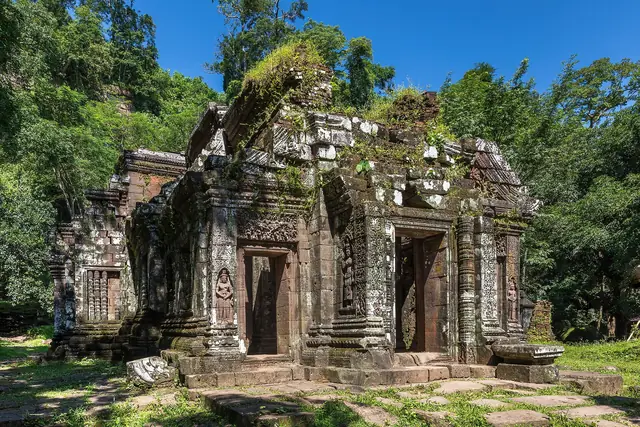
Wat Phou (Vat Phou)
A Khmer Shiva temple climbing the slope of a mountain whose summit looks like a linga, which the inscriptions call Lingaparvata. A spring at the top once poured its water over the linga in the sanctuary.
 Ruined
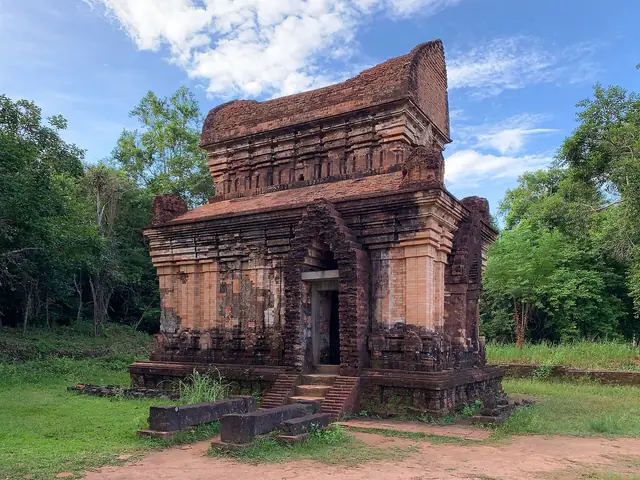
Mỹ Sơn
The holy valley of the Cham kings, where for some nine centuries they built brick temples to Shiva Bhadreshvara, the guardian of their kingdom.
 Standing
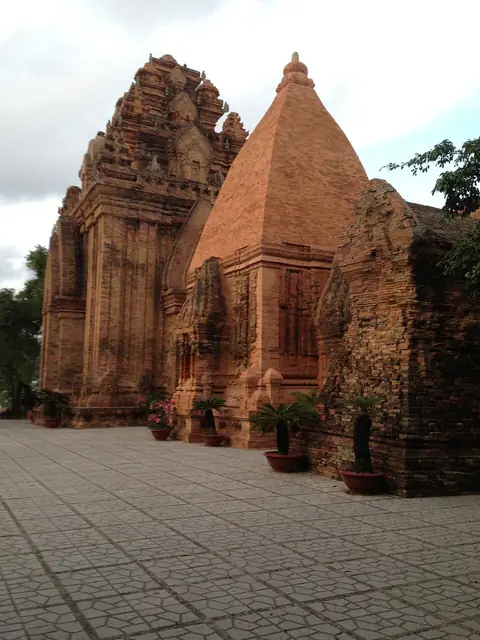
Po Nagar, Nha Trang
A hilltop temple of the Devi above the Cai river mouth at Nha Trang, still in worship by Cham and Vietnamese alike more than a thousand years after its first towers rose.
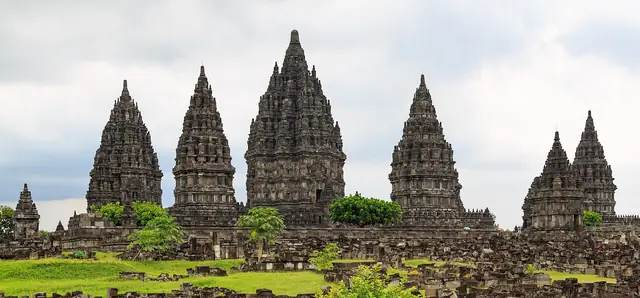 Rebuilt
Prambanan (Shivagrha)
The largest Hindu temple in Indonesia, raised to the Trimurti in ninth-century Java. Its central Shiva tower stands 47 metres high.
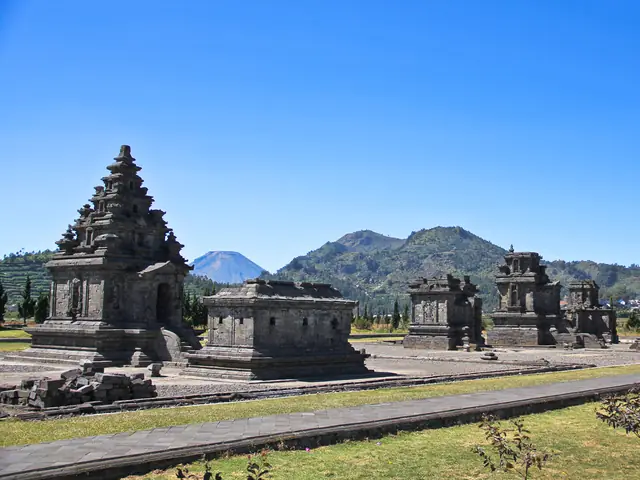 Ruined
Dieng Plateau temples
The oldest standing Hindu temples in Java, small stone Shiva shrines on a volcanic plateau about 2,000 metres up. The Javanese later named them after the heroes of the Mahabharata.
 Ruined
Candi Sukuh
A stepped stone temple on the slopes of Mount Lawu, one of the last Hindu temples built in Java before Islam became the faith of the island’s courts.
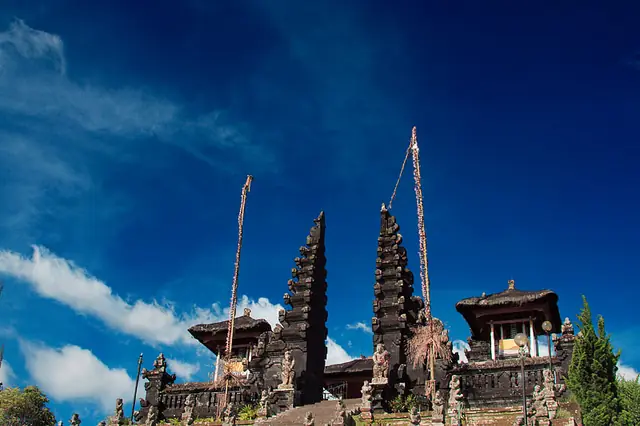 Standing
Pura Besakih
The mother temple of Bali, a complex of more than twenty temples climbing the slope of Gunung Agung, the island’s holiest mountain.