Coins of Bharat

A coin carries a king’s name, his gods and his claims, and it is found where it was spent. These are the coins on this site, in order of date, each with its findspot and its present home.

Coins of Bharat: 12 objects

Punch-marked karshapanas
01Coin · c. 6th–2nd century BCE

Punch-marked karshapanas

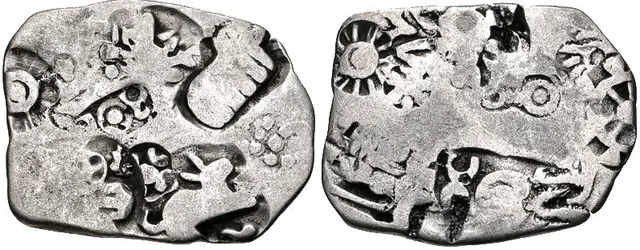
The first coins of Bharat: small pieces of silver of a set weight, stamped one symbol at a time with separate punches.

Found
In hoards across the subcontinent, from Taxila to the Deccan and the Gangetic plain
Kept at
National Museum, New Delhi; British Museum; most Indian state museums
Agathocles’ coins of Balarama and Krishna
02Coin · c. 190–180 BCE

Agathocles’ coins of Balarama and Krishna

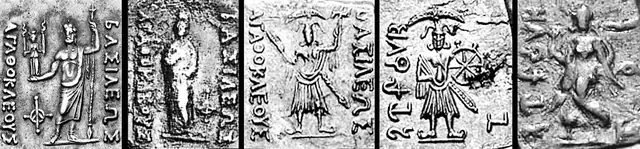
Silver coins of a Greek king of Bactria that carry the oldest known images of Balarama and Vasudeva-Krishna.

Found
Six square silver drachms found at Ai-Khanoum, northern Afghanistan, in 1970
Kept at
The Ai-Khanoum pieces went to the Kabul Museum; a few other specimens are known
Kushana coins of Shiva (Oesho)
03Coin · c. 1st–3rd century CE

Kushana coins of Shiva (Oesho)

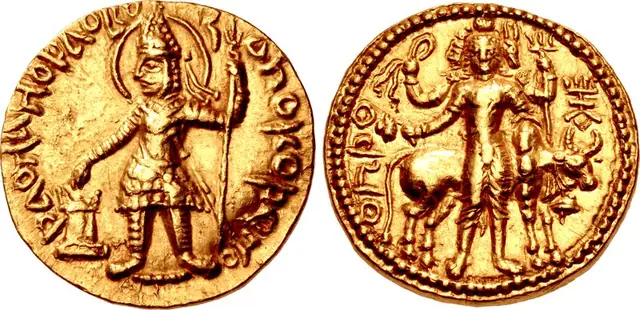
Gold coins of the Kushana emperors showing Shiva with his trident and Nandi, named in the Bactrian inscription as OESHO.

Found
Across the Kushana lands, from Bactria and Gandhara to Mathura
Kept at
British Museum; National Museum, New Delhi; Musée Guimet, Paris; and other collections
Satavahana ship coins
04Coin · Late 2nd century CE

Satavahana ship coins

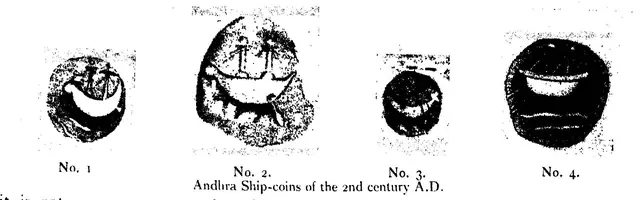
Lead and potin coins of the Satavahana king Yajna Sri Satakarni showing a two-masted ship.

Found
Along the Coromandel coast, between the Krishna and the Kaveri
Kept at
Government Museum, Chennai; British Museum and other collections
Yaudheya coins of Kartikeya
05Coin · c. 2nd century BCE–4th century CE

Yaudheya coins of Kartikeya

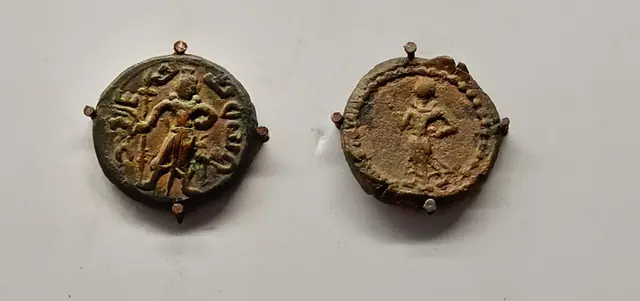
Copper coins of the Yaudheya republic of the Haryana plains, dedicated to Kartikeya and struck in the name of the gana, not of a king.

Found
Haryana, Punjab and northern Rajasthan; clay coin moulds found by Birbal Sahni at Khokrakot, Rohtak
Kept at
Museums in Haryana and Delhi; the Indian Institute of Research in Numismatic Studies, Nashik; other collections
The Chandragupta–Kumaradevi coin
06Coin · 4th century CE

The Chandragupta–Kumaradevi coin

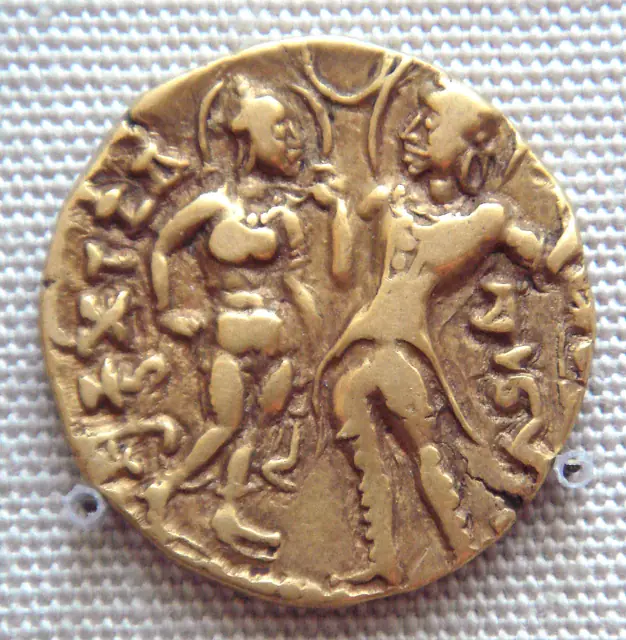
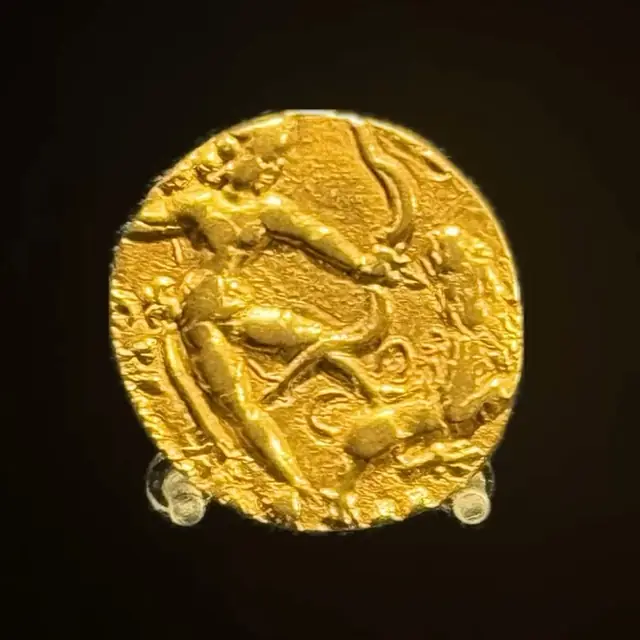
A gold coin showing Chandragupta I with his Licchavi queen Kumaradevi, both named, with the word “Licchavayah” on the back.

Found
Gupta hoards of north India, including Bayana
Kept at
National Museum, New Delhi; British Museum and other collections
Samudragupta’s Ashvamedha coin
07Coin · c. 350–375 CE

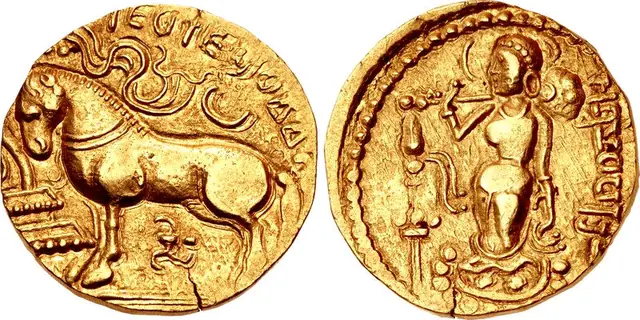
Samudragupta’s Ashvamedha coin

A gold dinar struck to mark Samudragupta’s horse sacrifice: the consecrated horse stands before the sacrificial post.

Found
Gupta hoards, including Bayana (1946)
Kept at
British Museum, National Museum New Delhi and other collections
Gupta gold dinars
08Coin · c. 320–550 CE

Gupta gold dinars

The gold coins of the Gupta emperors, which their own inscriptions call dinaras: portraits of kings as archers, horsemen and lion-slayers, with Lakshmi on the back.

Found
Hoards across north India; the largest, nearly two thousand coins, at Hullanpura near Bayana, Bharatpur, in 1946
Kept at
Many of the Bayana coins in museums across India; also British Museum, Ashmolean Museum and others
Hindu Shahi bull-and-horseman coins
09Coin · c. 9th–10th century CE

Hindu Shahi bull-and-horseman coins

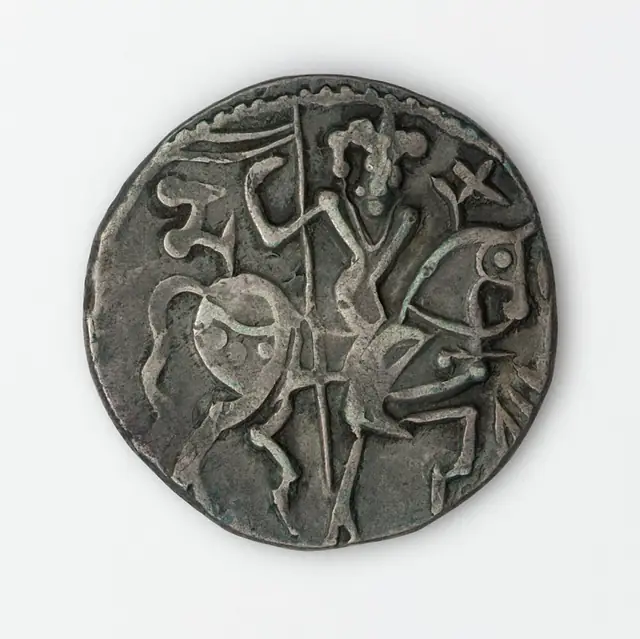
Silver coins of the Shahi kings of Kabul and Udabhandapura, with Nandi on one side and a horseman on the other.

Found
Afghanistan, Gandhara and the Punjab, in large numbers
Kept at
Los Angeles County Museum of Art, British Museum and many other collections
Chola coins
10Coin · c. 10th–12th century CE

Chola coins

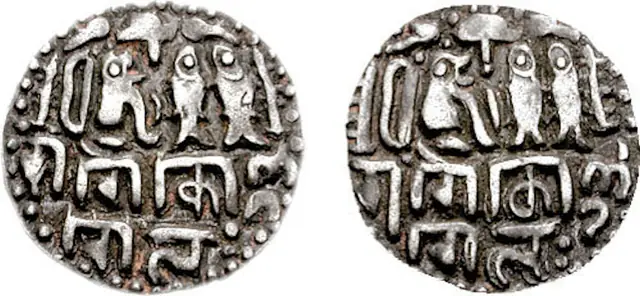
Gold, silver and copper coins of the imperial Cholas, bearing the seated tiger of the Cholas beside the fish of the Pandyas and the bow of the Cheras.

Found
Across Tamil Nadu and in great numbers in Sri Lanka
Kept at
Government Museum, Chennai; Colombo National Museum; British Museum and others
Vijayanagara gold varaha
11Coin · 14th–17th century CE

Vijayanagara gold varaha

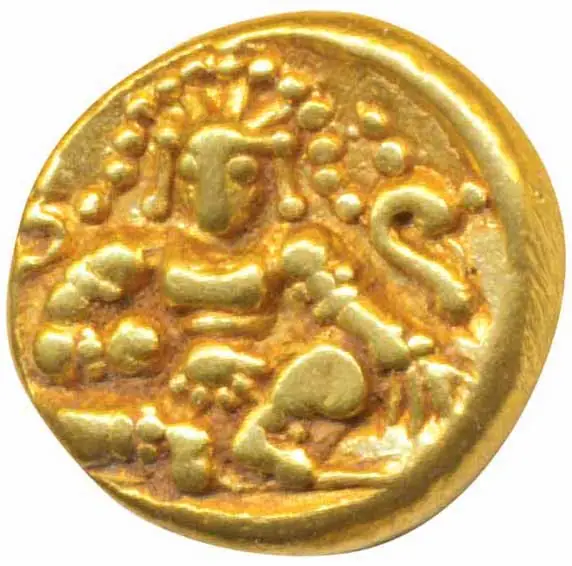
The small, thick gold coin of Vijayanagara, called varaha after the boar on the royal seal, hon in Marathi and Kannada, and “pagoda” by the Europeans.

Found
Across South India and in hoards as far as Sri Lanka
Kept at
Government Museum, Chennai; British Museum and other collections
Shivaji’s Shivrai hon
12Coin · Struck from 1674 CE

Shivaji’s Shivrai hon

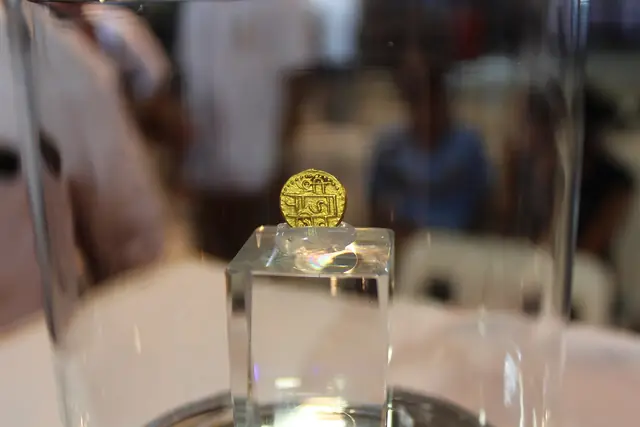
The gold coin of the new Hindavi Swarajya, with the king’s name and title in Devanagari and no reference to any Mughal overlord.

Found
Minted for the coronation of Chhatrapati Shivaji Maharaj at Raigad, 6 June 1674
Kept at
Rare; a few specimens survive in museum and private collections