01Pandukabhaya’s city
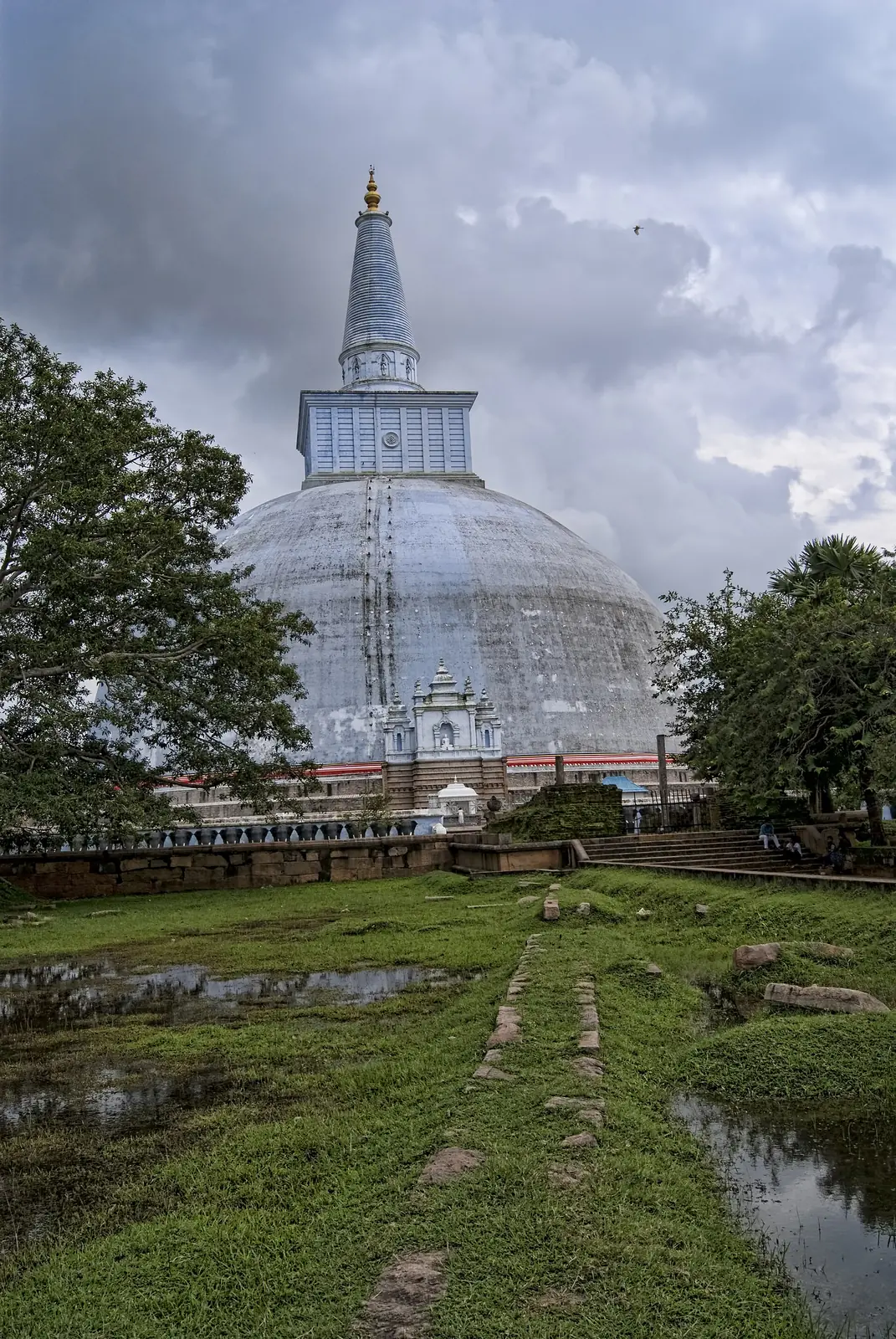
The Mahavamsa, the Pali chronicle of Lanka, says that Prince Vijaya landed from Bharat with seven hundred followers, and that his descendant Pandukabhaya laid out Anuradhapura as his capital, which the traditional chronology puts in 437 BCE. He dug tanks, marked out quarters, and, the chronicle says, built dwellings for Jain ascetics and other wandering teachers. Excavation at the citadel shows the city was occupied well before that date.
02Mahinda at Mihintale
In the reign of Devanampiya Tissa, a friend of Ashoka, the Mauryan prince-monk Mahinda came to Mihintale on the full moon of Poson, and the king took refuge in the Buddha. Mahinda’s sister Sanghamitta brought a cutting of the Bodhi tree of Bodh Gaya, and it still grows in Anuradhapura as the Jaya Sri Maha Bodhi. Sri Lanka keeps it as the oldest human-planted tree with a recorded date.
03Elara and Dutugemunu
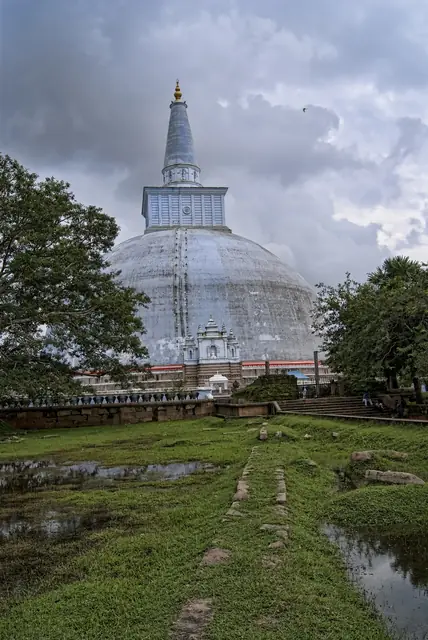
Elara, a Chola prince, ruled Anuradhapura for forty-four years, and the Mahavamsa, though written by Buddhist monks, calls him a just king who judged friend and foe alike. Dutugemunu of Ruhuna defeated him in single combat. The chronicle says Dutugemunu ordered that everyone passing Elara’s tomb should silence their music in his honour. Dutugemunu went on to raise the Ruwanwelisaya, the great white stupa of Anuradhapura.
04Devalayas and the end
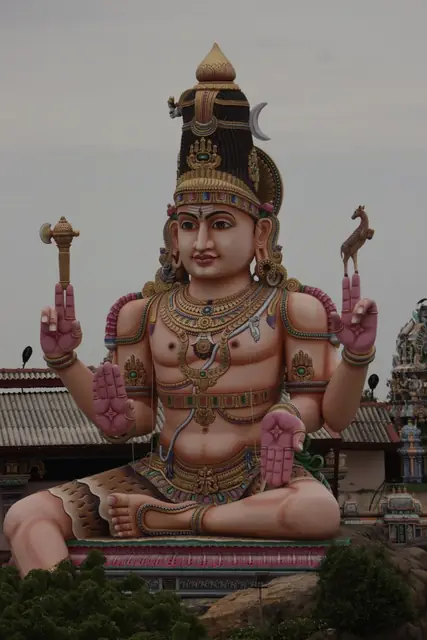
Hindu shrines stood on the coasts throughout this age, at Koneswaram on Trincomalee bay and at Munneswaram near Chilaw. The Mahavamsa records that King Mahasena, in the 3rd century, destroyed devalayas, temples of the gods, and built viharas in their place, one of them at Gokanna, which many identify with Trincomalee. In 993 Rajaraja Chola’s army took Anuradhapura and made Polonnaruwa the seat of Chola rule, and in 1017 Rajendra Chola carried King Mahinda V captive to the Chola country.
The rulers
- 1PandukabhayaFounded Anuradhapura as capital437–367 BCE (traditional)
- 2Devanampiya TissaReceived Mahinda; friend of Ashokac. 247–207 BCE
- 3ElaraChola king, remembered as justc. 205–161 BCE
- 4DutugemunuBuilt the Ruwanwelisayac. 161–137 BCE
- 5Vattagamani AbhayaPali Canon written down at Aluviharec. 89–77 BCE
- 6MahasenaBuilt Jetavanarama; Minneriya tankc. 277–304
- 7DhatusenaBuilt the Kalawewa tankc. 455–473
- 8Mahinda VTaken captive by Rajendra Chola982–1017
What they left
- The Jaya Sri Maha Bodhi and the stupas of Anuradhapura
- The Pali Canon, first written down in Lanka
- The Mahavamsa and Dipavamsa chronicles
- Great irrigation tanks still in use