
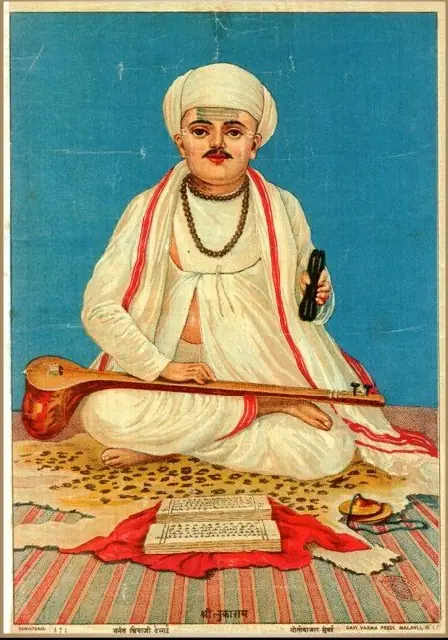
वृक्ष वल्ली आम्हां सोयरीं वनचरें। पक्षी ही सुस्वरें आळविती॥१॥
येणें सुखें रुचे एकांताचा वास। नाहीं गुण दोष अंगा येत॥ध्रु.॥
आकाश मंडप पृथुवी आसन। रमे तेथें मन क्रीडा करी॥२॥
कंथाकुमंडलु देहउपचारा। जाणवितो वारा अवसरु॥३॥
हरिकथा भोजन परवडी विस्तार। करोनि प्रकार सेवूं रुची॥४॥
तुका म्हणे होय मनासी संवाद। आपुला चि वाद आपणांसी॥५॥
Vriksh valli amhan soyari vanachare, pakshi hi susvare alaviti.
Yene sukhe ruche ekantacha vas, nahi gun dosh anga yet.
Akash mandap prithuvi asan, rame tethe man krida kari.
Kanthakumandalu dehaupachara, janavito vara avasaru.
Harikatha bhojan paravadi vistar, karoni prakar sevu ruchi.
Tuka mhane hoy manasi sanvad, apula chi vad apanansi.
Meaning
Trees and creepers are our kin, and so are the creatures of the forest; the birds too sing to us sweetly.
In this joy, living alone is sweet; neither virtue nor fault clings to me here.
The sky is my canopy, the earth my seat; there the mind delights and plays.
A patched cloth and a water-pot serve the body’s needs; the wind tells me the time of day.
The katha of Hari is my food, served in many dishes; I make many kinds and enjoy the taste.
Tuka says: the mind holds a dialogue; it argues only with itself.
About this bhajan
Tukaram withdrew often to the hills of Bhandara and Bhamnath near Dehu, and this abhang comes from that solitude. The trees are relatives, the sky a pandal, the wind a clock, and Hari-katha the feast. It is one of the most quoted Marathi verses on nature, read at tree-planting drives and printed in Maharashtra’s school books, but its centre is spiritual: alone with God, the mind’s only quarrel is with itself.
Tukaram Gatha, abhang 2471 (numbering as on Marathi Wikisource)