
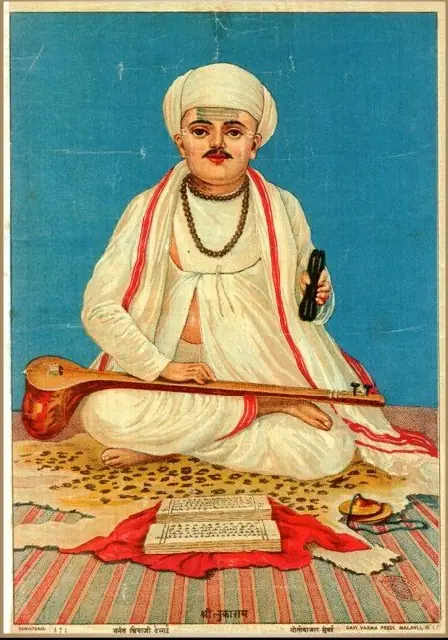
आनंदाचे डोहीं आनंदतरंग। आनंद चि अंग आनंदाचें॥१॥
काय सांगों जालें कांहीचियाबाहीं। पुढें चाली नाहीं आवडीनें॥ध्रु.॥
गर्भाचे आवडी मातेचा डोहळा। तेथींचा जिव्हाळा तेथें बिंबे॥२॥
तुका म्हणे तैसा ओतलासे ठसा। अनुभव सरिसा मुखा आला॥३॥
Anandache dohi anandtarang, anand chi ang anandache.
Kay sango jale kahichiyabahi, pudhe chali nahi avadine.
Garbhache avadi mateca dohala, tethicha jivhala tethe bimbe.
Tuka mhane taisa otalase thasa, anubhav sarisa mukha ala.
Meaning
In a lake of bliss, waves of bliss: bliss is the very body of bliss.
What can I say of what has happened, beyond all telling? In this delight there is no going further.
As a mother’s cravings come from the child she carries, and the love there is mirrored back,
so, says Tuka, the mould has been cast: the experience itself has come to my lips.
About this bhajan
Tukaram rarely tried to describe the state of union itself; this abhang is the great exception. The first line repeats one word, anand, until the reader is inside it. Then he reaches for the most intimate image he knows, a pregnant mother whose cravings are really her child’s, to say that the words now come from the experience and not from him. Varkari kirtankars often close with it, and it is sung on Tukaram Beej, the day of his vaikuntha-gaman in 1650.
Tukaram Gatha, abhang 3241 (numbering as on Marathi Wikisource)