
शिवः शक्त्या युक्तो यदि भवति शक्तः प्रभवितुं
न चेदेवं देवो न खलु कुशलः स्पन्दितुमपि ।
अतस्त्वामाराध्यां हरिहरविरिञ्चादिभिरपि
प्रणन्तुं स्तोतुं वा कथमकृतपुण्यः प्रभवति ॥ १ ॥
तनीयांसं पांसुं तव चरणपङ्केरुहभवं
विरिञ्चिः सञ्चिन्वन्विरचयति लोकानविकलम् ।
वहत्येनं शौरिः कथमपि सहस्रेण शिरसां
हरः सङ्क्षुद्यैनं भजति भसितोद्धूलनविधिम् ॥ २ ॥
भवानि त्वं दासे मयि वितर दृष्टिं सकरुणा-
मिति स्तोतुं वाञ्छन्कथयति भवानि त्वमिति यः ।
तदैव त्वं तस्मै दिशसि निजसायुज्यपदवीं
मुकुन्दब्रह्मेन्द्रस्फुटमकुटनीराजितपदाम् ॥ २२ ॥
जपो जल्पः शिल्पं सकलमपि मुद्राविरचना
गतिः प्रादक्षिण्यक्रमणमशनाद्याहुतिविधिः ।
प्रणामः संवेशः सुखमखिलमात्मार्पणदृशा
सपर्यापर्यायस्तव भवतु यन्मे विलसितम् ॥ २७ ॥
प्रदीपज्वालाभिर्दिवसकरनीराजनविधिः
सुधासूतेश्चन्द्रोपलजललवैरर्घ्यरचना ।
स्वकीयैरम्भोभिः सलिलनिधिसौहित्यकरणं
त्वदीयाभिर्वाग्भिस्तव जननि वाचां स्तुतिरियम् ॥ १०० ॥
śivaḥ śaktyā yukto yadi bhavati śaktaḥ prabhavituṃ
na cedevaṃ devo na khalu kuśalaḥ spanditumapi
atastvāmārādhyāṃ hariharaviriñcādibhirapi
praṇantuṃ stotuṃ vā kathamakṛtapuṇyaḥ prabhavati ‖ 1 ‖
tanīyāṃsaṃ pāṃsuṃ tava caraṇapaṅkeruhabhavaṃ
viriñciḥ sañcinvanviracayati lokānavikalam
vahatyenaṃ śauriḥ kathamapi sahasreṇa śirasāṃ
haraḥ saṅkṣudyainaṃ bhajati bhasitoddhūlanavidhim ‖ 2 ‖
bhavāni tvaṃ dāse mayi vitara dṛṣṭiṃ sakaruṇā-
miti stotuṃ vāñchankathayati bhavāni tvamiti yaḥ
tadaiva tvaṃ tasmai diśasi nijasāyujyapadavīṃ
mukundabrahmendrasphuṭamakuṭanīrājitapadām ‖ 22 ‖
japo jalpaḥ śilpaṃ sakalamapi mudrāviracanā
gatiḥ prādakṣiṇyakramaṇamaśanādyāhutividhiḥ
praṇāmaḥ saṃveśaḥ sukhamakhilamātmārpaṇadṛśā
saparyāparyāyastava bhavatu yanme vilasitam ‖ 27 ‖
pradīpajvālābhirdivasakaranīrājanavidhiḥ
sudhāsūteścandropalajalalavairarghyaracanā
svakīyairambhobhiḥ salilanidhisauhityakaraṇaṃ
tvadīyābhirvāgbhistava janani vācāṃ stutiriyam ‖ 100 ‖
Meaning
1. Only when Shiva is joined with Shakti does he have the power to create; without her, the Deva cannot even stir. How then can one who has gathered no merit bow to you or praise you, whom even Hari, Hara and Brahma worship?
2. Gathering a tiny speck of the dust from your lotus feet, Brahma creates the worlds without flaw. Vishnu, as Adishesha, bears it somehow on his thousand heads. Hara grinds it fine and smears it on his body as sacred ash.
22. Whoever only begins to pray, "Bhavani, you, cast a merciful glance on me, your servant", and has said no more than "Bhavani, you", to him at that very moment you grant oneness with yourself, at your feet which are lit by the gleaming crowns of Mukunda, Brahma and Indra.
27. Let my talk be japa, every movement of my hands a mudra, my walking a pradakshina, my eating and drinking an oblation, my lying down a prostration. Whatever I do for my own ease, seen as an offering of myself, let it all be a form of your worship.
100. As one waves a lamp before the sun, offers arghya to the moon with drops of water from the moonstone, or pleases the ocean with its own waters, so is this praise, Mother of all speech, made of words that are your own.
About this bhajan
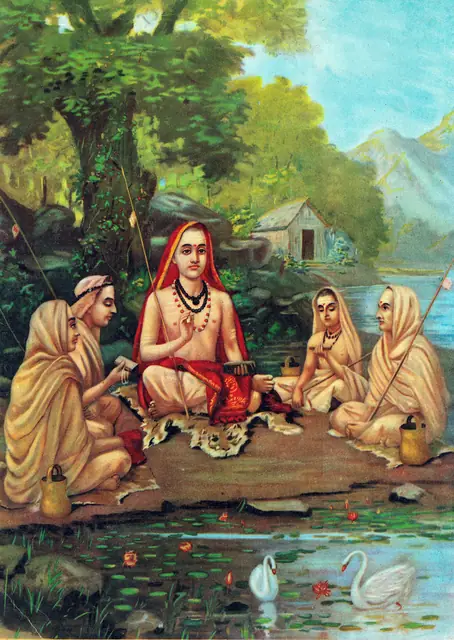
A hundred verses in the shikharini metre, each one a mountain peak of sound. A well-known account in the tradition says Shankaracharya received the first part at Kailasa, written on the walls or given into his hands, and composed the rest himself; the first forty-one verses, on the inner worship of Shri Vidya, are often called the Ananda Lahari, and the remaining fifty-nine describe the Devi's form from crown to feet. Verse one is Shakta teaching in four lines: Shiva without Shakti cannot even stir. Verse twenty-seven turns a whole day into puja. Every verse has its own yantra and its own use in the Shri Vidya tradition, which is why many teachers ask that it be learnt from a guru.
Adi Shankaracharya, Saundarya Lahari, vv. 1, 2, 22, 27, 100 (a selection): Works of Sri Sankaracharya (Vani Vilas Press, Srirangam, 1910), sa.wikisource "सौन्दर्यलहरी"